Soundproofing with Style: Acoustic Panels as Decor
Quiet rooms promote calm, appear cleaner, and function more effectively. However, few homeowners desire walls that mimic recording studios. The latest acoustic panels integrate sound control with design elements, converting a technical solution into a decorative asset.
Designers incorporate acoustic panels into the overall composition. They pair textured fabrics, sculptural shapes, and color blocking with sound absorption capabilities. This approach yields spaces that feel peaceful and refined.
Why Acoustic Panels Matter
Noise infiltrates homes from multiple sources. Hard surfaces such as tile, glass, and drywall reflect sound waves, causing echoes and making conversations strained. Acoustic panels capture these reflections, which reduces reverberation and improves audio clarity. The impact becomes evident in open kitchens, home offices, and living areas where activities overlap.
Interior designer Marisa Chen observes, “When you lower the echo, everything feels more comfortable. You can listen to music or talk without raising your voice.” This adjustment influences home functionality beyond mere appearance.
Design Options at a Glance
- Material choices: Fabric, felt, wood slats, and recycled fibers
- Common sizes: From 12-by-12-inch (30-by-30-centimeter) squares to 2-by-4-foot (60-by-120-centimeter) panels
- Ideal rooms: Home offices, media rooms, bedrooms, and open-plan living areas
- Installation methods: Wall-mounted, ceiling-suspended, or freestanding screens
Addressing Echo and Clutter in Modern Homes
Contemporary homes often include open layouts, high ceilings, and expansive windows. These features enhance visual appeal but intensify sound. A home office might capture hallway conversations, while a kitchen echo travels throughout the floor. Although heavy curtains or carpets provide partial relief, they seldom resolve the issue completely.
Homeowner Alex Rivera captures the frustration. “The space looked great but sounded terrible. Even small noises carried across the house.” This disconnect between aesthetics and comfort prompted the family to seek subtle acoustic treatments.
Transforming Spaces with Artistic Panels
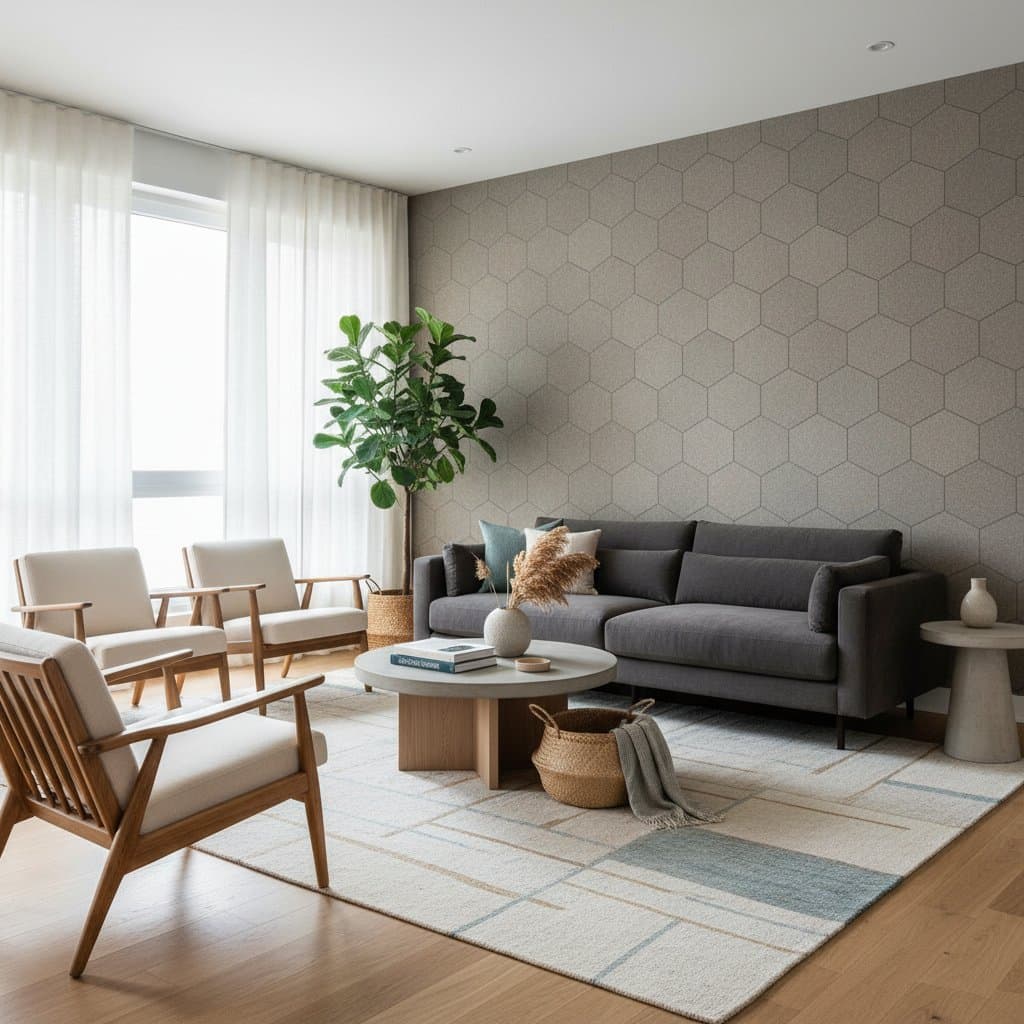
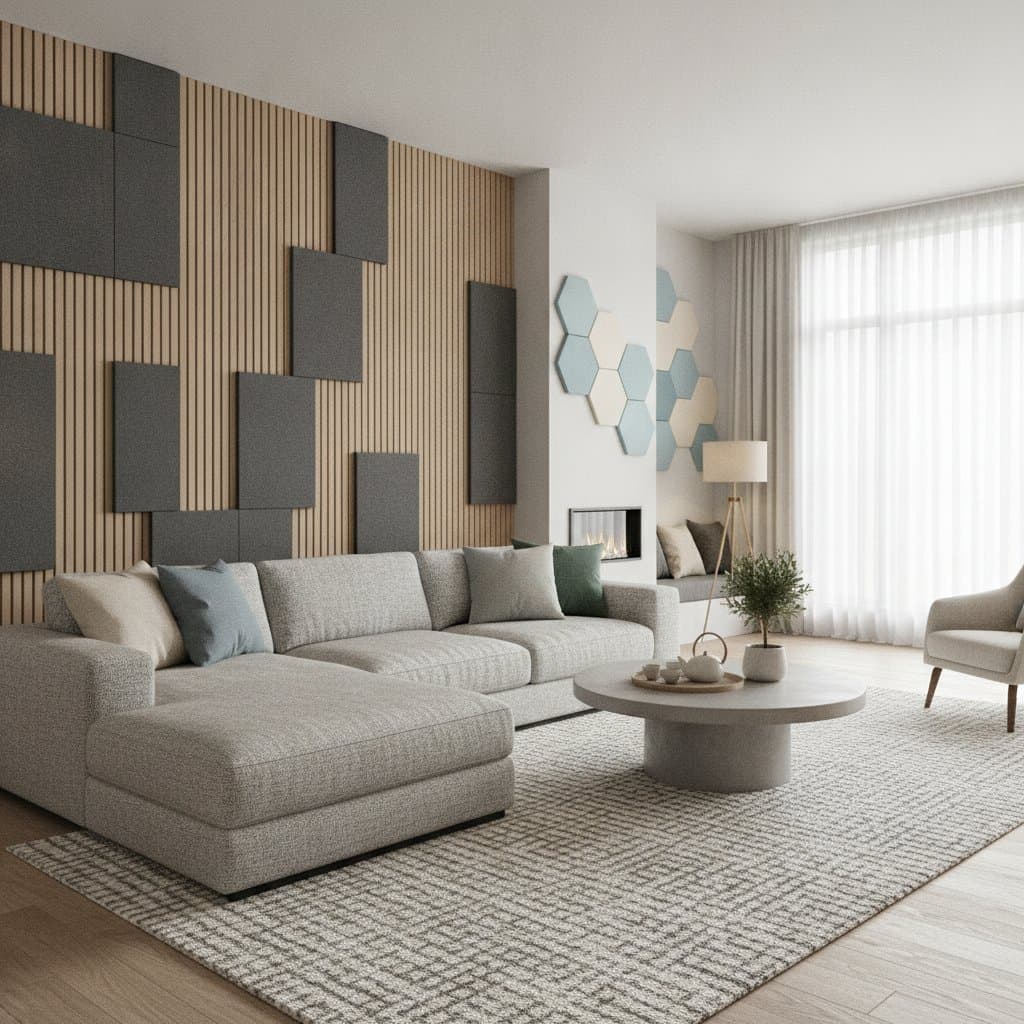
The team at Studio Loma installed acoustic panels resembling sculptural wall art. Square felt panels in gray and ivory tones formed a geometric grid above the sofa. This arrangement captivates attention while dampening reflected sound.
In the dining area, wood slat panels cover one wall, matching the flooring's hue. Vertical lines introduce warmth and rhythm, interrupting the monotony of plain drywall. Designer Elias Tan explains that the panels “anchor the room while balancing the brightness of the adjoining kitchen.” Texture and color coordination render the space deliberate and cohesive.
Key Design Details
- Fabric panels: Covered in linen blends or wool felt, typically with recycled acoustic cores
- Wood slats: Attached to black acoustic backing for a sleek, linear appearance
- Ceiling baffles: Lightweight PET felt panels hung in grids to manage echo in expansive areas
- Modular systems: Interlocking tiles that support customizable patterns or color variations
- Color strategy: Neutral tones for subtle backgrounds, or vibrant shades to delineate zones in open layouts
Materials vary in sound absorption. Felt and fabric panels target mid- and high-frequency sounds, suitable for voices and routine activities. Wood panels handle lower frequencies, proving effective in media rooms or music areas.
Incorporating Acoustic Panels into Your Home
Identify the noisiest zones first. Clap hands in an empty room to detect echo; lingering sound indicates a need for treatment.
Measure the intended wall or ceiling surface. Aim for coverage of 25 to 40 percent to optimize performance without dominating aesthetics. Combine panel shapes for visual interest, or align them with furniture to highlight proportions.
A single 2-by-4-foot (60-by-120-centimeter) panel behind a desk in a small office clarifies video calls. In living rooms, groups of smaller squares add pattern alongside artwork. For open kitchens, ceiling baffles over the island manage sound and introduce architectural depth.
Weighing Practical Considerations
- Budget: Pre-made panels offer affordable entry points, whereas custom options with high-end fabrics or wood finishes command higher prices.
- Maintenance: Fabric panels benefit from occasional vacuuming, while wood slats require simple dusting.
- Timeline: Custom production may span several weeks, so schedule installations accordingly.
Integrating Acoustics with Storage Solutions
Acoustic strategies frequently intersect with organization. Upholstered cabinet doors, felt-lined drawers, and soft dividers absorb sound while providing storage. Designer Irene Walsh points out that “combining sound control with function keeps rooms quieter and tidier.”
Incorporate built-in benches with cushioned backs or bookcases featuring insulated panels. These elements minimize noise and optimize space usage.
Experiencing the Benefits Daily
With panels installed, everyday interactions improve. Conversations gain warmth, and rooms feel more enclosed. Lighting enhances the effect; direct beams or wall washes illuminate textures, elevating functional pieces to sculptural highlights.
Acoustic panels underscore that comfort extends beyond physical sensations. It encompasses auditory quality and interpersonal dynamics. Integrating sound management into design creates refined, restful environments.
Select minimalist fabric arrangements or striking wood slats based on preference. The outcome remains consistent: a quieter home that embodies personal style. Thoughtful implementation allows panels to blend seamlessly or stand as focal art, affirming silence as an elegant design element.