Elevate Living Rooms with Acoustic Wall Panels
Living rooms serve as hubs for conversation, entertainment, and relaxation. Echoes from hard surfaces disrupt these experiences, but acoustic wall panels offer a solution. These innovative elements, once reserved for professional recording studios and theaters, now bring residential spaces into balance by absorbing sound while enhancing visual appeal.
Panels integrate seamlessly into home decor, adding layers of texture and warmth to plain walls. Homeowners gain environments where dialogue flows clearly and music plays without distortion. This approach preserves the room's aesthetic integrity while addressing acoustic challenges.
At a Glance
Target residents: Homeowners seeking quieter, more refined living spaces
Ideal settings: Urban apartments and spacious open-plan residences
Applicable room sizes: From compact 200-square-foot (18.6-square-meter) areas to expansive layouts over 500 square feet
Key collaborators: Residential interior designers, acoustic specialists, and expert millworkers
Challenges Before Installation
Many living rooms suffer from unwanted echoes caused by reflective materials such as glass windows, stone floors, and unfinished drywall. Even well-furnished spaces amplify sounds as voices bounce between parallel walls. Interior designer Carla Mendes explains, "Clients often share that their living rooms look impeccable but feel acoustically exhausting."
These issues extend beyond discomfort; they hinder enjoyable interactions. Television dialogue becomes muddled, and background music overwhelms conversations. The goal remains to control sound reflections without altering the room's core structure or style.
Transformations After Installation
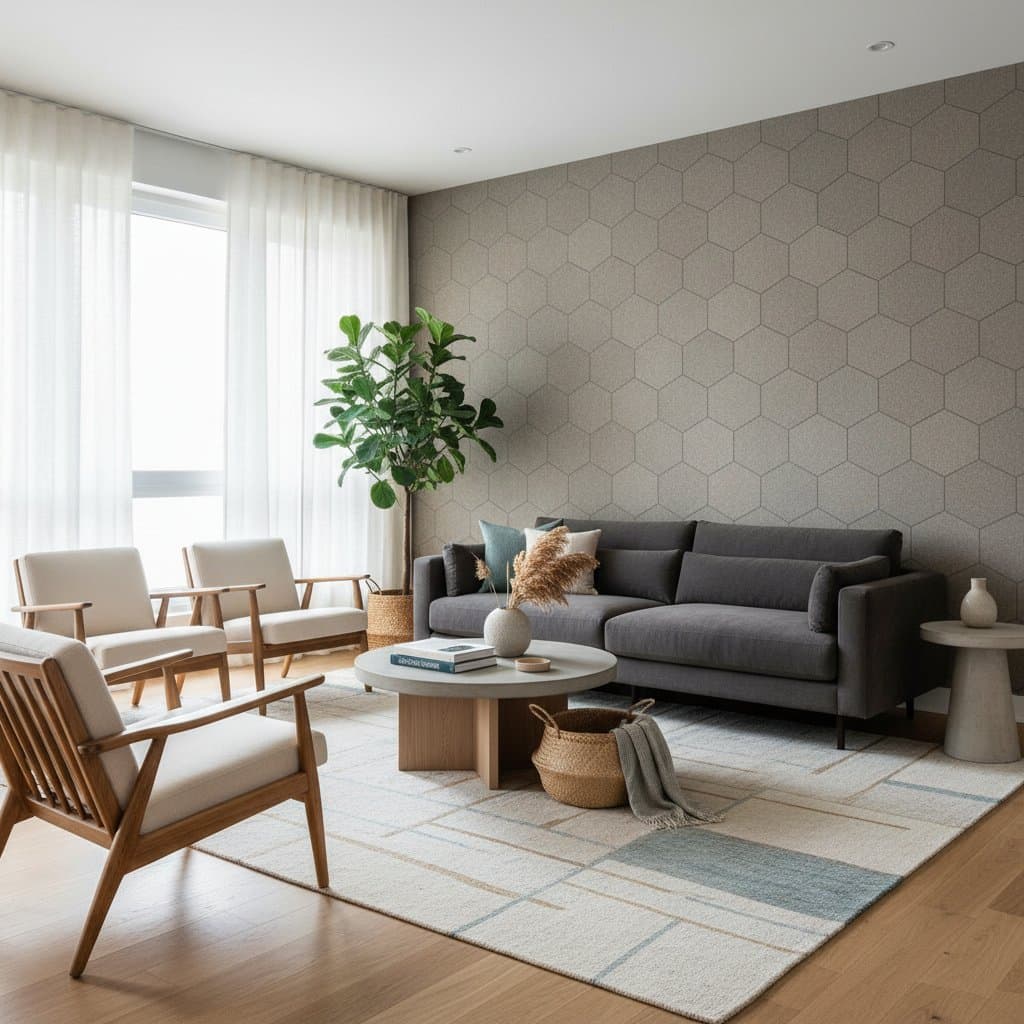
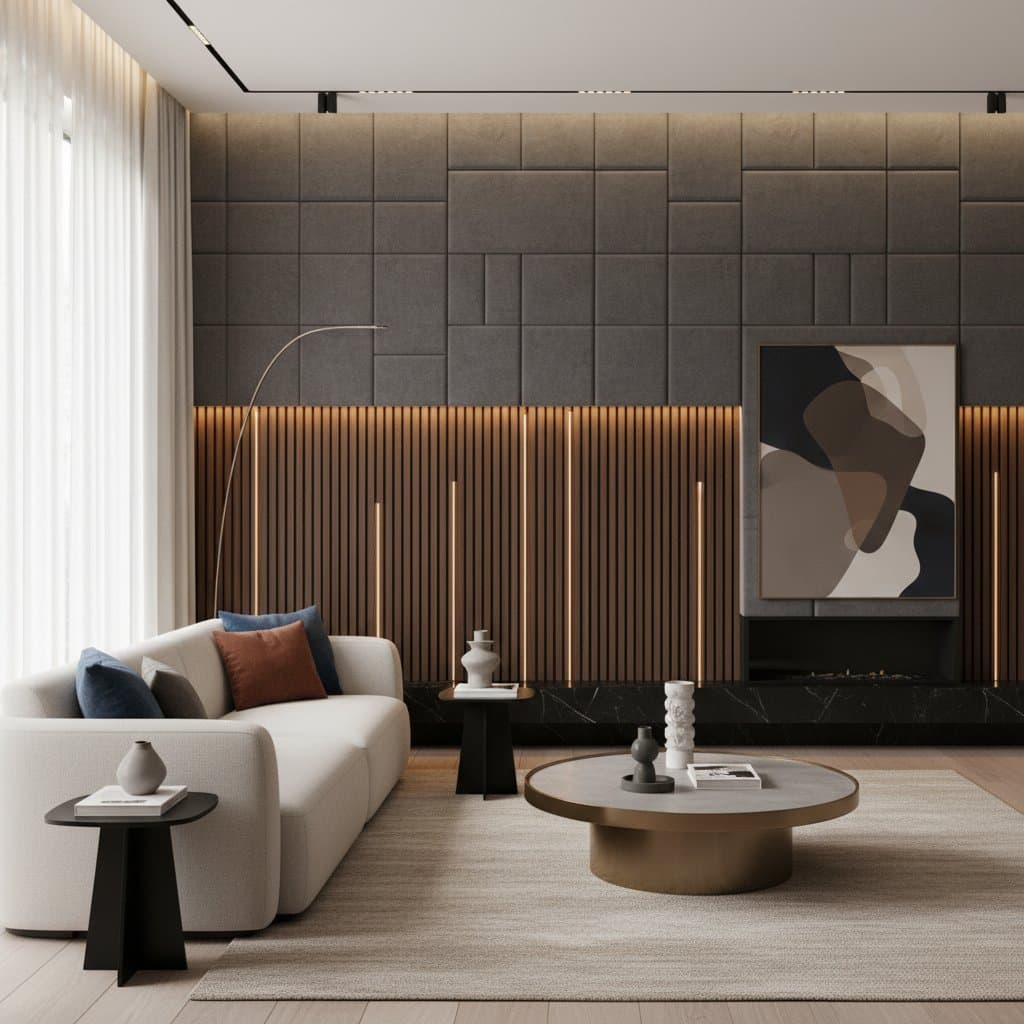
Modern acoustic wall panels tackle these problems with advanced materials that trap sound waves and boost design elements. Options include coverings in wool-blend textiles or recycled PET felt, which provide a tactile softness that complements sofas, curtains, and area rugs. Slatted wood configurations, placed over absorptive backings, introduce clean lines and depth to walls.
Mendes adds, "We treat acoustic panels as essential components of the overall design scheme, not mere add-ons. They become part of a unified wall composition that elevates the entire space." In larger rooms, panels help divide areas functionally, turning a lively media zone into a cozy nook for intimate talks.
Lighting integration takes these installations further. Designers position slim LED strips above wooden slats or behind fabric panels to create diffused illumination. This technique highlights textures and fosters a welcoming atmosphere, especially during evening gatherings.
Essential Design Details
- Core materials: Wool-blend fabrics for durability, recycled PET felt for sustainability, oak or walnut slats for natural warmth, and perforated medium-density fiberboard paired with absorptive cores
- Installation methods: Attachment via hidden cleats or track systems, including a small air gap behind panels to enhance sound capture efficiency
- Color options: Subtle neutrals like soft grays and beiges, warm wood tones, or custom-dyed fabrics to align with existing decor schemes
- Lighting features: Dimmable LED channels recessed into frames or concealed uplights that emphasize panel contours
- Upkeep routines: Regular vacuuming with a soft brush attachment or wiping with a dry microfiber cloth to preserve material quality
To select the right panels, consider the room's primary activities. For family rooms with active children, prioritize robust, easy-to-clean fabrics. In formal sitting areas, opt for refined wood accents that match cabinetry.
The Broader Impact of Acoustic Treatment
Acoustic panels deliver more than echo suppression; they improve daily life in tangible ways. Conversations become effortless without raised voices, television sound clarifies for better immersion, and music systems achieve even playback. Families with young children benefit from reduced noise during playtime, while apartment dwellers curb sound leakage to neighboring units.
Sound designer Leo Hart emphasizes, "Spaces that absorb excess noise cultivate a feeling of calm and organization, even amid visual busyness." This subtle enhancement promotes mental well-being, making homes feel more restorative.
In professional consultations, experts measure room reverberation using tools like sound level meters before recommending panel coverage. Typically, treating 20 to 30 percent of wall surfaces yields noticeable improvements without overwhelming the design.
Combining Acoustics with Practical Storage
Interior professionals frequently pair acoustic panels with bespoke storage to maximize utility. Consider cabinet doors upholstered in sound-absorbing fabric, which conceal shelves while dampening internal echoes. Integrated millwork embeds panels directly into media consoles or bookcases, creating unified pieces that serve dual purposes.
For example, a custom entertainment unit might feature perforated wooden fronts backed by foam absorbers, blending storage for remotes and cables with acoustic control. This strategy ensures functionality supports the room's serene vibe, avoiding cluttered appearances.
Experiencing the Design Daily
Once installed, an acoustically optimized living room instills a sense of immediate tranquility. The change manifests through feel rather than dramatic visuals; walls appear enriched, yet the focus shifts to how sounds behave. Over time, occupants lower their speaking volumes naturally, set media devices to gentler levels, and host events with less effort.
Maintenance proves straightforward, allowing the design to endure. Periodic checks ensure panels remain dust-free, preserving both performance and aesthetics for years.
Steps to Incorporate Acoustic Panels
Begin by assessing your living room's acoustic needs through simple tests, such as clapping to detect echoes. Consult a designer to map panel placement, focusing on echo-prone walls opposite windows or doors. For new builds or major renovations, integrate panels during framing to simplify the process.
Start small with a single accent wall to gauge impact, then expand as needed. The result creates a living space that excels in both sound quality and visual harmony, proving that effective design engages all senses for lasting comfort.