Make Acoustic Panels Your Living Room Statement Piece
The quiet luxury trend has moved beyond plush fabrics and muted palettes. Homeowners now rethink how sound shapes comfort. They turn acoustic panels into design features that balance calm with character. These panels no longer hide behind curtains or paint. They step forward instead as sculptural elements that soften noise and complete a room visual rhythm.
Why Sound Belongs in the Design Conversation
Every hard surface in a living room reflects sound. Glass walls and polished floors create echo-filled spaces that feel restless. Acoustic panels absorb those reflections. They produce a grounded and intimate atmosphere. Designer Mara Holden noted that sound functions like another material. Proper acoustics make the entire room feel calmer.
The shift toward panels as statement decor stems from awareness that comfort remains multisensory. Texture, tone, and acoustics influence how a space feels beyond visual elements.
Materials That Work Hard and Look Good
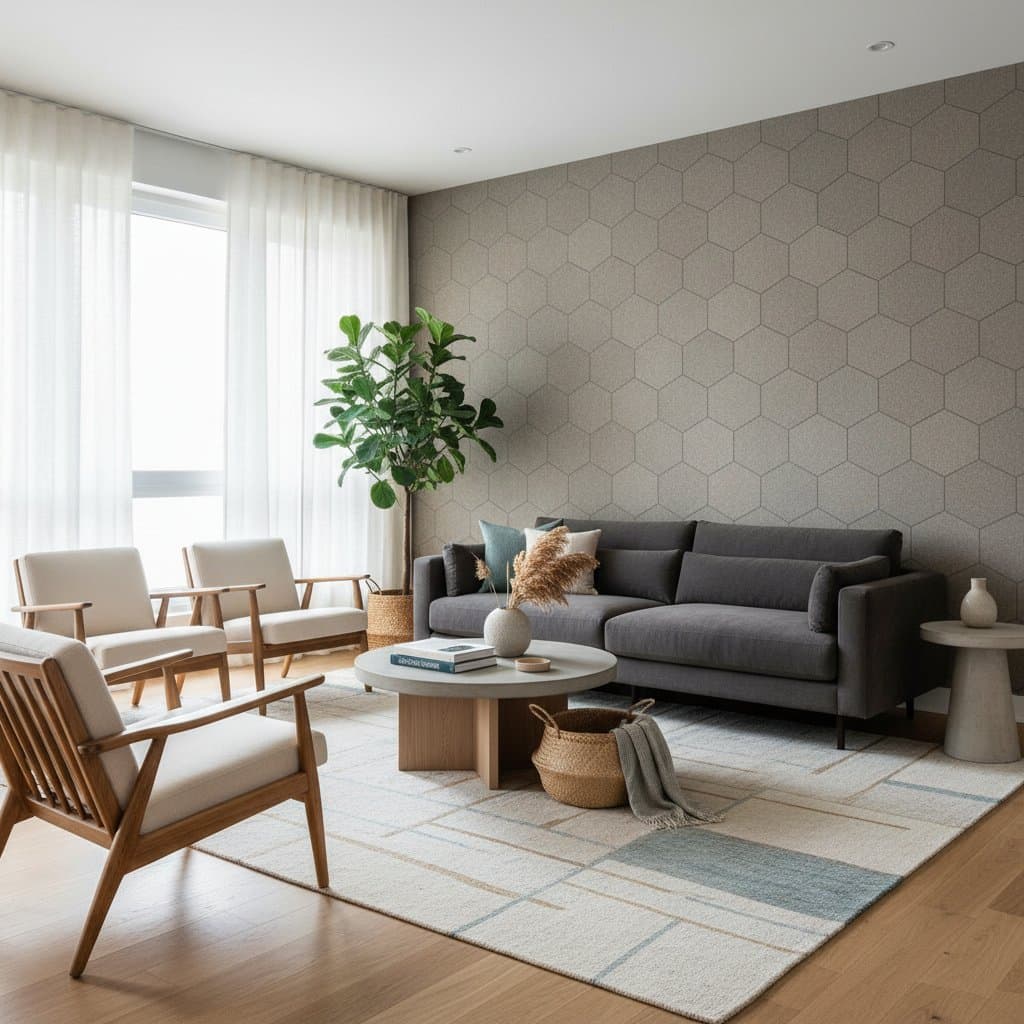
Modern acoustic panels use felted wool, wood veneer, recycled PET, or thick fabric over mineral fiber cores. Panels range from slim one-inch wall tiles to deeper three-inch baffles that hang as art. Some designs include geometric cuts or slatted wood faces that break up sound while adding rhythm to the wall.
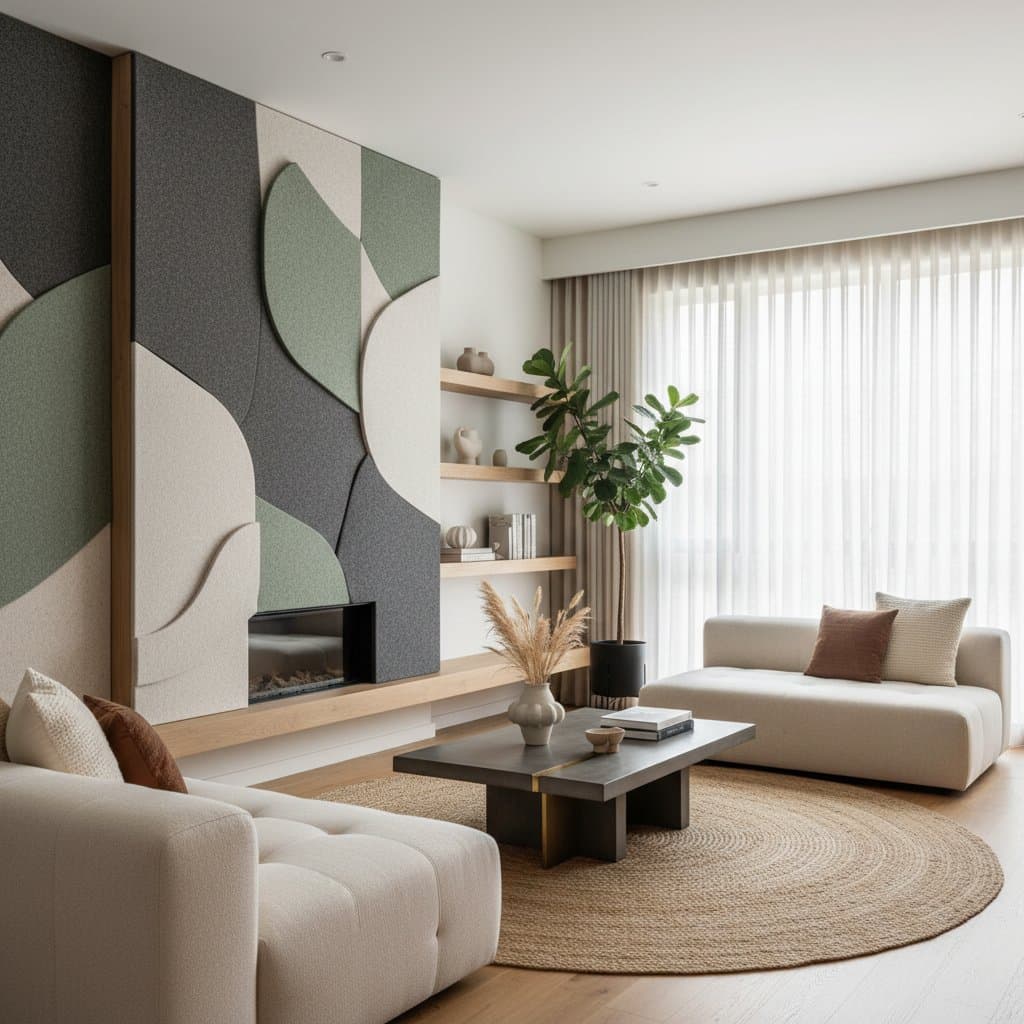
Neutral tones such as oat, charcoal, and sand stay popular. Bold hues like rust or forest green serve as focal art. Minimalist schemes benefit from panels with subtle vertical ribs that echo millwork lines. Eclectic rooms gain interest when square and round modules mix into a loose collage effect.
Layout and Lighting Harmony
Placement shapes performance as much as appearance. Panels perform best on walls opposite large windows or behind main seating areas. Mounting them symmetrically around artwork or shelving frames the living zone while maintaining visual order.
Lighting enhances the effect. A slim LED wash above a textured panel highlights depth and pattern. Recessed ceiling lights positioned a few inches forward create gentle shadow play. The panel becomes a dynamic backdrop that shifts with the day.
Design Details
- Material pairing: Combine wool felt with oak trim for warmth and balance.
- Size guide: For a medium living room around 250 square feet, plan to cover at least one-fifth of the wall area for noticeable absorption.
- Mounting tip: Floating rails allow panels to sit slightly off the wall. This improves performance and adds dimensionality.
- Maintenance: Vacuum lightly with a brush attachment to remove dust and keep textures fresh.
Integration with Storage and Media
Some designers integrate acoustic panels into built-in cabinetry fronts or sliding doors. This approach hides clutter while maintaining sound control. Others wrap panels around media walls or fireplace surrounds to soften the acoustics of hard finishes like stone and glass.
Daily Comfort Benefits
Once installed, acoustic panels change the feeling of daily life in subtle ways. Conversations sound clearer. Music plays with richer depth. The space feels both quieter and more connected. Holden explained that good sound design makes people want to linger.
Sculptural felt tiles or slatted wood panels both treat sound as part of living room design. This approach brings comfort and style into harmony.