Stylish Acoustic Panels Enhance Noisy Living Rooms
Homes often feature persistent sounds that disrupt comfort. The rattle of utensils, overlapping voices, or reverberating media can render a living room chaotic and fatiguing. Acoustic panels, traditionally confined to professional recording environments, now prioritize residential style. These elements mitigate audio reflections while preserving elegance, positioning them as essential enhancements for open-concept layouts and lofty interiors.
This overview examines professional integrations of acoustic panels in living rooms that prioritize both appearance and acoustics. It covers optimal materials, effective strategies, and adaptations for diverse home settings.
Project Overview
Residents: A professional couple with two young children
Location: Seattle, Washington
Area: Living space spans roughly 420 square feet, or 39 square meters
Design Firm: Studio CN; images captured by Lauren Kent
Design Implementation
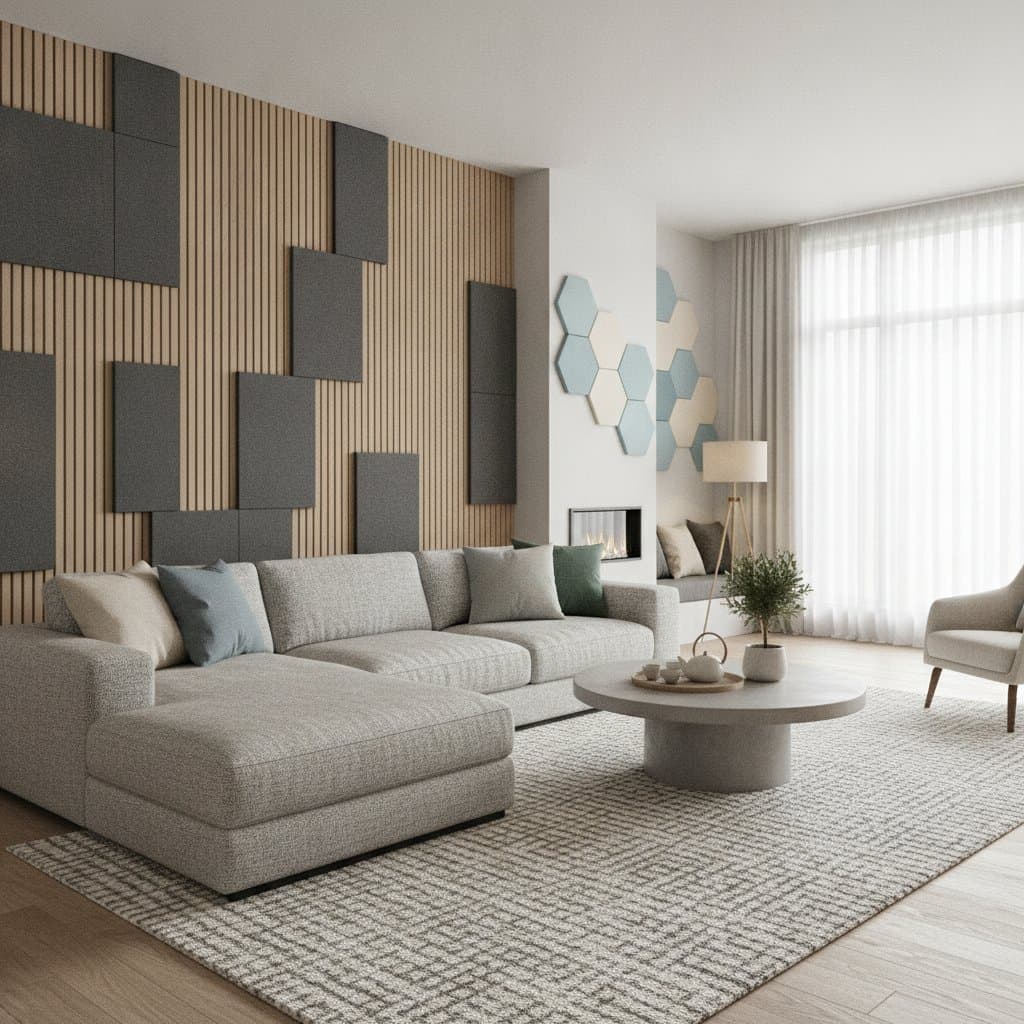
The professionals installed bespoke acoustic panels that serve dual purposes as decorative elements. Three upright panels, measuring 36 inches wide by 72 inches tall—or approximately 91 by 183 centimeters—line the primary wall adjacent to the seating area. Encased in textured wool felt featuring muted gray and sand hues, these panels disrupt sound waves and introduce a gentle pattern to the space.
Overhead baffles, constructed from recycled PET felt in a neutral taupe shade, hang between structural beams in a straightforward array. Such placement curbs vertical audio rebound without compromising perceived ceiling height. "The intention was for the panels to recede visually from afar yet provide texture upon closer inspection," explained Nguyen of Studio CN.
The outcome yields an intimate and soothing atmosphere. The residents note improved dialogue intelligibility and enhanced musical fidelity. Family members now engage in separate activities—such as gaming in one area and reading in another—without mutual interference.
Integrating Style and Acoustics
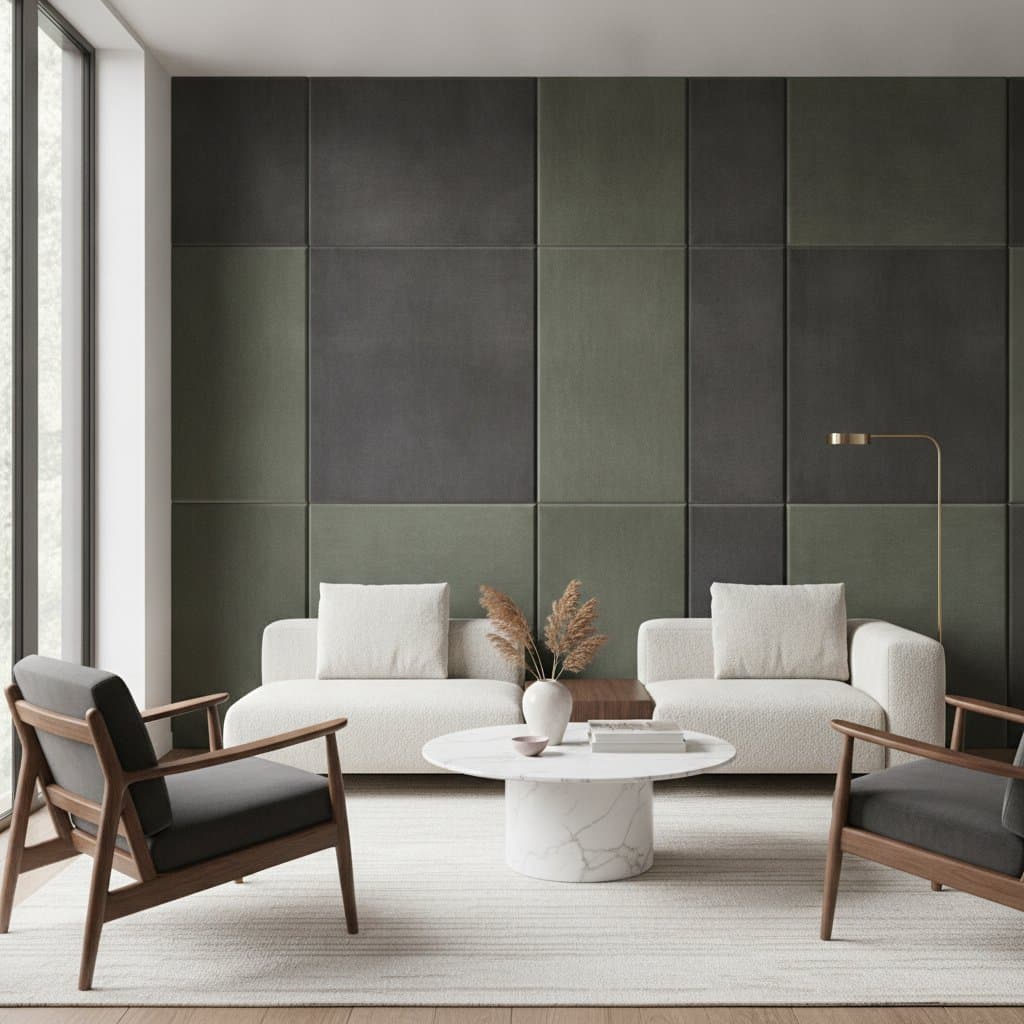
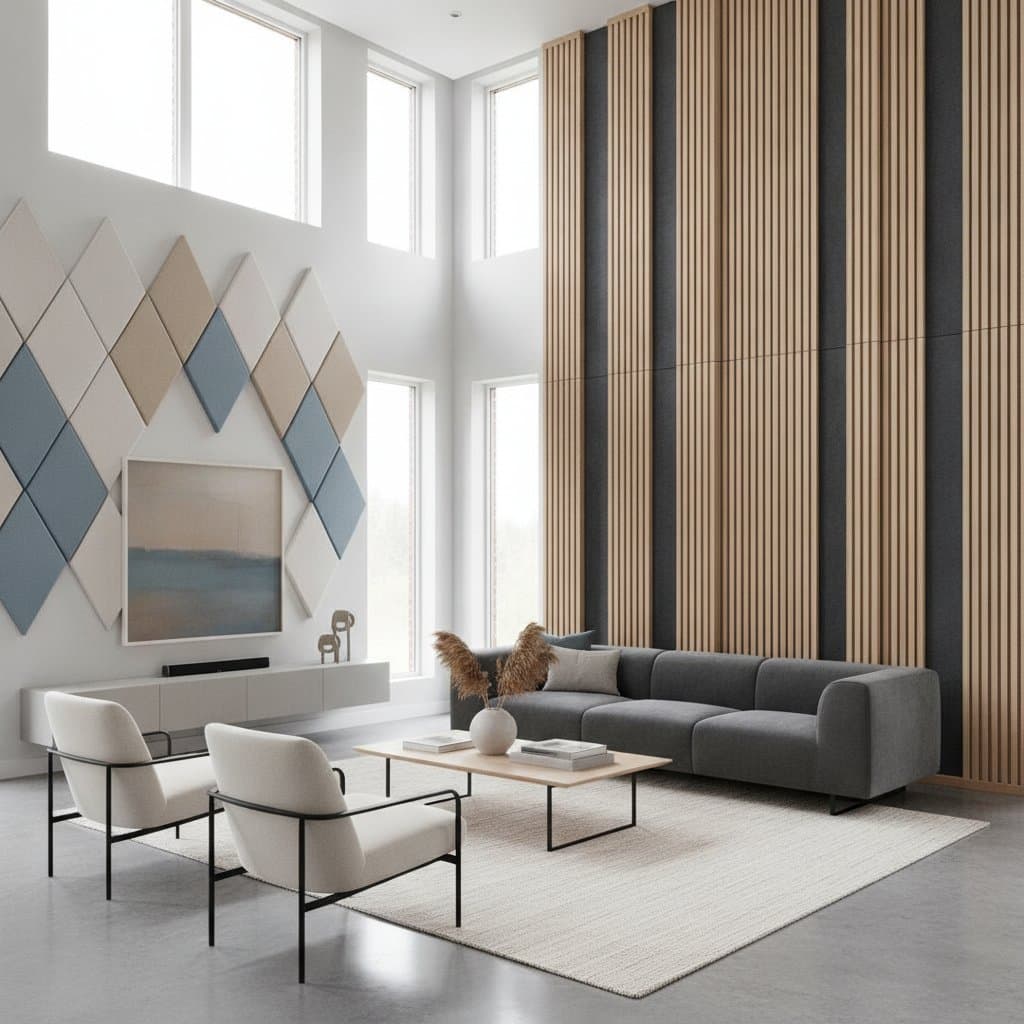
Professionals increasingly view acoustic treatments as integral design components. Certain panels emulate textile artworks, while alternatives replicate timber louvers or lattice partitions. The approach involves aligning them with the overall aesthetic vocabulary, avoiding any perception of utilitarian add-ons.
In a Lakehouse Interiors commission, dual panels of perforated oak veneer mask underlying foam absorbers. The motif draws from midcentury room screens, and the natural wood finish maintains a welcoming tone. "The goal was an element that appeared deliberate, not an afterthought," stated principal designer Maya Lopez.
For compact living areas, modular configurations offer versatility. Arrange square felt modules in assorted grays or earthy terracottas to form abstract compositions that function as wall art. Begin with a modest set and scale up as required, ensuring scalability suits evolving needs.
Installation Methods
Acoustic panels integrate through several proven techniques:
- Accent Wall Application: Position expansive panels behind primary furniture like sofas or screens to establish a centerpiece that captures significant reflections.
- Overhead Configurations: Deploy suspended baffles or cloud-like arrays to manage reverberation in elevated spaces.
- Portable Partitions: Utilize freestanding dividers to delineate zones in fluid floor plans, providing adaptability.
Prior to setup, assess surface dimensions and pinpoint reflection origins. Audio typically rebounds between parallel walls or vertically between floors and ceilings. Targeting 25 to 35 percent coverage of these areas yields substantial acoustic gains.
Incorporating Storage Solutions
Innovative designs fuse sound management with functional storage. Line cabinet faces or gliding panels with absorptive fabrics to embed quieting properties seamlessly. Partially stocked shelving units, interspersed with volumes, scatter sound effectively without specialized appearance.
Harper Studio executed a solution where low-level cabinetry received acoustic fabric cladding. The upper rim doubled as an art display shelf, concealing storage to minimize visual clutter. "This integration achieved acoustic regulation alongside streamlined aesthetics," remarked Elise Harper, the firm's director.
Key Considerations
Acoustic panels offer substantial benefits, though thoughtful preparation proves essential. Textile exteriors may collect dust, necessitating light vacuuming biweekly. In moisture-prone regions, wool variants risk dampness retention; opt for synthetics or composites for durability.
Costs vary by specification and extent. Entry-level felt modules commence at reasonable rates per square foot, whereas bespoke timber assemblies command premium investments. Renters favor adhesive-backed tiles or framed textiles, which detach cleanly to preserve original surfaces.
Practical Implementation Guide
To achieve a more serene living space, initiate with an auditory evaluation. Position yourself centrally and produce a sharp clap; prolonged reverberation signals insufficient absorption. Introductory measures like area rugs or substantial curtains provide initial relief, yet targeted wall and ceiling panels deliver comprehensive equilibrium.
Select motifs aligned with your decor. Subtle schemes suit minimalist palettes through tone-matched integrations. Vibrant or varied interiors accommodate dynamic forms and accents. Time additions with broader updates, such as color refreshes or upholstery changes, to harmonize selections.
Engage an acoustics consultant or interior specialist for precise positioning and scale. Numerous vendors provide digital tools to compute required coverage based on dimensions and substrates.
Embracing the Transformation
Post-installation, acoustic panels integrate unobtrusively, amplifying the sense of peace. Audio experiences enrich—melodies gain nuance, interactions flow naturally, and the ambiance warms overall. Frequently, satisfied owners extend these enhancements to private quarters and workspaces, recognizing the profound impact on daily comfort.
Acoustic refinement transcends mere engineering. Through advanced substrates and deliberate styling, these panels unite serenity with sophistication in the home.