Acoustic Panels Enhance Living Room Comfort and Design
The hum of conversation, the clink of glasses, and the echo of footsteps can turn even the most beautiful living room into a noisy space. Homeowners who invest in fine furniture and layered lighting now pay equal attention to how their rooms sound. Acoustic panels, once reserved for recording studios, serve as a refined design element that brings both calm and visual depth to living areas.
This approach focuses on texture, form, and materials to tune a space so that it feels composed. The result delivers luxury in its quietest form.
Project Background
The family open plan living room featured generous windows and high ceilings but offered little softness. Hardwood floors, drywall, and minimal drapery allowed sound to bounce from wall to wall. Homeowner Maya L. noted that every word from the kitchen carried clearly. The space looked appealing yet felt chaotic during gatherings.
The design team identified reflective surfaces and a rectangular room shape as the source of reverberation. Area rugs provided only slight improvement. The family preferred to avoid bulky curtains that would block natural light.
Key Design Elements
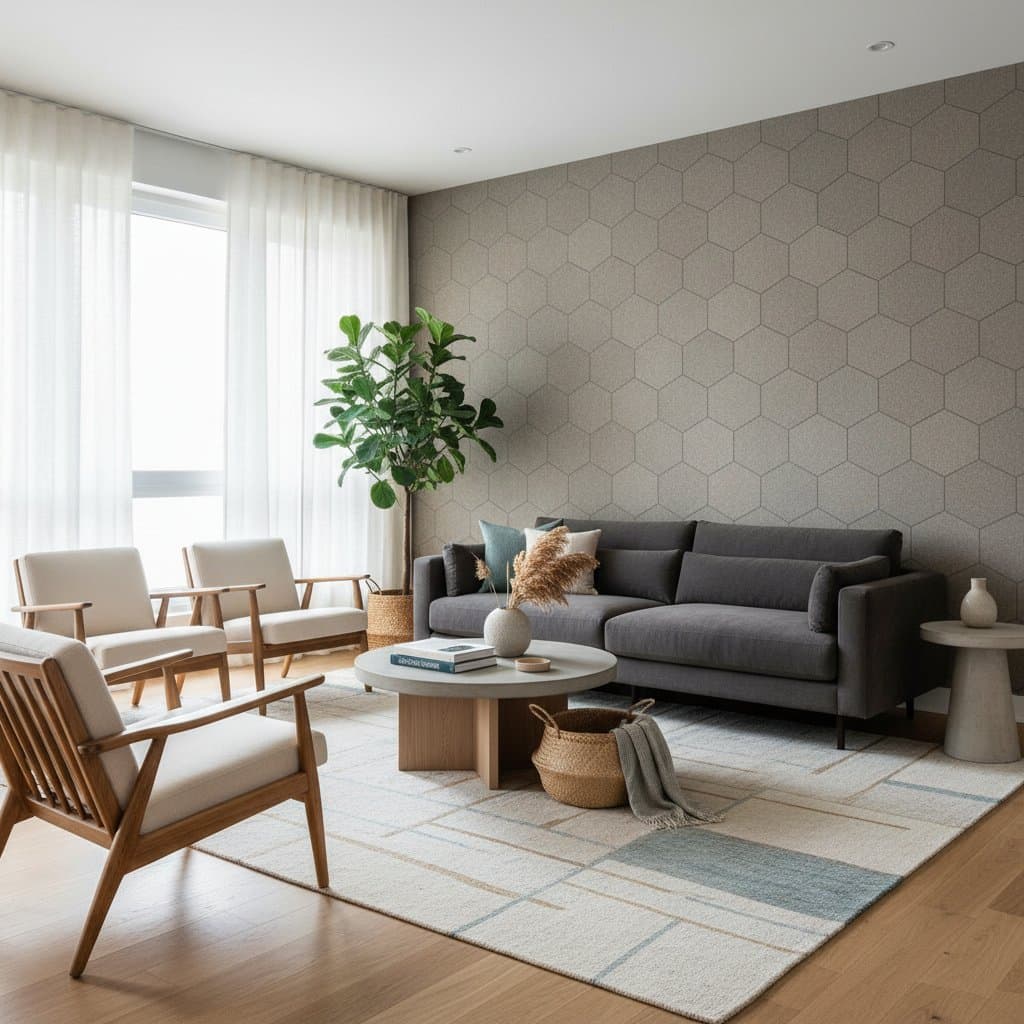
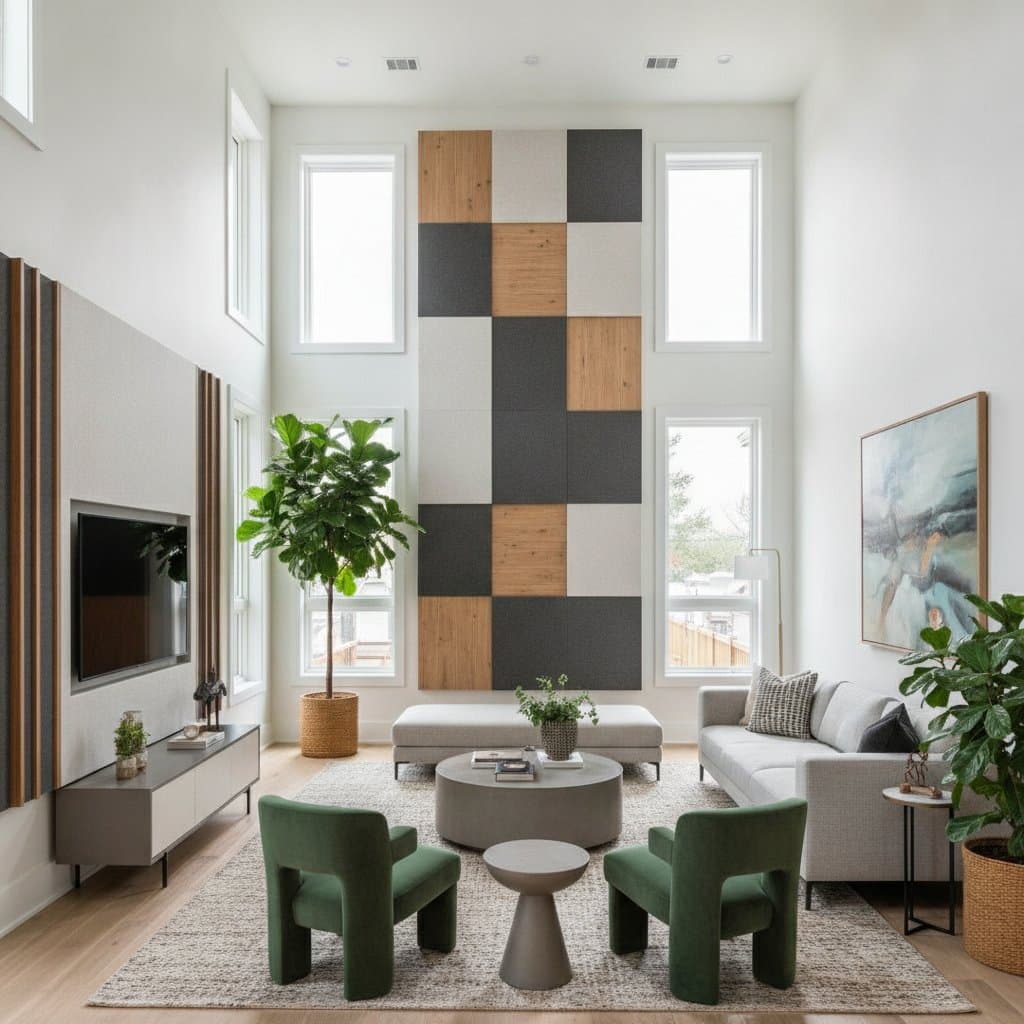
- Panels: Solid oak frames with wool blend fabric stretched over recycled cotton fiberboard.
- Color palette: Warm neutrals with subtle contrast between matte and semi gloss finishes.
- Lighting: Adjustable wall sconces combined with ambient ceiling light, task lamps, and accent fixtures.
- Flooring: Refinished white oak with a matte sealant to reduce high frequency reflection.
- Rug: Hand loomed wool measuring 9 by 12 feet.
- Drapery: Linen blend with acoustic interlining for sound absorption and light diffusion.
Steps to Improve Room Acoustics
Homeowners begin by observing how the room sounds when empty versus when occupied. Voices that echo or television audio that feels harsh indicate high reverberation. A mix of soft materials, strategic panel placement, and furniture adjustments often resolves the issue.
- Identify reflection points by standing in the center of the room and clapping. Echoes from walls, ceilings, or floors mark the surfaces that benefit most from panels or fabric treatments.
- Balance hard and soft surfaces. Rooms with wood floors and stone fireplaces gain from upholstered furniture, rugs, and curtains. Panels supplement these elements when additional absorption is required.
- Select panel style and thickness. Framed, frameless, slatted wood, or printed fabric options range from 1 to 2 inches thick. Thicker panels address lower frequencies while thinner panels manage mid to high tones. Most living rooms perform well with a combination.
- Position panels on walls opposite major sound sources such as speakers or large windows. Grouping panels near seating areas defines an acoustic zone in open plan homes.
Storage Solutions That Support Acoustics
Sound friendly design often aligns with improved organization. Closed cabinetry, upholstered benches, and fabric lined baskets absorb noise while concealing clutter. In one project the team installed a low media cabinet with perforated wooden doors that hide speakers yet allow sound to pass. The perforations maintain natural audio flow.
Measuring Acoustic Comfort
Acoustic comfort depends on reverberation time, the duration sound takes to decay after a noise stops. Balanced living rooms fall between 0.4 and 0.6 seconds. Uncontrolled spaces often exceed one second and produce the echo that fatigues listeners. Properly placed panels can halve that time and deliver immediate clarity.
Residents notice the change at once. Voices sound closer, music gains definition, and the space remains calm during activity.
Professional Perspectives
Interior designers view acoustic panels as an essential component in residential work. Designer Leo Tran of Formwell Studio observes that clients often describe the room as finished once panels are introduced. Photographer Peter Sandor noted that the quiet atmosphere allowed greater focus on visual details during documentation.
Practical Implementation Options
Low commitment options include a large wool or cotton rug under seating, upholstered dining chairs, and textile art or woven hangings that absorb sound.
Moderate upgrades involve framed panels above the sofa or television, lined fabric drapery, and a cork or felt pinboard in a study or media area.
Comprehensive solutions combine panels with built in cabinetry or slatted wood walls, acoustic plaster or suspended baffles on ceilings, and balanced zones that control sound across open layouts.
Daily Experience After Installation
Acoustic panels integrate into routine living without drawing attention. The improvement appears most clearly when the room fills with people. Conversations proceed without strain and music remains rich at moderate volume. The Portland family reported longer stays in their living room and described it as their calm zone. This outcome illustrates how design that addresses all senses supports connection and relaxation.