Acoustic Panels: Style Meets Soundproofing in Homes
Noise infiltrates living spaces in subtle ways. The murmur from adjacent rooms, reverberations in expansive areas, or reflections from uncovered surfaces can diminish the tranquility of a room. Acoustic panels, previously confined to professional environments like recording studios, now integrate into residential design. They balance acoustic performance with aesthetic appeal, fostering environments that promote relaxation and visual harmony.
These panels transcend mere utility. They serve as intentional design features that mitigate auditory disturbances while enhancing the overall ambiance. Strategic positioning and material selection enable homeowners to cultivate serene, inviting interiors that align with personal style.
Why Sound Matters at Home
Homes generate a constant array of sounds. Activities such as family interactions, meal preparation, media consumption, and footsteps contribute to the acoustic profile of daily living. While moderate noise adds vitality, excessive reverberation can induce stress or exhaustion. Effective sound management restores equilibrium.
The goal extends beyond elimination of sound. It involves refining acoustics to ensure clear communication, preserved musical fidelity, and enhanced opportunities for repose. Acoustic panels excel at capturing reflected waves, particularly in areas featuring rigid materials like ceramic tiles, windows, or hardwood flooring. This approach yields a more consistent auditory environment conducive to concentration and unwinding.
Where to Begin
Comprehensive wall coverage proves unnecessary for perceptible improvements. Identify locations where acoustics feel abrasive or propagate excessively. Typical areas include:
- Living rooms featuring elevated ceilings, where audio travels between vertical and horizontal planes.
- Dedicated home offices requiring subdued ambient noise for virtual meetings and focused tasks.
- Bedrooms susceptible to external disturbances that disrupt sleep cycles.
- Open-plan kitchens where vocal exchanges amplify against storage units and work surfaces.
- Entertainment areas that gain from improved vocal clarity and tonal depth in audio playback.
With problem areas pinpointed, determine optimal panel locations for maximum impact.
Choosing the Right Style
Acoustic panels offer diverse configurations, hues, and surface treatments. Their versatility allows integration with existing interiors. Consider these options:
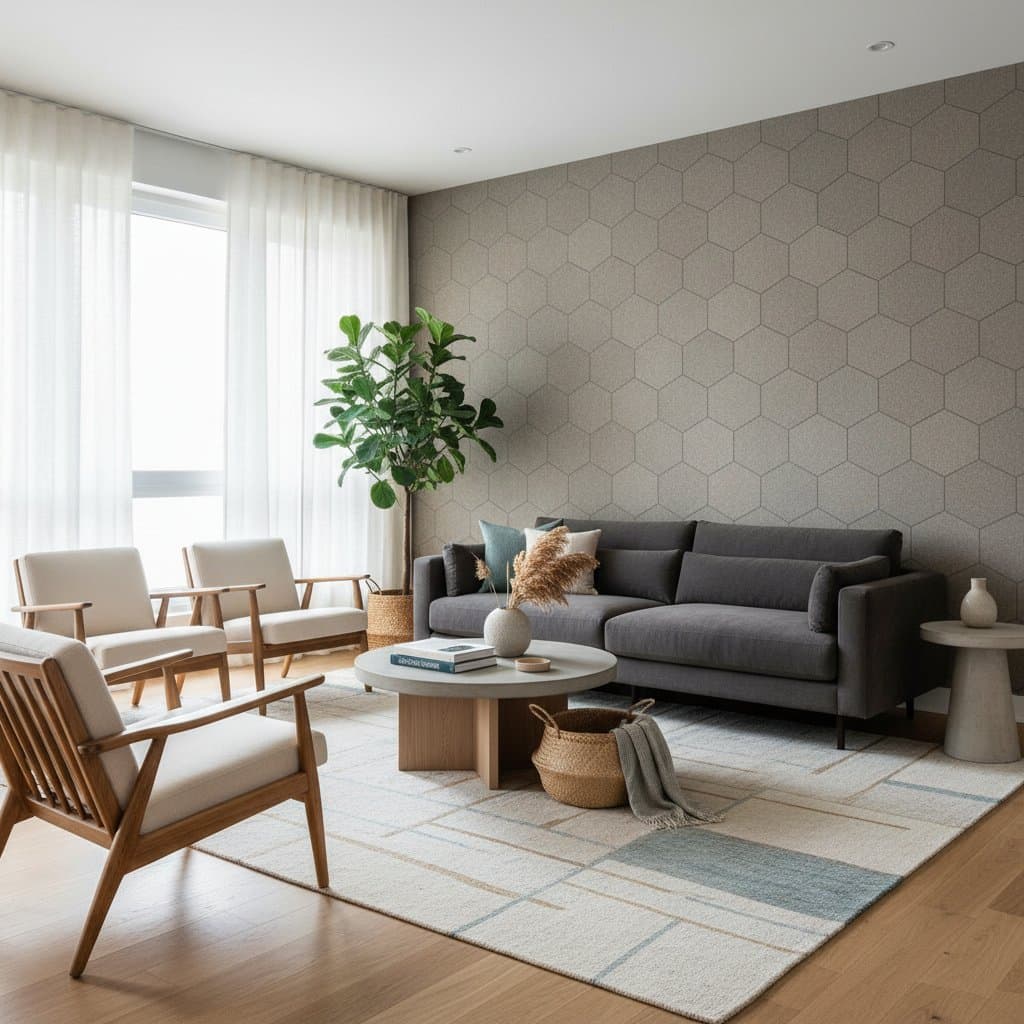
- Fabric-covered variants in materials such as linen, felt, or wool introduce tactile softness and depth. Select subdued shades for understated elegance or vibrant palettes to establish visual anchors.
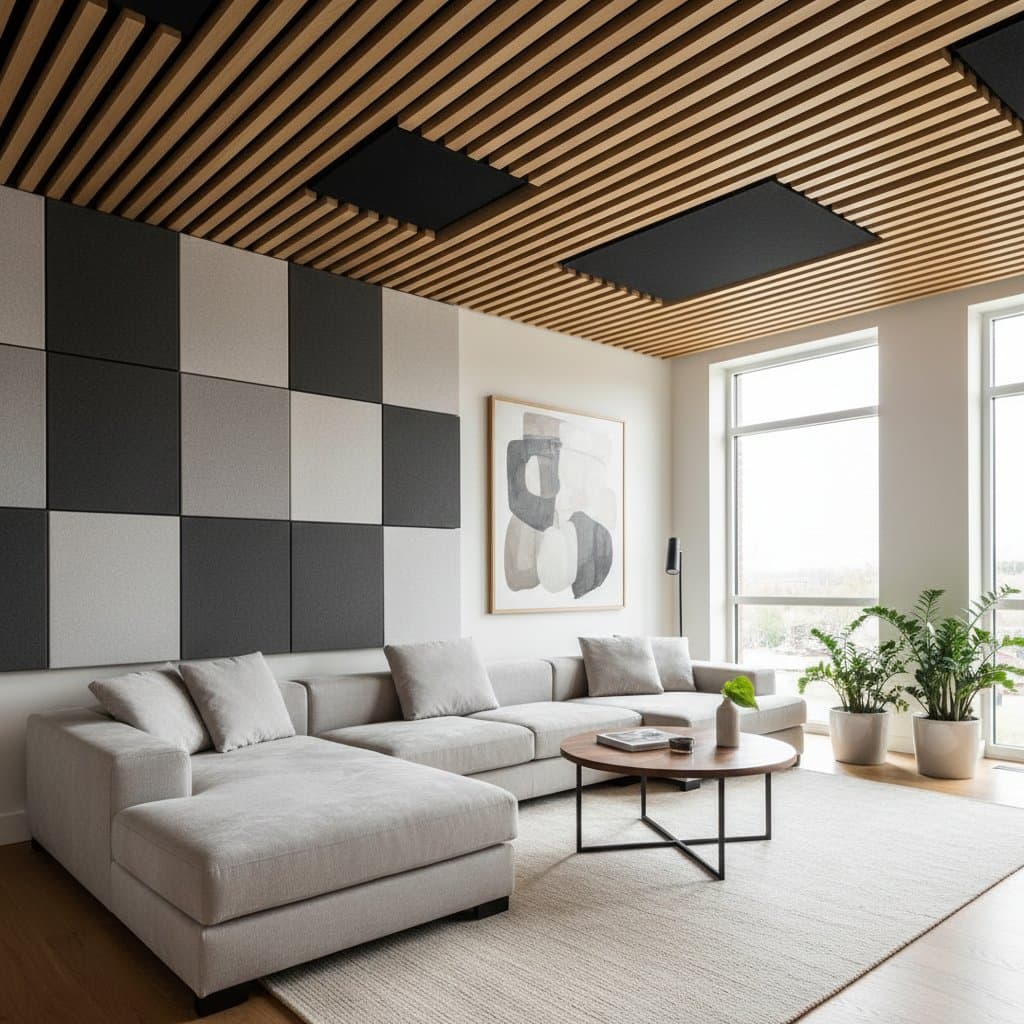
- Wood-veneered slat designs merge organic textures with noise mitigation. These elements introduce linear motifs that harmonize with cabinetry or floor treatments.
- Custom-printed surfaces enable incorporation of imagery or bespoke patterns, functioning dually as acoustic solutions and decorative accents. Such choices suit artistic environments or youth-oriented spaces.
- Overhead installations address vertical echo without altering perimeter aesthetics. Hanging diffusers or cloud formations prove effective in voluminous or undivided layouts.
View panels as multifaceted contributors. They emulate artwork, serve as upholstered backrests, or function as refined structural accents.
Simple Installation Steps
Contemporary panels facilitate straightforward setup using everyday implements. Follow this sequence:
- Evaluate the environment. Position yourself centrally and generate a sharp clap. Pronounced lingering resonance indicates overly reverberant conditions.
- Sketch the arrangement. Target initial applications on opposing walls. Partial implementation often delivers substantial benefits.
- Outline positions. Employ low-tack masking tape to preview configurations, ensuring alignment with furnishings and visual elements.
- Secure attachments. Utilize manufacturer-provided fixings or pressure-sensitive mounts, scaled to the product's mass.
- Verify acoustics. Post-installation, articulate phrases or broadcast subdued audio, observing shifts in spatial perception. Additional units may refine the outcome as required.
Allocate 10 to 20 minutes for fine-tuning. Minor repositioning influences auditory pathways significantly.
Blending Function and Aesthetics
Modern acoustic strategies emphasize discretion. Integrate sound absorption seamlessly to avoid clinical appearances. Explore these methods:
- Assemble a varied panel assortment into a gallery configuration, evoking contemporary curation.
- Encase units in molding that echoes built-in features for cohesive architecture.
- Position overhead elements over communal surfaces to facilitate fluid discourse.
- Install behind seating or sleeping areas to dampen reflections and add dimensional interest.
- Layer disparate materials, such as fibrous textiles and timber, for multifaceted sensory appeal.
These techniques infuse individuality while elevating usability.
Troubleshooting Common Challenges
Acoustic interventions occasionally present minor issues. Certain panels may subtly alter illumination, or dense groupings could impart a cushioned excess. Counter this by interspersing with pictorial displays or reflective surfaces.
For leased properties, prioritize non-invasive adhesives that preserve finishes. Portable dividers clad in absorptive textiles offer adaptability, segmenting areas while treating sound bidirectionally.
In constrained spaces like culinary zones, opt for upper or fixture-integrated solutions. Supplementary elements such as area rugs, drapery, and padded seating further attenuate transients. Incremental adjustments accumulate to yield refined results absent extensive alterations.
Creating a Quieter Routine
Post-implementation, heightened acoustic awareness emerges. Cultivate practices that amplify the established serenity.
- Adjust device outputs to complement the tempered environment.
- Maintain partial closures on portals to localize auditory zones.
- Incorporate plush accessories like bolsters or coverings to augment panel effects.
- Dedicate intervals to sensory immersion in the recalibrated setting, registering its influence.
Sound refinement prioritizes ease over dominance. It enables residences to accommodate both stillness and activity harmoniously.
Living with Your Design
Acoustic panels evolve beyond mechanical roles. They integrate into domestic cadence, influencing patterns of renewal, productivity, and interaction. As circumstances shift, expand or reconfigure installations accordingly.
This fusion of auditory and visual refinement constructs supportive habitats. The nuanced quietude of optimized interiors nurtures unhurried dawns, streamlined exchanges, and anchored closures.
Initiate modest acoustic enhancements to foster mindful occupancy. Such measures elevate dwellings to sanctuaries of genuine repose.