Acoustic Ceiling Treatments Blend Style and Sound Control
When a room sounds as good as it looks, every conversation becomes easier and every quiet moment feels deeper. Acoustic ceiling treatments shape how a space feels to live in. They soften noise and improve comfort in kitchens, home offices, and restaurants.
Acoustic ceilings once meant plain panels in offices. They now form part of a design approach that combines texture, tone, and comfort. The right treatment calms a room without removing its character.
At a Glance
Purpose: Reduce echo and control noise while enhancing visual warmth.
Best for: Open plan homes, offices, restaurants, studios, and entertainment rooms.
Common materials: Felt, wood slats, cork, acoustic plaster, mineral fiber, and recycled PET.
Design goal: Blend technical function with aesthetic comfort.
A Room That Looked Fine but Sounded Harsh
Consider a newly renovated loft with clean white walls, a gleaming concrete floor, and a high ceiling. The space appears beautiful until speech echoes sharply. Hard surfaces reflect sound waves instead of absorbing them. The result is reverb that causes fatigue during meals or movie nights.
A Ceiling That Listens
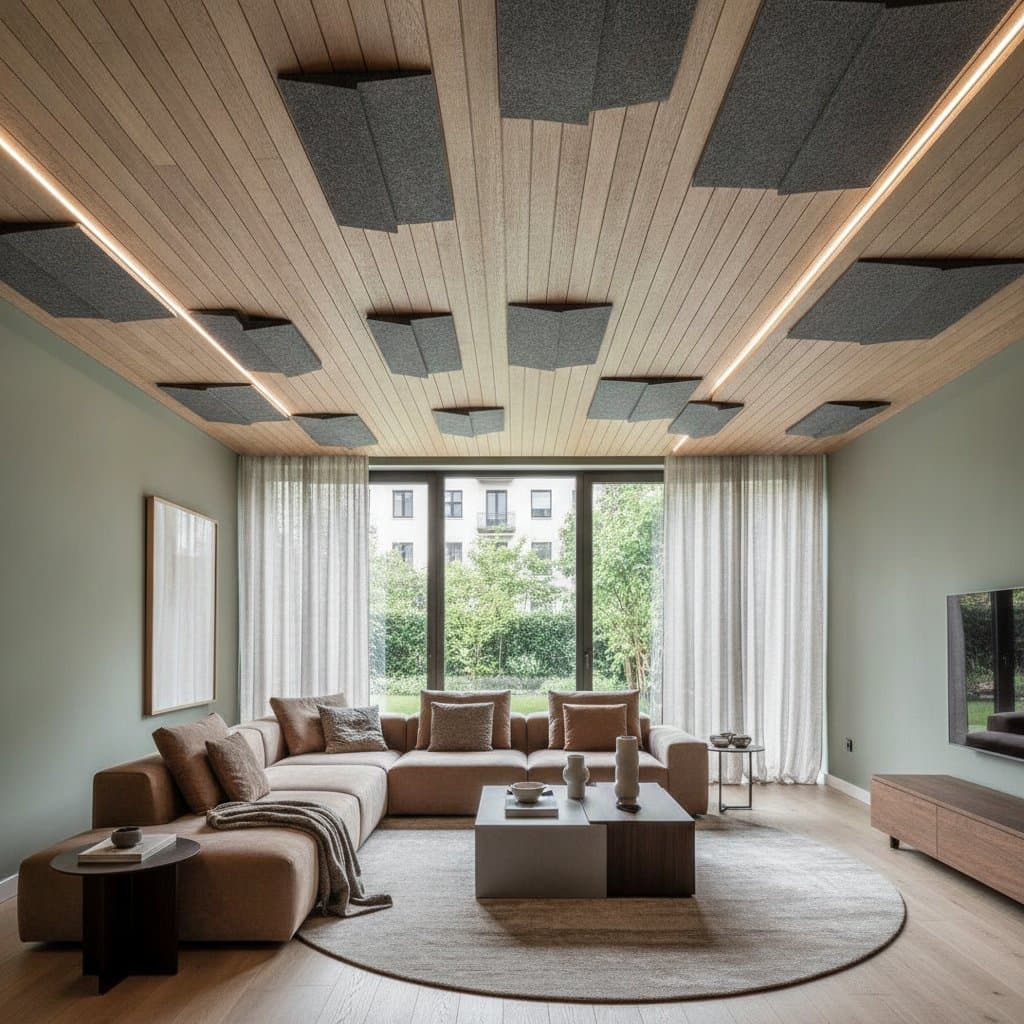
The same space changes with a ceiling that absorbs sound. Soft felt panels hang in geometric clusters and echo the tones of furniture below. Voices become clearer and music feels balanced. The room matches its visual calm and helps people relax.
Why the Ceiling Matters Most
Sound moves in all directions, yet the ceiling reflects a large share of it. Floors and furniture can receive rugs or upholstery, but the ceiling often stays a flat hard plane. Acoustic treatments absorb or diffuse sound based on the room goal. Absorption captures energy to prevent echo. Diffusion scatters sound so no area feels too loud or dead.
Design Details That Make the Difference
Material Choices
Each material shapes sound and appearance in distinct ways.
- Felt panels are soft and colorful. They suit creative studios or family spaces.
- Wood slats installed over acoustic backing add natural warmth. They fit dining rooms or offices that need elegance with quiet.
- Cork tiles offer sustainable tactile surfaces with organic patterns.
- Acoustic plaster creates seamless minimal surfaces for modern interiors.
- Recycled PET panels are lightweight and available in textured or sculptural forms.
A room with walnut slats feels grounded. A space with pale felt panels feels soft and open.
Color and Form
Designers use panels to add rhythm and color overhead. Clusters create sculptural interest while targeting reflective zones. Muted grays blend into the background. Deep blues or terracotta tones add drama. In restaurants color tuned panels zone areas without barriers. In homes they echo flooring or cabinetry palettes.
Lighting Integration
Recessed fixtures or suspended pendants integrate with acoustic panels. Some systems place LED strips within panel seams to create a floating halo. A felted ceiling with warm diffused lighting feels gentle. A slatted wood ceiling with concealed linear lights creates refined rhythm.
Installation Tricks
Placement matters as much as material. In open layouts target the central ceiling zone. In small offices place panels above desks. In living rooms mix ceiling panels with wall absorbers. Partial coverage yields noticeable results when positioned strategically.
Budget and Value
Options range from economical to premium.
- Adhesive felt tiles or lightweight PET panels allow homeowner installation.
- Modular suspension systems combine fabric panels with lighting.
- Custom millwork or seamless plaster systems suit high end projects.
Long term value appears in livability. Balanced spaces often require less additional decor to feel complete.
The Emotional Side of Quiet
Sound control changes how time passes in a room. Homes become less frantic in the morning and more intimate in the evening. Offices reduce fatigue and improve focus. Restaurants allow guests to converse without strain. Acoustic comfort works like visual comfort. It remains invisible yet deeply felt.
The Kitchen That Finally Stopped Echoing
A couple in North Carolina added acoustic baffles shaped like narrow sails above their kitchen island. Recycled felt panels in an oatmeal tone matched the oak cabinetry. Dish clatter no longer echoed through the living area. Guests notice the comfort without identifying the cause.
Style Meets Substance
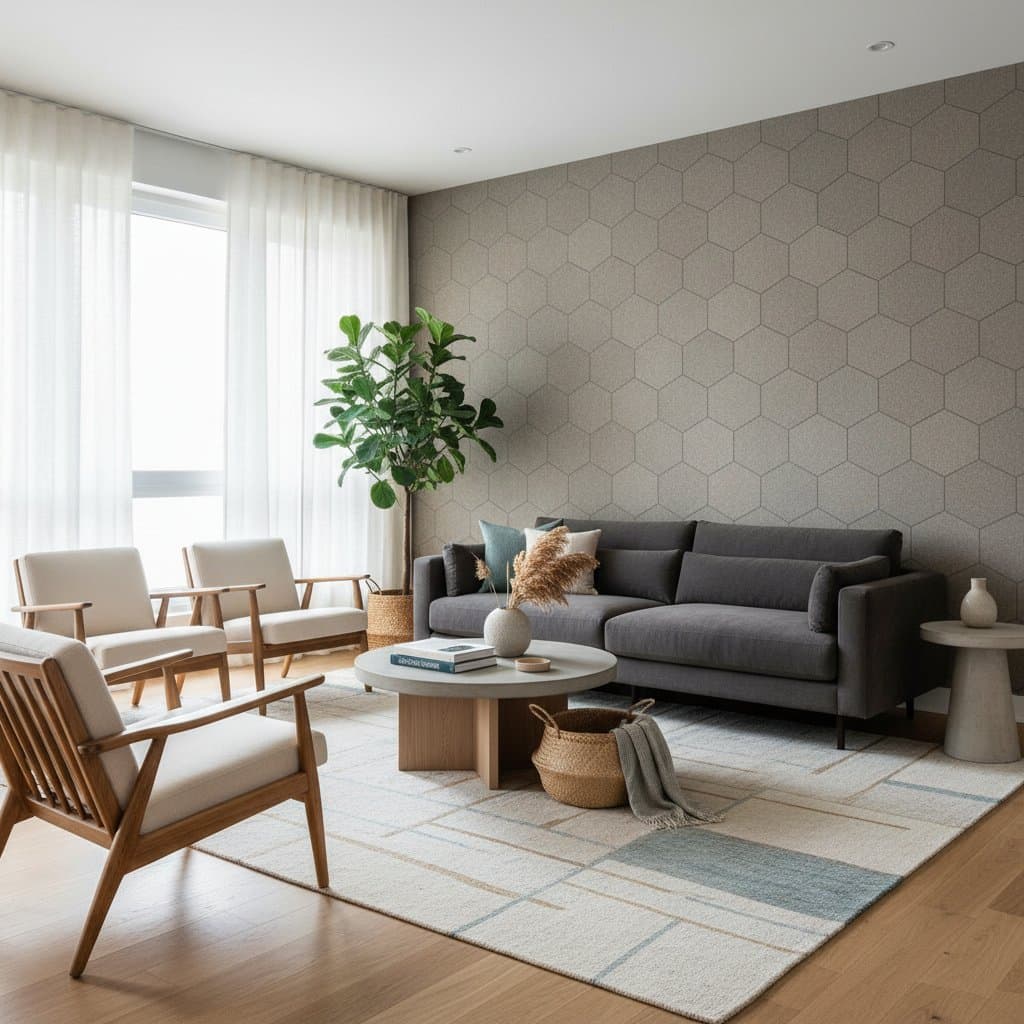
Designers treat acoustic ceilings as sculptural opportunities. Hexagonal panels form honeycomb patterns. Curved baffles add subtle movement. Layered planes at varied heights create depth and improve absorption. Minimalist interiors benefit from acoustic plaster that manages sound without visual distraction.
Sustainable Sound Control
Many products use recycled or renewable materials. PET panels come from plastic bottles. Cork regenerates naturally. Some felt uses wool blends or low emission binders. These choices add environmental value alongside acoustic performance.
How to Choose the Right Acoustic Ceiling
Step 1: Identify the noise problem. Determine whether the space echoes or transmits sound between rooms. Echo requires absorption. Transmission needs insulation above the ceiling plane.
Step 2: Decide on the look. Choose whether the ceiling should disappear or serve as a visual feature. Seamless plaster suits minimalist homes. Visible panels add pattern.
Step 3: Balance coverage and budget. Full coverage provides maximum control. Strategic placement often achieves similar results at lower cost.
Step 4: Plan lighting early. Coordinate fixtures and panels with electricians or designers.
Living with Your Design
Acoustic ceilings require only vacuuming or light dusting. Notice how conversations flow more easily and background noise fades. Some homeowners simplify decor once acoustics improve. Texture and light then take center stage. A ceiling that looks good and listens well supports daily activities without distraction.
Quick Takeaways
- Acoustic ceilings serve both decorative and functional roles.
- Materials such as felt, wood, cork, and acoustic plaster absorb or diffuse sound.
- Treatments range from subtle to bold and from minimal to sculptural.
- Proper planning aligns sound control with lighting and style.
- Sustainable materials provide environmental benefits and tactile warmth.
Planning Your Next Steps
Include acoustics early in any remodel or new build. Integration of panels and wiring occurs more easily before paint application. Walk through the space and note where sound lingers. Consider how overhead texture could soften or redirect it. Acoustic ceiling treatments now form part of modern interior character. They blend comfort with visual rhythm and produce rooms that sound as beautiful as they look.