How Acoustic Ceilings Merge Style and Sound Control
A quiet environment promotes comfort and focus in any setting, from residential living areas to professional offices and bustling restaurants. Sound dynamics within a space depend on surface interactions: hard materials reflect noise, while softer ones absorb it. Ceilings, frequently underappreciated, offer substantial opportunities to regulate this equilibrium. Modern acoustic ceilings have advanced beyond basic panels to become integral design features that incorporate varied textures, shapes, and lighting alongside robust sound management.
This piece examines how architects, interior designers, and homeowners incorporate acoustic ceiling systems to foster serene interiors without compromising visual appeal. Solutions range from bespoke wooden slats to refined mineral fiber tiles, harmonizing structural integrity with everyday usability in sophisticated ways.
At a Glance
Primary Beneficiaries: Homeowners, office professionals, restaurant operators, and educators aiming for reduced ambient noise.
Common Applications: Residential living rooms, home theaters, conference rooms, open-plan workspaces, educational classrooms, and hospitality venues.
Standard Dimensions: Individual panels typically measure 2 by 2 feet (60 by 60 centimeters), while linear planks extend to 8 feet (2.4 meters) in length.
Key Contributors: Architects, acoustic engineers, interior specialists, and producers of specialized sound-absorbing materials.
The Rise of Acoustic Design Ceilings
Contemporary acoustic ceilings utilize diverse materials such as perforated gypsum boards, wood-veneered surfaces, fabric-encased panels, and mineral fiber composites. These options range from minimalist profiles to bold, sculpted forms suited to specific contexts. Effective installations position the ceiling as a dual-purpose element, serving both acoustic functionality and aesthetic enhancement.
Consider a Lisbon townhouse renovation where architects fitted slender oak slats beneath existing structural beams. With gaps of approximately half an inch (1.3 centimeters) between slats, sound waves penetrate to an underlying absorptive backing. This configuration delivers the warmth of a traditional wooden overhead while effectively mitigating auditory disturbances.
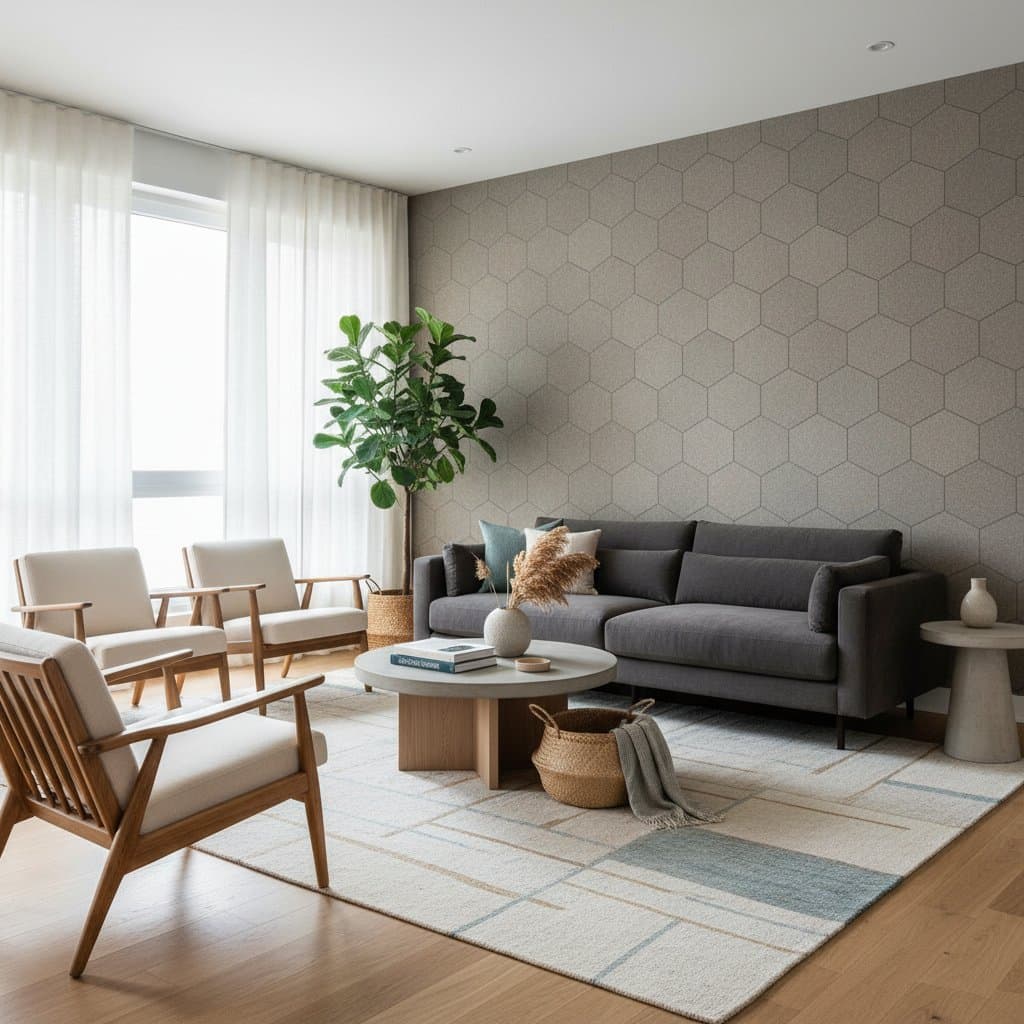
In a collaborative office environment, oversized hexagonal felt panels in muted gray hues hover over communal workstations via slender cables. This arrangement forms a patterned overhead layer that dampens distractions from conversations and typing. The material's dense fibers excel at capturing mid-frequency sounds, particularly those in the human vocal range.
Such installations establish a cohesive design motif. They introduce patterned repetition, tactile interest, and spatial depth, all while managing echo levels to support clearer communication.
The Science Behind the Calm
Acoustic efficacy relies on the Noise Reduction Coefficient (NRC), a scale from 0 to 1 indicating sound absorption capacity. Conventional drywall ceilings achieve an NRC around 0.05, absorbing just 5 percent of incident sound energy. Premium acoustic panels, however, attain NRC values of 0.8 or above, capturing up to 80 percent.
Acoustic consultant Priya Bhatia notes that optimal outcomes arise from material combinations. Ceilings prove most effective against mid- and high-frequency sounds. Pairing them with upholstered furniture or wall treatments achieves spectrum-wide balance. Bhatia observes that targeted applications, even covering limited ceiling areas, significantly lessen reverberation in smaller enclosures.
Beyond noise reduction, these systems boost speech clarity. Educational settings benefit as learners discern directives with ease. In shared workspaces, diminished auditory overlap alleviates cognitive strain. This auditory improvement fosters a more relaxed atmosphere, positively affecting occupant mood and interactions.
Integrating Functionality into Acoustic Ceilings
Although ceilings rarely serve as primary storage, acoustic designs adeptly hide building services. Professionals frequently embed HVAC diffusers, audio components, and cabling into panel frameworks for seamless integration.
-
Concealed Maintenance Access: Hinged sections allow servicing without disrupting the overall pattern.
-
Embedded Audio Solutions: Speakers positioned flush behind perforated surfaces distribute sound uniformly.
-
Wiring Pathways: Recessed tracks in support systems accommodate electrical and network lines.
This strategy unites practicality with visual harmony. By centralizing technical elements overhead, walls stay free of obstructions, enabling greater flexibility in layout and decor.
Practical Ways to Implement Acoustic Ceilings at Home
1. Begin with Targeted Coverage
Install panels over high-activity zones like dining areas or seating groups. Partial treatment alone can substantially quiet echo-prone sections.
2. Layer Diverse Materials
Pair rigid wood elements with softer fabric components to address varied sound frequencies. This blend enhances both performance and multilayered visual appeal.
3. Select Tones for Impact
Opt for panels matching the existing ceiling color to blend subtly. Alternatively, introduce bolder contrasts to delineate functional areas below.
4. Incorporate Illumination
Combine absorptive panels with recessed LED strips for balanced lighting. Such multifunctionality optimizes space and energy use.
5. Engage Specialists Early
Consult an acoustic expert to assess room reverberation and suggest coverage extents. Customized guidance aligns results with specific needs.
Experiencing the Benefits of Acoustic Ceilings
Following installation, an acoustic ceiling subtly reshapes room dynamics. Discussions flow more naturally, ambient sounds recede, and routines proceed with greater tranquility. The overhead plane evolves from mere structure to an active contributor to serene living.
Homeowner Elena Duarte, after outfitting her living room with these panels, captures the shift succinctly: The room feels restful now. Music sounds clearer, and we can talk without raising our voices.
This understated refinement marks the pinnacle of acoustic innovation. Through the fusion of engineering precision and material artistry, such ceilings instill equilibrium in contemporary environments.