Connect to Nature Through Grounding Bedroom Floors
Wellness often involves routines like morning exercises, dedicated meditation spaces, or nutritious diets. Yet the floor underfoot plays a vital role in achieving a sense of grounding, both physical and emotional. In the bedroom, where restoration occurs, selecting flooring that promotes calm, warmth, and an earth connection proves essential.
This approach transcends fleeting trends. Materials, tones, and textures influence sleep quality, daily mood, and energy flow within the space. Grounding bedroom floors represent a deliberate design decision and a broader lifestyle adjustment, fostering a mindful link between the home and surrounding natural elements.
From Disconnected to Harmonious: A Common Transformation
Numerous bedrooms feature flooring that appears adequate yet lacks vitality. Synthetic carpets accumulate allergens, while laminate imitations of wood fail to provide genuine warmth. Such choices often result in spaces that feel isolated from the outdoors.
A homeowner once characterized her previous bedroom as quiet yet devoid of peace. The cool gray laminate absorbed rather than enhanced light, turning mornings into rushed obligations instead of serene beginnings. Her remedy started with the floor, introducing elements that invited tranquility.
Essential Qualities of Grounding Floors
Grounding in interior design addresses both tactile and psychological needs. It links the body to authentic materials and the mind to stability. Effective grounding floors incorporate these key attributes:
- Natural composition: Authentic wood, stone, cork, or clay tiles offer organic textures unmatched by synthetics.
- Matte or subtle sheen finishes: These options diffuse light gently, minimizing glare and enhancing depth.
- Apparent texture: Grain patterns, knots, or color variations evoke the material's inherent story.
- Inherent warmth: Thermal qualities in wood and cork, or added radiant heating, ensure foot comfort.
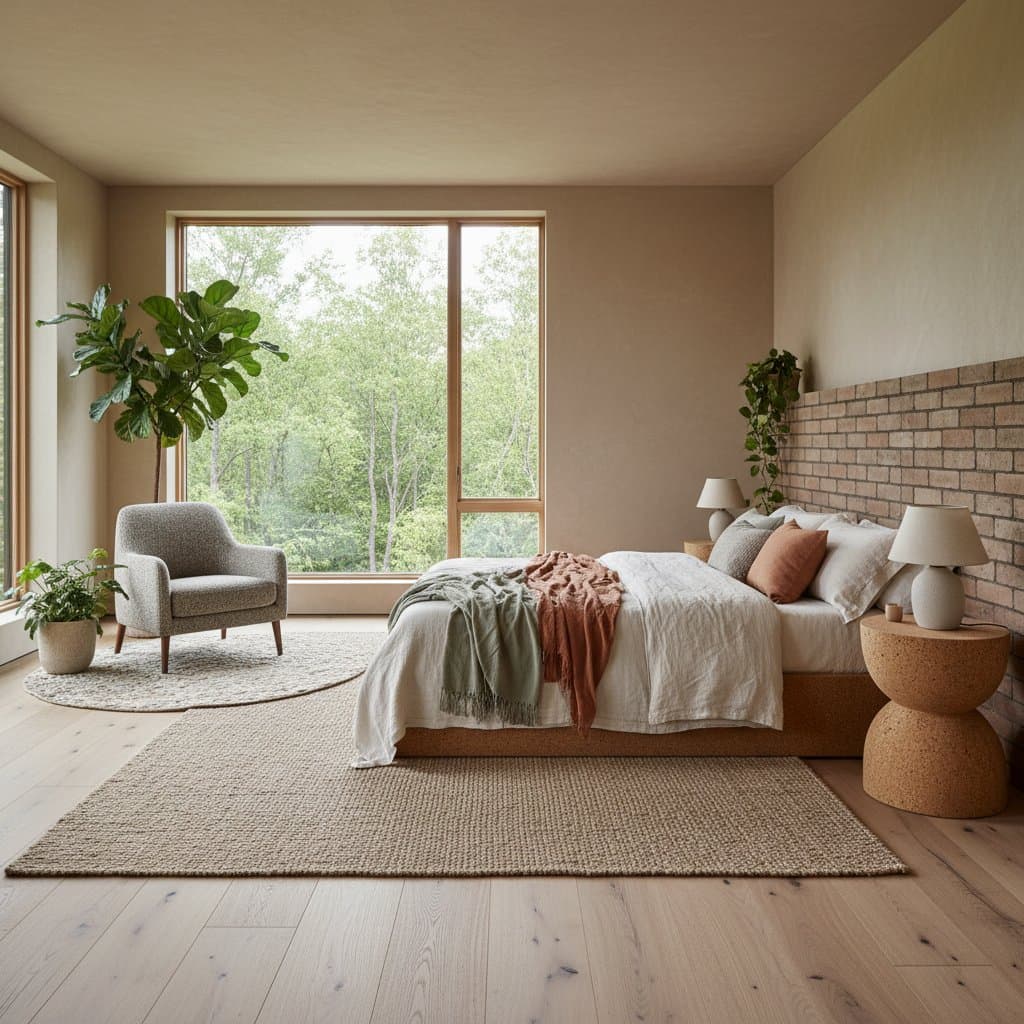
- Earth-inspired colors: Hues reminiscent of soil, sand, and tree bark establish a visual tie to the environment.
These features shape the room's atmosphere without overwhelming it. A grounding floor anchors the design, supporting layered elements above.
The Wellness Benefits of Natural Flooring
Incorporating natural materials into living spaces yields tangible improvements. Humanity's bond with the earth runs deep; barefoot contact with organic surfaces reduces stress and eases muscle tension. Even without direct outdoor earthing practices, the presence of natural flooring provides psychological restoration.
Wood's grain echoes nature's patterns, stone and clay offer earth's steady coolness, and cork delivers a yielding softness that invites ease. These properties align the body with natural cadences, mitigating insomnia and promoting profound rest.
Natural flooring also interacts uniquely with light. Dawn rays on oak or limestone appear vibrant and organic, unlike harsh reflections on artificial surfaces. Gentle shadows evolve throughout the day, fostering a rhythmic awareness that nurtures presence and serenity.
Accessible Options for Every Budget
Natural hardwood or stone may exceed current means, yet grounding effects remain attainable. Explore these practical alternatives:
- Matte-finish luxury vinyl planks: Select designs replicating authentic grain, steering clear of repetitive patterns for realism.
- Engineered bamboo flooring: This sustainable, cost-effective material delivers wood-like warmth and durability.
- Painted concrete subfloors: Prepare the surface by sanding, then apply low-VOC, permeable paint in warm earth tones. Complement with wool area rugs for added cushion.
- Layered natural rugs: Anchor with a broad jute rug, topped by a wool or cotton layer to introduce texture and hue without permanent changes.
Such strategies preserve the soothing essence of grounding aesthetics, bypassing extensive renovations.
Daily Life with Grounding Flooring
After installation, grounding floors alter routines subtly yet profoundly. Mornings unfold more deliberately, often with barefoot steps savoring texture and temperature. Evenings benefit similarly; the transition to natural surfaces signals the body to unwind.
Care routines evolve into intentional practices. Prompt spill cleanup, occasional natural oil applications, or gentle sweeping sustain the material's vitality. These actions reinforce the ongoing dialogue between inhabitant and environment.
A homeowner recounted savoring morning coffee near the window, oak planks warm beneath her feet as sunlight traversed the room. "It is a minor detail," she noted, "yet it affirms that my home integrates with nature, rather than standing separate."
Key Principles for Implementation
- Select natural, textured materials such as wood, stone, cork, or clay tiles.
- Opt for matte or low-sheen finishes to build visual richness.
- Employ earth-toned palettes for unified tranquility.
- Integrate natural fabrics and diffused lighting to harmonize the space.
These guidelines cultivate presence and rootedness within the home.
Embracing Elemental Design in Your Bedroom
Grounding flooring extends beyond aesthetics; it revives fundamental ties. A living floor beneath transforms rest, awakening, and home interaction. Prioritize authenticity over flawlessness, allowing materials to converse with emotions.
During renovations, focus on frequent contact points. Evaluate textures through touch, beyond mere visuals. This process crafts a personal haven of equilibrium and rejuvenation, where daily steps reaffirm foundational support.