Soundproof Stylishly with Acoustic Ceiling Panels
Consider the frustration of settling into a quiet evening, only to be disrupted by echoing footsteps from upstairs or muffled voices from adjacent rooms. Such persistent noise erodes the tranquility essential for relaxation and focus. Acoustic ceiling panels offer an effective solution that combines superior sound absorption with refined aesthetics, transforming ordinary spaces into havens of calm without the need for invasive renovations.
These panels integrate seamlessly into ceilings, addressing reverberation at its source while enhancing visual appeal. Selecting the appropriate type involves evaluating room size, existing decor, and specific acoustic needs. The following sections detail key options, installation considerations, and practical benefits to guide informed choices.
Key Types of Acoustic Ceiling Panels
Acoustic ceiling panels vary in material, design, and application, allowing customization to suit diverse environments. Each type targets sound waves differently, ensuring optimal performance alongside stylistic harmony.
Fabric-Wrapped Panels
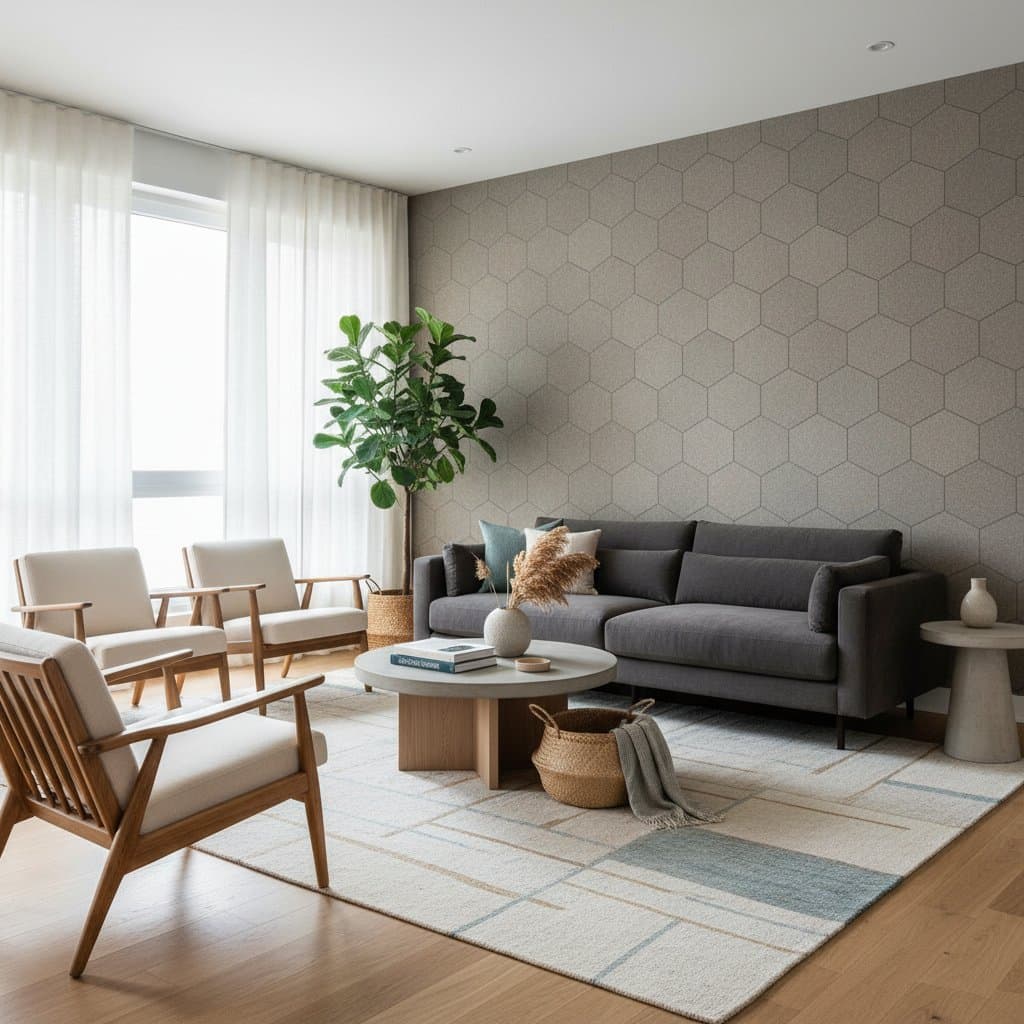
Fabric-wrapped panels feature a core of sound-absorbing material encased in acoustically transparent fabric. This design captures mid-to-high frequency sounds, reducing echo by up to 80 percent in treated areas. Opt for broadloom fabrics in earth tones to blend with minimalist interiors, or vibrant weaves to accentuate focal points.
Installation requires measuring ceiling dimensions precisely and securing panels with adhesive clips or suspension wires, a process that typically takes two to four hours for a standard room. In residential settings, these panels excel in media rooms or open kitchens, where they soften dialogue and appliance hum without altering airflow.
Wood Slat Designs
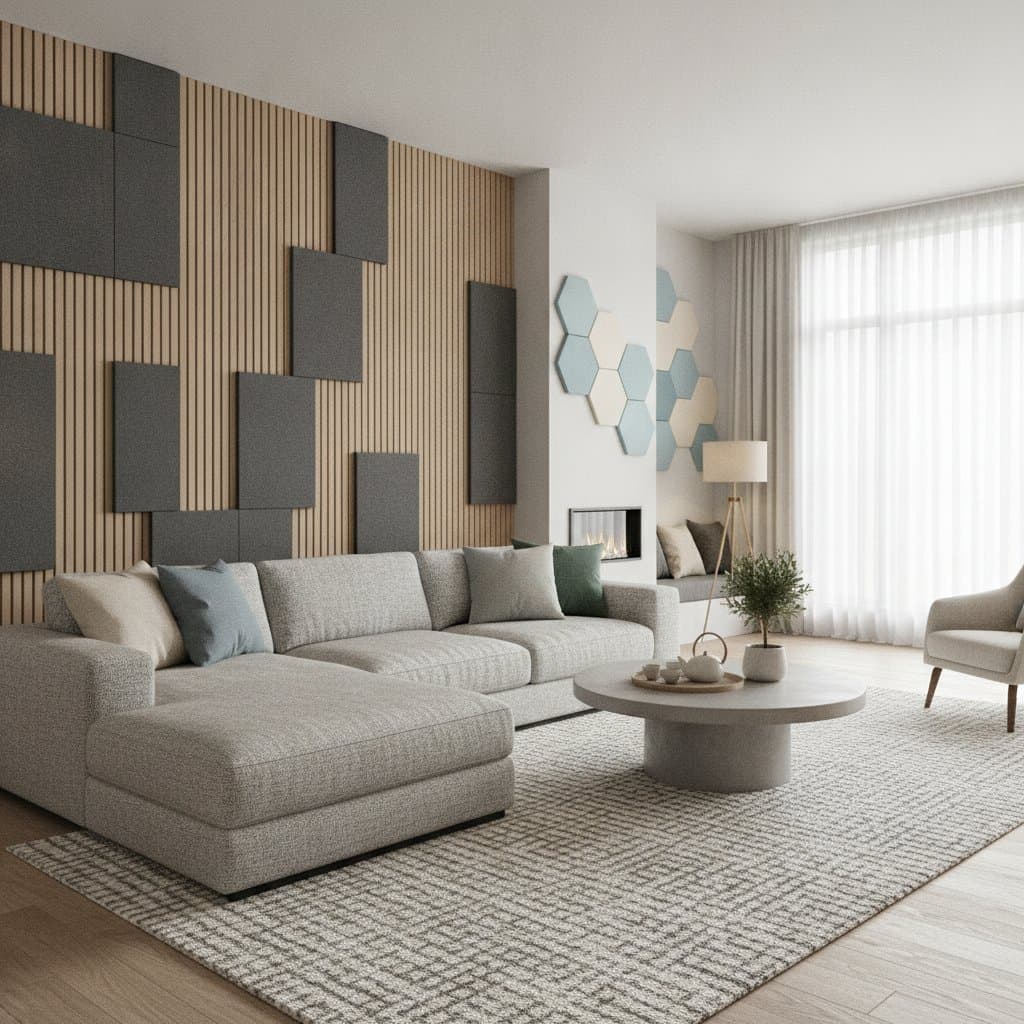
Wood slat acoustic panels consist of wooden battens spaced over a fiberglass or foam backing, diffusing sound through geometric patterns. The slats scatter reflections while the substrate absorbs energy, achieving noise reduction coefficients of 0.7 or higher. Select sustainably sourced hardwoods like oak for durability and a natural grain that complements rustic or contemporary schemes.
Mount these panels using hidden brackets to maintain a flush appearance, ensuring even spacing for uniform performance. They prove ideal for dining areas or home offices, where the tactile warmth of wood fosters a grounded atmosphere amid reduced ambient noise.
Suspended Clouds
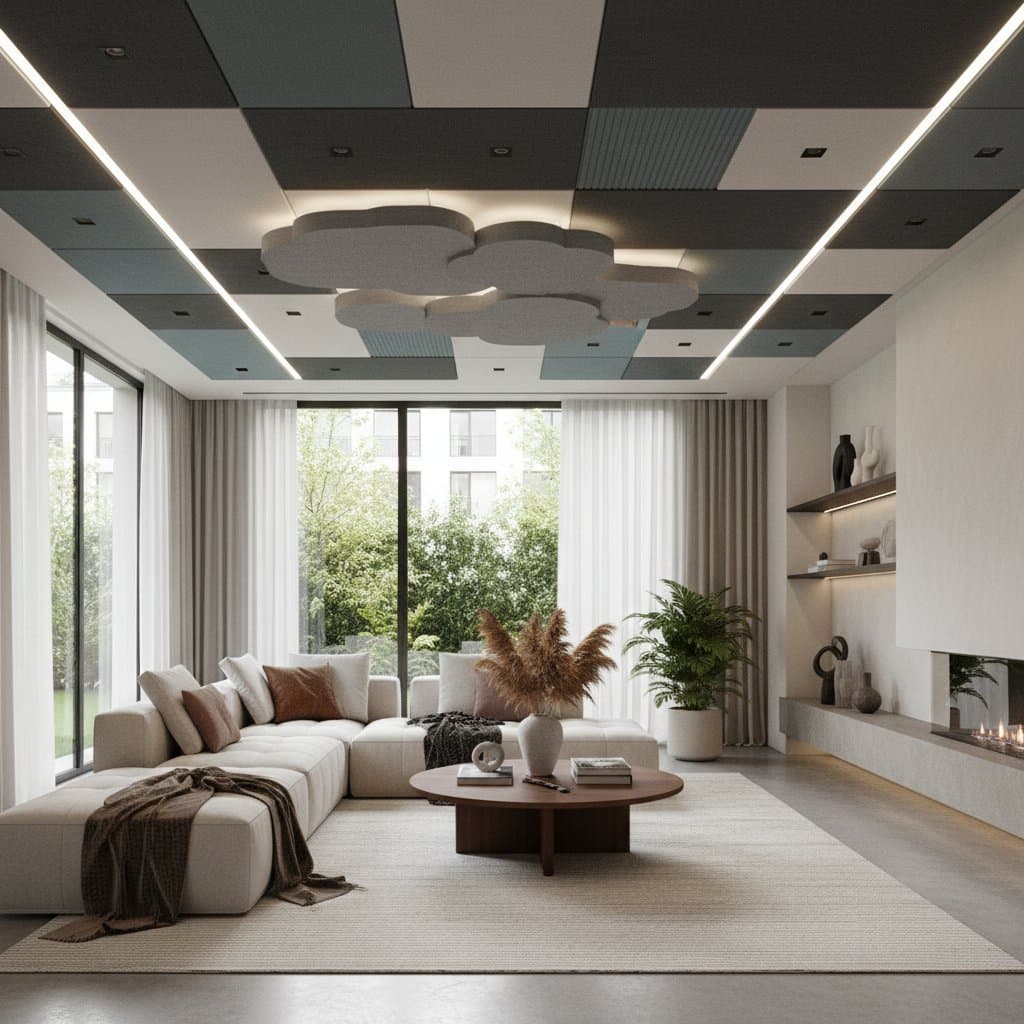
Suspended acoustic clouds float from cables or rods, introducing vertical dimension to ceiling treatments. Composed of lightweight fiberglass cores wrapped in fabric or veneer, they intercept sound from multiple angles, particularly effective in rooms exceeding 200 square feet. Customize shapes from simple rectangles to organic forms to echo architectural motifs.
Professional installation involves anchoring support points to structural beams, followed by level adjustments for a balanced hover. In loft-style living areas or commercial lobbies, these elements mitigate sound buildup in high-ceilinged volumes, creating zones of focused quiet.
Perforated Metal Panels
Perforated metal panels employ sheets with precise micro-perforations over an absorptive layer, allowing sound to penetrate and dissipate. This construction yields high durability and a noise reduction coefficient above 0.85, suitable for humid or high-traffic zones. Choose finishes like brushed aluminum for a modern edge or powder-coated colors to match industrial palettes.
Attach via direct ceiling clips or magnetic systems for straightforward removal during cleaning. In kitchens or studios, they withstand splatters while controlling clatter from utensils or machinery, blending functionality with sleek lines.
Printed Acoustic Art
Printed acoustic art panels merge sound control with visual storytelling, printing high-resolution images or patterns onto absorptive substrates. The ink-infused surface maintains acoustic integrity, absorbing frequencies from 125 Hz to 4 kHz. Tailor designs from abstract geometrics to scenic landscapes to personalize the space.
Apply using standard mounting hardware, positioning panels strategically to avoid shadows from lighting. These serve as conversation starters in guest rooms or creative nooks, where aesthetic impact subtly enhances auditory comfort.
Installation and Maintenance Essentials
Proper installation maximizes acoustic efficacy and longevity. Begin by assessing the ceiling's load-bearing capacity and selecting panels rated for the intended environment, such as moisture-resistant options for bathrooms. Tools needed include a level, measuring tape, and safety harness for elevated work; consult local codes for compliance.
For DIY projects, start in room corners and work outward, sealing edges with acoustic caulk to prevent sound leakage. Maintenance involves gentle vacuuming or wiping with a microfiber cloth, avoiding harsh chemicals that could degrade materials. Regular checks ensure sustained performance, typically lasting 10 to 15 years with care.
Tangible Advantages of Acoustic Integration
Implementing acoustic ceiling panels yields measurable improvements in daily comfort. Sound clarity enhances communication, reducing strain during prolonged interactions. In creative pursuits, diminished distractions allow deeper concentration, boosting productivity by up to 20 percent according to environmental studies.
Beyond functionality, these panels elevate property value through sophisticated design. Homeowners report greater satisfaction in treated spaces, where reduced fatigue from noise promotes better sleep and mood. The investment, often under $10 per square foot, delivers enduring returns in well-being and appeal.
Integrating Acoustics into Everyday Spaces
Acoustic ceiling panels transcend mere utility, becoming integral to cohesive interior narratives. By aligning selections with room functions and styles, spaces achieve balanced serenity. This approach not only quiets environments but also refines the sensory experience, fostering harmony between form and function.