Acoustic Ceiling Clouds for Luxurious Noise Reduction
Stepping into a living room after a long day can bring an unwelcome surprise when sharp echoes bounce off walls and hard surfaces. Footsteps, conversations, and everyday sounds create a restless atmosphere that undermines comfort. Acoustic ceiling clouds provide an elegant solution that combines visual appeal with effective sound management to create serene interiors.
Why Noise Control Matters in Modern Interiors
Open floor plans and high ceilings paired with hard finishes allow sound waves to reflect repeatedly. This amplification produces environments that feel chaotic rather than inviting. Acoustic ceiling clouds address the issue by capturing sound before it reverberates, resulting in clearer conversations and a more refined atmosphere.
These suspended panels work in homes, offices, restaurants, and hotel lobbies where comfort depends on balanced acoustics. Proper treatment turns potentially overwhelming spaces into places that support relaxation and focus.
The Appeal of Ceiling Clouds
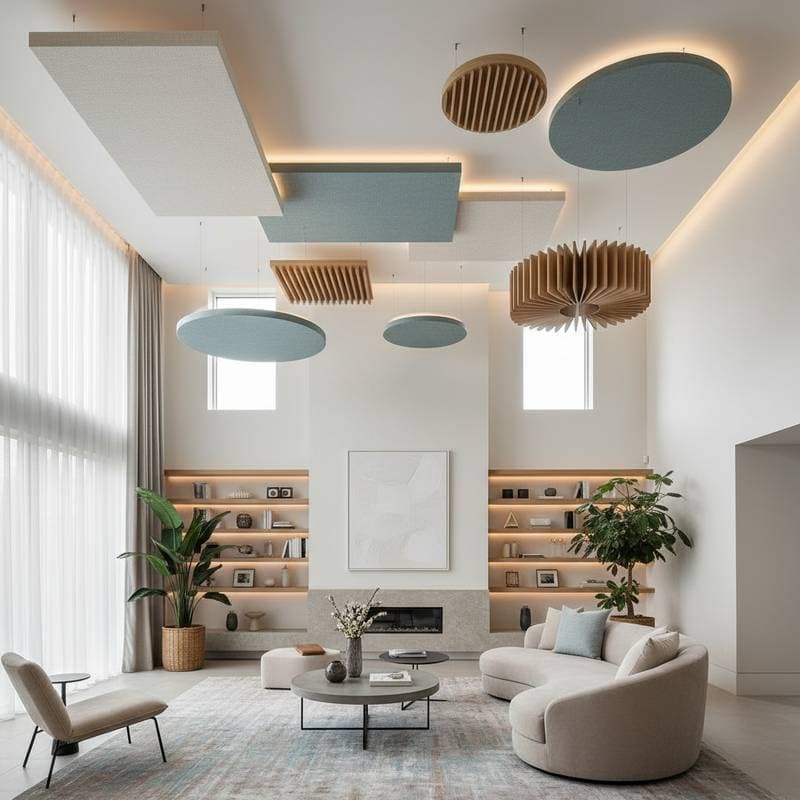
Ceiling clouds deliver both performance and design impact. They hang below the ceiling plane to add depth while absorbing excess sound. Shapes range from simple rectangles that emphasize clean lines to circular forms that soften the overhead plane.
The transformation extends beyond reduced volume. A dining area becomes more intimate, and a conference room gains speech clarity. Material and finish selections allow the panels to integrate with existing styles or serve as focal points.
Types of Acoustic Ceiling Clouds
Several categories address different aesthetic and performance needs.
- Fabric-wrapped panels use a fiberglass or foam core covered in acoustically transparent fabric. They offer lightweight construction and extensive color options.
- Wood-finish versions combine acoustic cores with real wood veneers for warm, textured appearances suitable for upscale residences.
- Felt and wool options appeal to projects seeking natural materials that provide effective absorption along with tactile softness.
- Custom-sculpted designs enable organic shapes or layered configurations that function as architectural statements.
How They Work
Sound waves reflect off hard surfaces and create reverberation. Suspended clouds introduce air gaps that increase absorption efficiency. Panel materials convert sound energy into minimal heat, reducing echo and improving overall room acoustics.
Steps to Plan Your Installation
- Assess the space by identifying areas with the strongest echoes, such as kitchens or rooms with high ceilings.
- Define design goals to determine whether the clouds should blend subtly or create a dramatic feature.
- Calculate required coverage based on room volume and desired noise reduction level.
- Consult an acoustic specialist for precise panel quantity and placement recommendations.
- Select finishes and mounting hardware that align with the interior palette and preferred suspension style.
Practical Considerations
Residential projects typically range from several hundred dollars for standard panels to several thousand for custom work. Commercial installations scale according to square footage and complexity. Standard lead times run a few days after material arrival, while custom elements may extend fabrication schedules.
Most residential applications do not require permits, yet local codes should always be verified. Commercial projects must meet fire safety standards and use approved suspension systems. Maintenance involves routine dusting or vacuuming, with fabric surfaces replaceable if needed.
Design Integration Tips
- Combine varied shapes and sizes to build visual depth.
- Choose neutral tones for seamless integration or bolder colors for artistic emphasis.
- Incorporate LED uplighting above the panels to enhance the floating effect.
- Select moisture-resistant materials in humid climates.
Finding Qualified Local Installers
Simple layouts may suit experienced homeowners, yet complex designs benefit from professional installation. Local contractors familiar with acoustic systems ensure secure mounting and balanced performance. Contractor matching services connect property owners with screened professionals who hold proper licensing and insurance.
Achieving a Balanced Sound Environment
A completed acoustic ceiling cloud installation supports clearer speech, richer audio playback, and restorative quiet. The improvement affects both measurable acoustics and the overall sense of comfort within the space. Thoughtful selection of materials and placement delivers lasting value across residential and commercial settings.