Grounding Floors for Bedroom Wellness
Creating a restful bedroom typically involves selecting soothing colors, appropriate window coverings, or a supportive mattress. The flooring beneath serves an equally vital role. Grounding floors, achieved via natural materials, earthing mechanisms, or sensory textures, foster a calming connection between the body and surroundings. Interior designers increasingly recognize how these choices shape well-being, emotions, and sleep patterns.
At a Glance
Focus: Bedroom flooring that promotes grounding and health benefits
Design Intent: Sensory comfort, links to nature, and harmonious energy
Best For: Environments prioritizing rest and rejuvenation
Common Materials: Wood, cork, natural fiber carpets, conductive tiles, grounding mats
Design Teams Leading the Trend: Wellness-focused interior designers and experts in sustainable flooring
The Importance of Flooring in Sleep
Grounding, also known as earthing, involves direct or energetic contact with the earth. In bedroom settings, this translates to selecting materials that provide a natural sensation, maintain comfortable temperatures, and aid restorative sleep. Interior designer Claire Morrison states, "The floor represents the initial contact each morning and the final touch at night. It shapes feelings of stability and ease within the room."
Durable options like tile or vinyl offer longevity yet often convey a sense of detachment or chill. In contrast, natural wood, cork, or wool rugs bring warmth and an organic sensory tie. This bond extends beyond the physical to evoke emotional tranquility. Such surfaces mimic elements found outdoors, signaling the body to unwind and prepare for rest.
Beyond immediate feel, flooring impacts physiological responses. Studies in environmental psychology suggest that natural textures lower stress hormones, facilitating deeper sleep cycles. For instance, barefoot contact with wood in the evening can mimic forest walks, aligning circadian rhythms with natural patterns.
Selecting Materials for Health Benefits
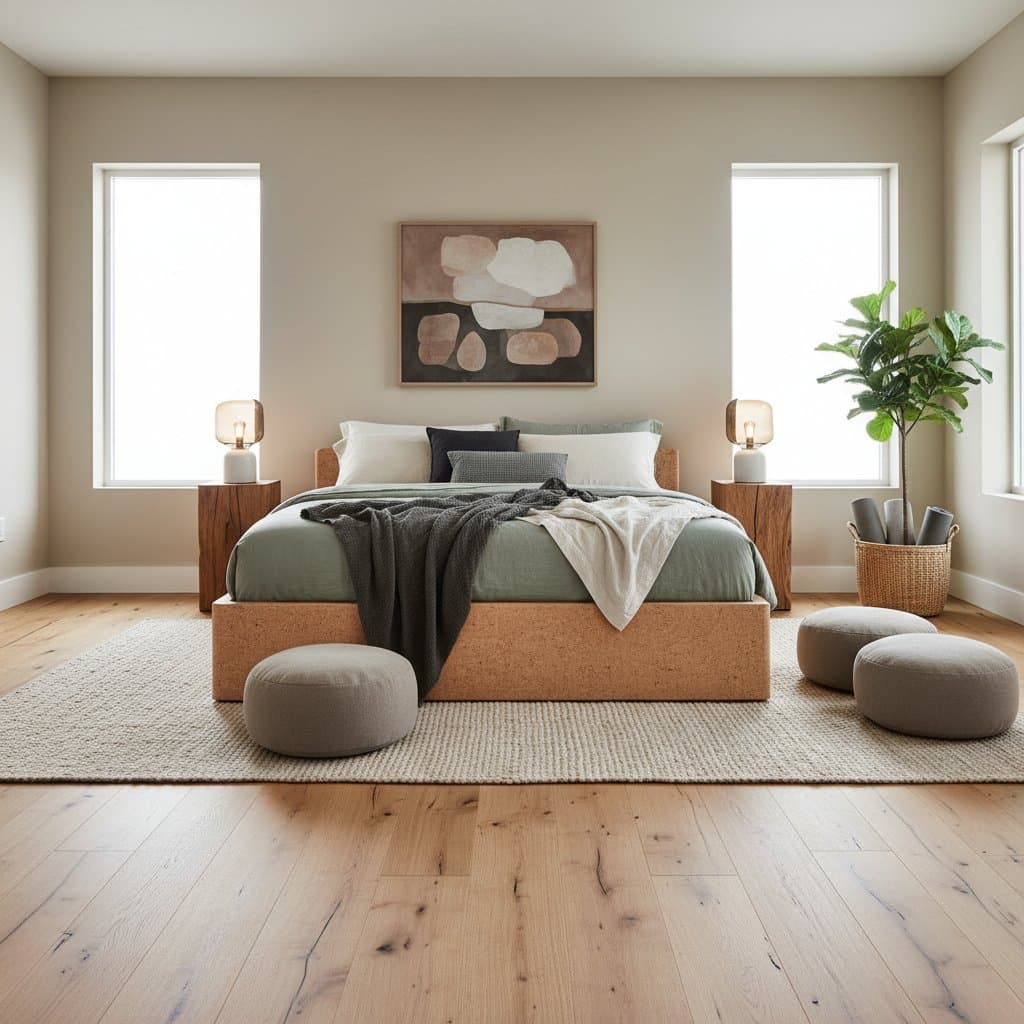
Wood: Opt for wide-plank varieties in oak or maple, finished with low-volatile organic compound sealants for enduring warmth and organic patterns. Pairing with a natural fiber underlay adds subtle resilience, promoting blood flow during barefoot routines.
Cork: This renewable resource resists microbes and delivers inherent cushioning, dampening noise while providing a responsive step. Even without additional coverings, cork maintains a soft, inviting surface that adapts to body temperature.
Natural Fiber Carpets: Choices like wool, sisal, or jute provide varied textures alongside thermal control. A wool loop pile, for example, shields against drafts while allowing moisture to escape, ensuring a dry and comfortable sleep environment.
Grounding Mats or Conductive Tiles: Individuals pursuing electrical earthing benefits can integrate systems connected to grounding rods, simulating earth's charge. These install subtly under rugs or wood layers, offering potential reductions in inflammation without altering aesthetics.
When choosing, consider room specifics. In humid climates, cork excels for moisture resistance; in dry areas, wool prevents static buildup. Always verify certifications for low emissions to safeguard indoor air during sleep hours.
Integrating Layout and Layers
Effective grounding requires harmonious layout integration. Rugs or material shifts direct pathways and delineate areas for sleep or reflection. Position a braided hemp rug in a bedside nook to secure a lounge chair, while extending cork or wood across the sleeping zone ensures seamless continuity.
Illumination enhances these elements. Install dimmable fixtures casting warm glows along floor edges to accentuate textures without harsh shadows. Designer Rafael Lin observes, "Perimeter lighting positioned near baseboards directs focus to the ground, instilling a grounded, serene atmosphere."
Minimize floor obstructions for optimal flow. Employ wall-mounted shelves or integrated bed storage to elevate items, preserving the floor as a clean, expansive canvas. This approach not only highlights material beauty but also reduces mental clutter, easing transitions to sleep.
In larger bedrooms, zone with subtle transitions. A central wood expanse under the bed contrasts with softer rug islands near windows, inviting gradual unwinding from active spaces to restful cores.
Key Design Considerations
- Finish: Select matte or satin options to minimize reflections and emphasize organic qualities.
- Color Tone: Earthy mid-tones in wood or neutral shades in fibers brighten rooms while avoiding clinical sterility.
- Underlayment: Use natural rubber or wool felt to enhance sound absorption and foot comfort.
- Maintenance: Vacuum weekly and spot-clean with gentle brushes to sustain texture integrity and air purity.
Incorporate seasonal adaptations, such as layering removable wool mats in winter for added insulation. Test samples in situ to gauge how light alters perceptions throughout the day.
Balancing Practicalities
Natural selections demand attentive upkeep and higher initial investments. Exposure to direct sun may lighten cork over time, requiring UV-protective finishes. Wool invites prompt spill treatment to prevent marks. Budget-friendly synthetics replicate appearances but often lack authentic sensory or eco-advantages.
Evaluate based on usage. High-traffic homes benefit from resilient cork hybrids; allergy sufferers prefer antimicrobial wool treatments. Long-term, these choices yield savings through durability and health gains, like fewer sleep disruptions from discomfort.
Consult professionals for installations ensuring proper subfloor preparation, especially for conductive systems needing electrical compliance.
Experiencing the Benefits Daily
A well-grounded bedroom cultivates unhurried routines and profound repose. Barefoot steps on heated wood or yielding cork signal the body to decelerate as bedtime approaches. Homeowner Jasmine Lee reflects, "Previously, mornings felt frantic, but the floor's texture now prompts me to linger and center myself."
Such subtle integrations align spaces with wellness goals. Tactile, nature-inspired floors paired with open arrangements yield environments that nurture equilibrium. The outcome extends a refined aesthetic, quietly bolstering daily renewal and poise from the base upward.