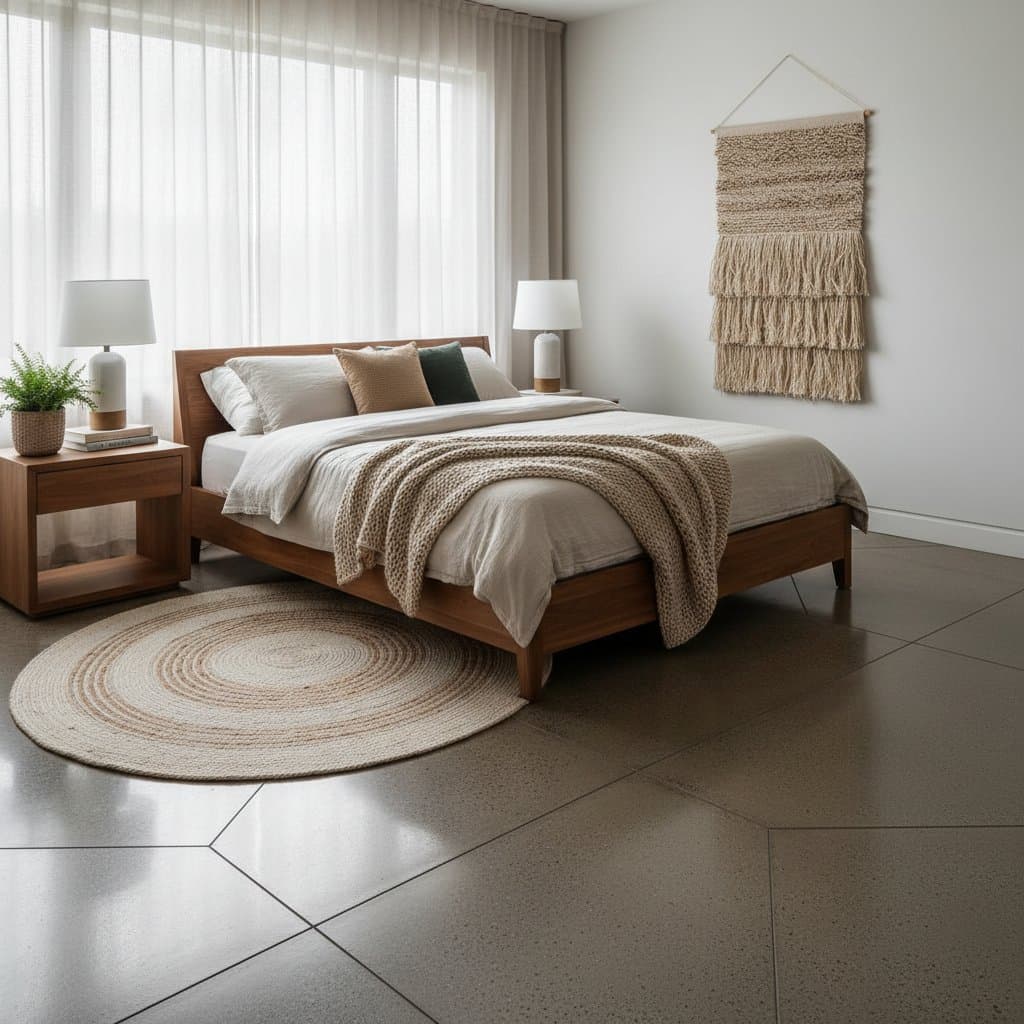
How Grounding Floors Enhance Bedroom Wellness
Consider the sensation of removing your shoes and placing your feet on the floor, only to encounter static rather than calm. In many bedrooms, the floor remains an overlooked element. Individuals focus on paint colors, bedding, and lighting, yet the surface underfoot influences rest, energy levels, and physical sensations upon waking. Grounding floors address this oversight by linking interior design to the earth's inherent balance. These floors resemble standard options but incorporate a key feature: they facilitate a connection to the earth's natural electrical currents, promoting calm, focus, and renewal.
Understanding Grounding Floors
Grounding, also known as earthing, involves reestablishing the body's link to the earth's electrical field. Historically, this occurred through barefoot contact with grass or sand. Contemporary lifestyles often isolate people with rubber-soled shoes, synthetic carpets, and elevated living spaces. Grounding floors overcome these barriers by integrating conductive materials into the flooring, connected to an external ground rod or system.
Options include carbon-infused vinyl planks, conductive rubber tiles, or engineered wood with a conductive underlayer. The primary objective is to dissipate static buildup and maintain the body's electrical equilibrium. This approach appeals through its straightforward integration. Rather than introducing additional devices, it enhances the foundational surface used in daily routines, from morning stretches to nighttime preparations.
The Importance of Grounding in Bedroom Design
The bedroom serves as the home's most serene area. However, it frequently contains numerous electronics, synthetic materials, and impermeable surfaces. These elements generate a low-level electrical interference that disrupts a sense of stability. Grounding floors extend beyond theoretical benefits; they alter the room's tactile experience. The surface provides an organic texture, a balanced temperature, and an overall soothing ambiance.
One individual reported that after installing conductive wood-effect tiles, the subtle static discharge from removing clothing near the bed vanished. Such minor disruptions accumulate and undermine tranquility. A grounded floor supports improved sleep and contributes to a space that aligns with natural rhythms.
Complementary Design Elements for Optimal Results
View grounding floors as components of a broader wellness-oriented design strategy. The following additions enhance their effectiveness and create a cohesive environment:
-
Natural Fiber Rugs
Select rugs crafted from jute, wool, or cotton to overlay the grounded surface. These breathable options support conductivity while providing comfort. Avoid synthetic backings, which impede electrical flow and retain static. -
Grounded Bedside Mats
For those hesitant about full-floor replacement, these mats offer an accessible entry point. Connect them to a grounding outlet or rod to establish a localized earthing area for sleeping or reading. -
Low-EMF Lighting Fixtures
Opt for diffused, enclosed lights to minimize electromagnetic interference. Focus on fixtures that emit a gentle glow, with wiring designed to eliminate audible hums. -
Secure Grounded Outlets
Install plates without visible screws and verify proper circuit grounding to prevent energy leakage near sleeping areas. This adjustment improves both visual appeal and energetic harmony. -
Dedicated Barefoot Areas
Implement a shoe-free policy in the bedroom to maximize direct contact benefits and maintain cleanliness. This practice signals a transition to a relaxed, intentional space.
These elements interact synergistically. Together, they yield subtler mornings, reduced static incidents, and a supportive atmosphere that enhances daily well-being.
Integrating Science with Everyday Experience
Scientific principles underpin grounding, yet the appeal lies in its intuitive alignment with nature. The body responds positively to authentic materials like stone, wood, and fibers, which soothe the senses. In contrast, synthetic alternatives maintain a state of low-level vigilance. Grounding floors import this natural affinity into indoor settings, blending advanced materials with timeless concepts.
Many systems feature a conductive subfloor linked to a discharge wire for safe energy redirection. Others embed carbon or silver filaments directly into the top layer. These innovations remain invisible, manifesting as static-free stability and reassuring solidity. The floor achieves equilibrium, guiding users toward their own.
Maintaining and Experiencing Grounded Spaces
Grounding floors demand minimal upkeep beyond standard cleaning. Employ mild, non-waxy solutions to preserve conductivity. Shifts occur in routines: increased barefoot time, pre-bedtime stretches, or an unexplained sense of room tranquility.
Wellness in the bedroom emerges from incremental, intentional choices rather than sweeping changes. A grounded floor represents a subtle enhancement that elevates routine moments without fanfare. It operates silently, free from distractions.
Realizing the Full Benefits
Installing a grounding floor combines aesthetic and functional value, encouraging unhurried routines and attuned physical awareness. Integrate it with permeable linens, streamlined furnishings, and ambient illumination to amplify effects. Each footfall reinforces the connection, delivering tangible calm independent of passing fads.