Why Acoustic Tiles Are Entering Mainstream Home Design
Consider the sharp clatter of a utensil on a hard surface in the kitchen, or the way voices reverberate in an open living area, creating an unintended echo. These everyday disturbances highlight a growing need for better sound management in residential spaces. Acoustic tiles, previously confined to professional recording studios and corporate offices, now appear in homes, eateries, and multifamily dwellings. The appeal lies in their ability to deliver tranquility without compromising aesthetic appeal.
Modern acoustic tiles serve as an effective solution for those seeking serenity alongside visual harmony. They differ from outdated, obtrusive foam installations or concealed barriers. Current designs integrate seamlessly with contemporary interiors, effectively dampening reverberations and ambient noise while maintaining an elegant profile.
The Impact of Noise on Daily Living
Ambient noise infiltrates routines subtly, from the steady drone of household devices to external sounds penetrating walls. Prolonged exposure erodes concentration and elevates stress levels over time. Acoustic tiles function as a refined acoustic barrier, moderating sound waves to foster a more restful atmosphere. This approach treats the auditory environment with the same intentionality applied to visual elements.
Improved acoustics alter the sensory experience of a space profoundly. Discussions gain clarity and intimacy, media consumption becomes more immersive, and remote interactions proceed with reduced interference. The transformation proves understated yet transformative, making reversion to untreated spaces challenging.
Practical Applications for Acoustic Tiles
Design professionals and residents employ acoustic tiles in innovative configurations to address specific challenges. The following examples illustrate versatile implementations:
-
Suspended Ceiling Panels
These floating elements capture overhead sound reflections without obstructing sightlines. They suit high-traffic zones like kitchens and dining rooms, where reflective surfaces amplify noise. Pendant fixtures and architectural details remain visible, yet the area gains acoustic equilibrium. -
Modular Geometric Configurations
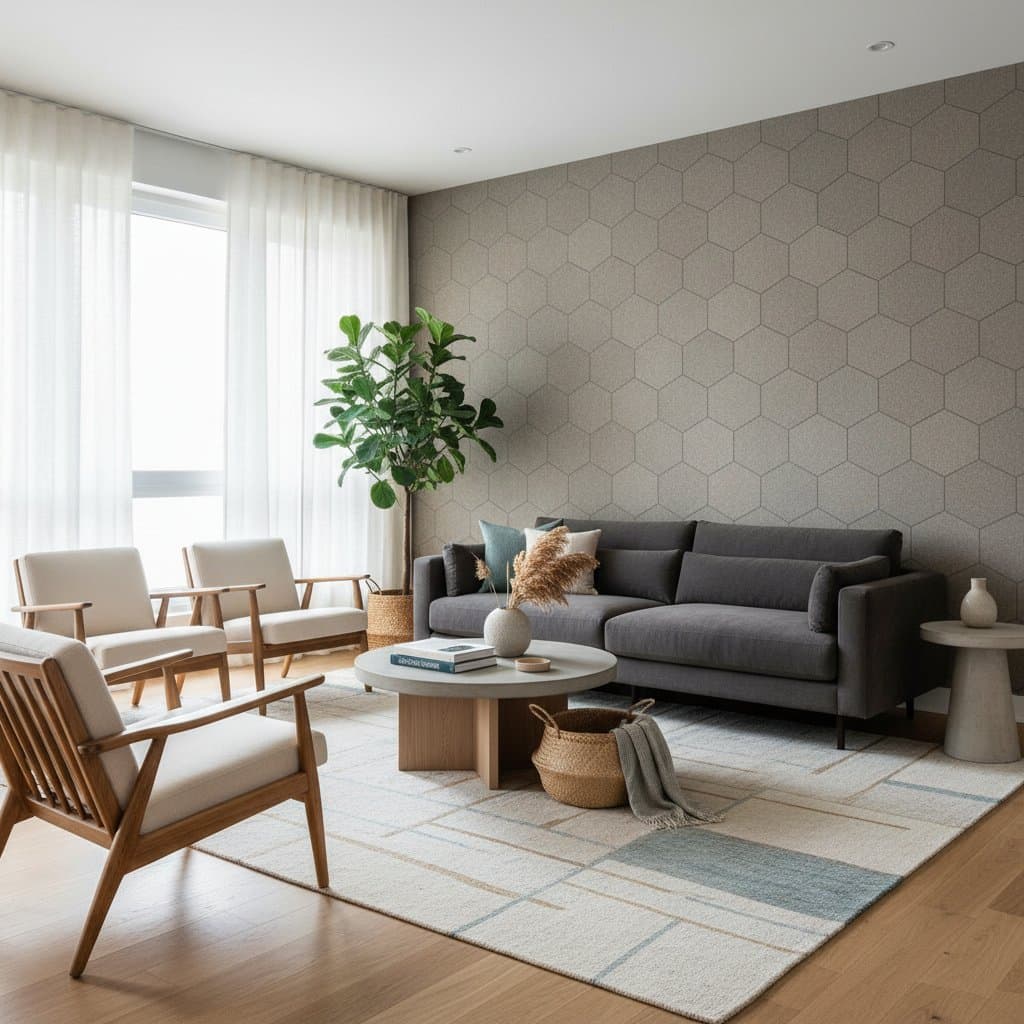
Arranged in patterns such as hexagons or interlocking shapes, these tiles introduce visual interest alongside sound absorption. Position them as accents behind seating areas or in corridors to mitigate echoes. Such installations elevate the sculptural quality of walls while enhancing auditory comfort. -
Fabric-Covered Modular Units
Traditional square formats receive contemporary updates through diverse fabric selections. Opt for subtle textiles in neutral palettes for understated integration or vibrant hues for focal points. Users frequently report enhanced conversational balance during gatherings, a benefit that emerges post-installation. -
Slatted Wooden Accents
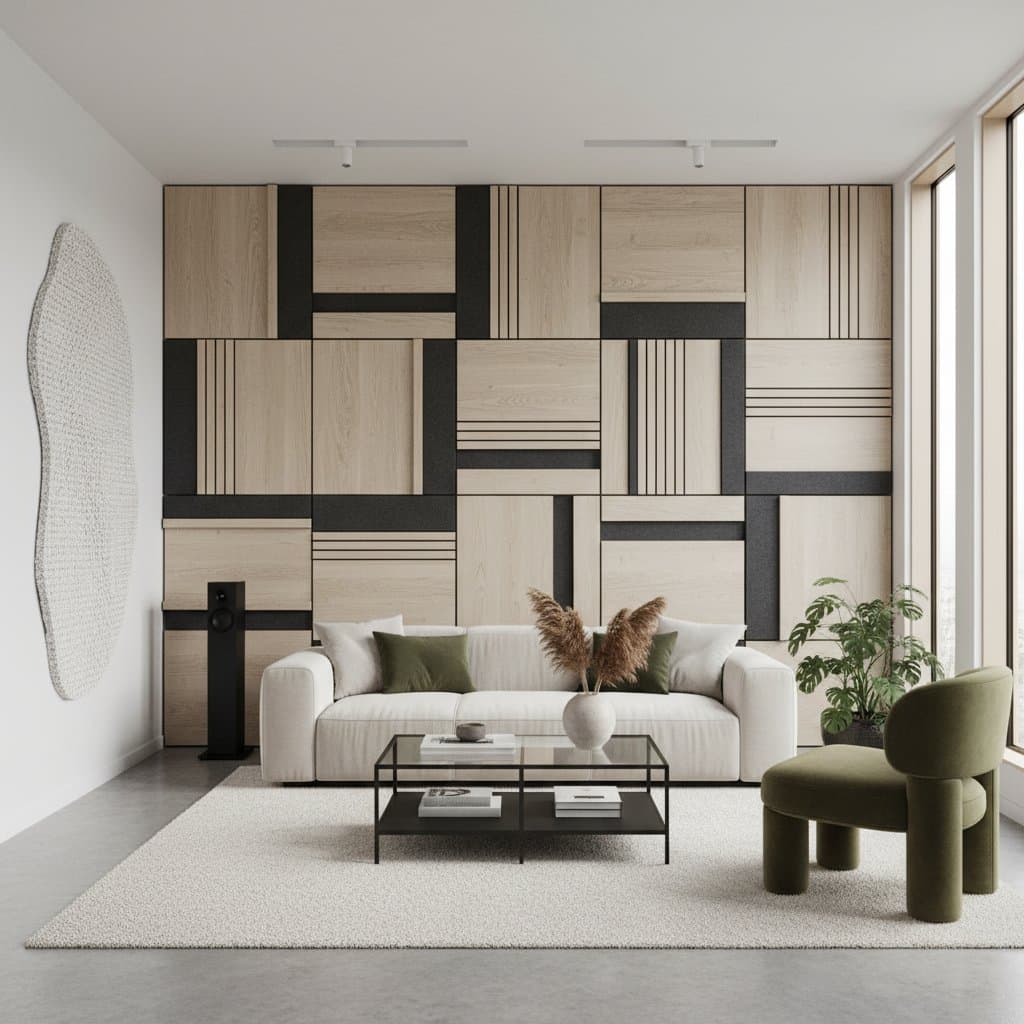
Combining natural timber with absorptive backing, these panels diffuse sound through directional channels. They impart organic warmth to interiors, resembling built-in cabinetry rather than remedial additions. This method balances functionality with a grounded, inviting ambiance. -
Portable Workspace Partitions
Slim dividers provide targeted sound isolation in home offices or communal areas, preserving openness. They enable sustained focus amid distractions and facilitate clearer virtual communications. Integration requires minimal alteration to existing layouts.
Evolution in Design and Materials
Historically, acoustic solutions prioritized utility over form, often resulting in utilitarian appearances. Recent advancements incorporate materials like compressed felt, sustainable cork, engineered wood, and eco-friendly composites. Installation simplifies with self-adhesive options, comparable to applying decorative wall coverings. Color palettes now encompass soft pastels, earthy tones, and bold charcoals, allowing tiles to serve as deliberate design features rather than afterthoughts.
This development aligns with broader priorities in holistic interior wellness, including optimal illumination, ventilation, and tactile elements. Sound quality emerges as an essential dimension, parallel to choices in palette and spatial arrangement. Designers increasingly specify acoustics to complete multisensory environments.
Implementing Acoustics for Enhanced Comfort
Addressing auditory elements refines the overall harmony of living areas. Audio reproduction gains precision, interactions proceed effortlessly, and routine sounds adopt a more agreeable resonance. Acoustic tiles extend beyond mere noise reduction; they cultivate a balanced auditory cadence suited to modern lifestyles.
For renovations or targeted refreshes, initiate with modest interventions. Install select panels in contemplative zones or over communal tables to gauge benefits. Observers often remark on the serene quality of treated spaces, attributing it to thoughtful acoustic enhancements rather than abstract improvements.
Sustaining Acoustic Benefits in Everyday Use
Effective acoustic interventions harmonize form and function, ensuring vitality persists alongside quietude. Strategic placements yield environments that feel more attuned and polished, as if extraneous auditory layers have been refined. Such modifications invite appreciation through lived experience, underscoring their subtle yet enduring value.