Textured Ceilings: Reviving the Bedroom's Fifth Wall
Bedrooms benefit from ceilings that contribute to overall comfort and style. Designers now treat the ceiling as the fifth wall, applying textures to introduce depth and personality. Subtle plaster patterns or woven materials transform a monotonous white expanse into an engaging design element that influences the room's atmosphere.
The Importance of the Fifth Wall
Ceilings influence a room's perceived scale and emotional tone. A flat surface often feels cold and uninviting, but texture interacts with light to generate warmth and dynamic patterns. Interior designer Marissa Lane notes, "When we add gentle movement overhead, it creates a sense of enclosure that feels calming."
In bedrooms, where soft lighting and textiles dominate, texture provides essential tactile appeal. These surfaces also manage sound by absorbing echoes, which proves valuable in compact spaces or open-plan homes. The result delivers a noticeably serene environment upon entry.
Materials That Revitalize Ceilings
Professionals select materials to align with bedroom aesthetics and functionality. Each option delivers unique tactile and visual qualities suited to various room sizes and themes.
1. Limewash and Plaster Applications
Hand-applied limewash or plaster yields a gently undulating finish that scatters light for a lively effect. In smaller bedrooms, opt for light shades like soft cream or muted pink to brighten the area without shine. These surfaces complement neutral bedding and wood floors seamlessly.
2. Wood Slats and Exposed Beams
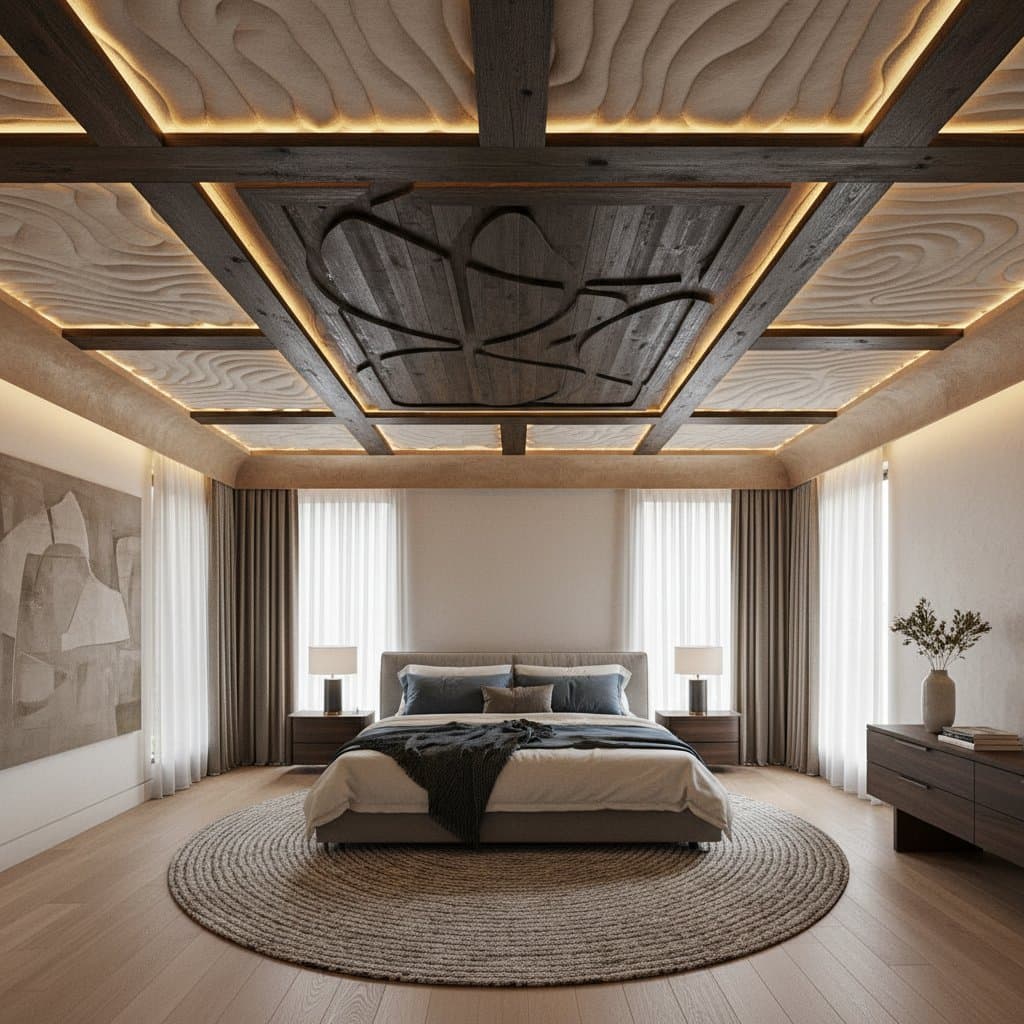
Timber elements introduce immediate comfort. Install narrow oak or walnut strips with one-inch gaps to make low ceilings appear taller. White or light gray painted beams highlight existing architecture in traditional homes, adding subtle elegance.
3. Wallpaper and Natural Weaves
Overhead wallpaper gains popularity for its versatility. Grasscloth provides a natural texture, while patterned or fabric-lined options simulate carved details. These choices diffuse overhead light from fixtures, fostering a relaxed glow throughout the space.
4. Coffered and Grid Panels
In spacious bedrooms, recessed coffers or paneled layouts offer structured appeal. Apply a uniform matte paint to maintain openness. Designer Tom Ritchie advises, "We use shallow frames, no more than two inches deep, to bring rhythm without reducing height."
5. Fabric-Covered and Upholstered Sections
Linen or velvet stretched over panels forms an enveloping, plush layer. Such coverings excel at sound dampening for quieter nights. Select calm neutrals for tranquility, or deeper hues like navy or forest green for focal impact above the sleeping area.
Integrating Light with Texture
Strategic lighting accentuates ceiling details effectively. Position recessed lights along edges or uplights near the bed to cast even glows that reveal surface nuances. This approach emphasizes plaster undulations or fabric weaves without harsh shadows.
Multiple light layers prevent texture from dominating. Install dimmable fixtures to adjust the mood from vibrant evenings to quiet mornings. A hidden LED strip along molding enhances plaster finishes with a soft shimmer, deepening the room's perceived volume.
Installation and Upkeep Essentials
Ceiling modifications demand careful preparation and expert execution. Basic plaster textures involve joint compound and trowel work, but wood or paneled designs require accurate framing. Hire specialists for wallpaper to ensure seamless adhesion and longevity.
Upkeep varies by choice. Dust plaster gently with a soft brush periodically. Reapply oil to wood every few years to preserve moisture. Vacuum fabric panels lightly to clear debris without harm.
Costs range from affordable limewash to premium wood installations, yet all deliver significant impact. Select based on room dimensions and maintenance preferences to maximize satisfaction.
Key Design Choices
- Color Coordination: Choose ceiling shades two tones lighter than walls to lift the space, or deeper for coziness.
- Border Treatments: Incorporate narrow trim or painted edges for clean definition.
- Illumination Options: Pair central lights with wall-mounted or hidden sources to showcase textures delicately.
- Scale Matching: Favor low-profile textures in ceilings below nine feet to avoid compression.
Experiencing the Transformation
A textured ceiling alters the bedroom's entry experience profoundly. It draws attention upward, harmonizing with lower elements for balanced design. This added dimension renders even modest rooms more sophisticated and inviting.
Interior stylist Hannah Cruz observes, "Once you notice texture overhead, you start to see the whole room differently. It connects everything." Such integration fosters emotional resonance.
Focusing on the ceiling elevates an underutilized area into a hub of serenity and style. Select plaster, timber, or fabric to achieve visual and sensory benefits. The bedroom evolves into a true haven for rest and renewal.