Stylish Acoustic Tiles That Quiet Open Floor Plans
Open floor plans dominate modern homes and offices, fostering a sense of spaciousness and connectivity. However, these layouts often come with a downside: excessive noise that disrupts conversations and daily activities. Stylish acoustic tiles offer an elegant solution, absorbing sound waves while adding visual appeal to ceilings and walls.
These innovative materials blend functionality with design, transforming echo-prone spaces into serene environments. Designers increasingly incorporate them to balance openness with comfort. This article explores how acoustic tiles work, their various styles, and practical ways to integrate them into your space.
The Challenge of Noise in Open Layouts
Open floor plans eliminate barriers between rooms, allowing light and air to flow freely. Yet, without walls to dampen sound, echoes bounce off hard surfaces like concrete floors and glass windows. This acoustic issue can make spaces feel chaotic, especially in homes with children or during gatherings.
Research shows that poor acoustics affect concentration and relaxation. In residential settings, background noise from appliances or footsteps can reach uncomfortable levels. Acoustic tiles address this by targeting mid-to-high frequency sounds, reducing reverberation without sacrificing the open aesthetic.
How Acoustic Tiles Function
Acoustic tiles consist of porous materials that trap sound energy and convert it to heat. Common compositions include fiberglass, mineral wool, or recycled polymers, often covered in fabric or perforated metal for style. Their effectiveness depends on thickness, density, and surface area; thicker tiles absorb lower frequencies better.
Installation typically involves adhesive, clips, or suspension systems, making them versatile for ceilings, walls, or partitions. Unlike traditional foam panels, modern tiles prioritize aesthetics, mimicking wood grains, geometric patterns, or soft textiles. This ensures they enhance rather than detract from interior design.
Exploring Stylish Options
Ceiling Clouds and Canopies
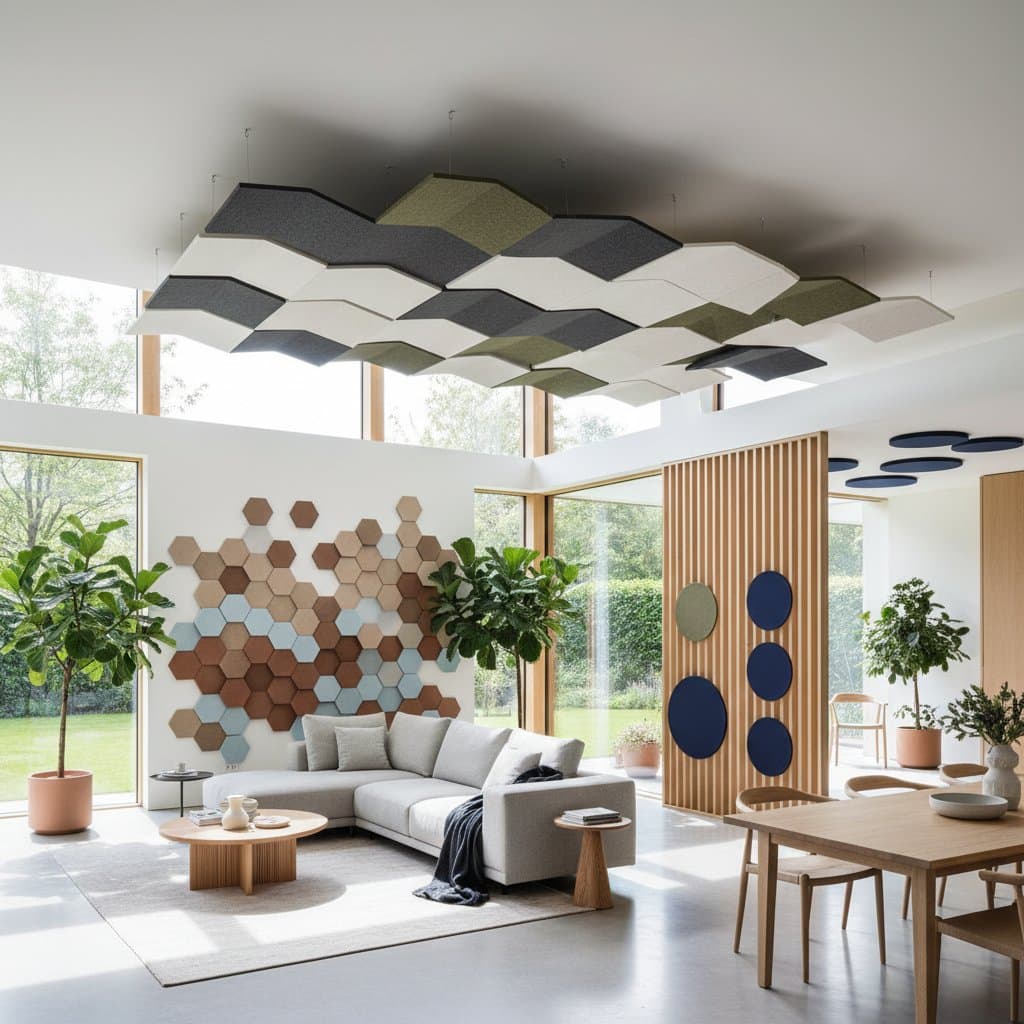
Ceiling clouds suspend above key areas like dining tables or workspaces, floating like artistic elements. Available in shapes from circles to custom designs, they diffuse light while muffling overhead noise. For a minimalist look, opt for matte white clouds that blend seamlessly; bolder choices include metallic finishes for contemporary flair.
These installations require careful planning to avoid obstructing fixtures. Measure the room's height and traffic flow to position them effectively. In a 20-foot living area, three to five clouds spaced evenly can reduce echo by up to 50 percent.
Wall-Mounted Panels
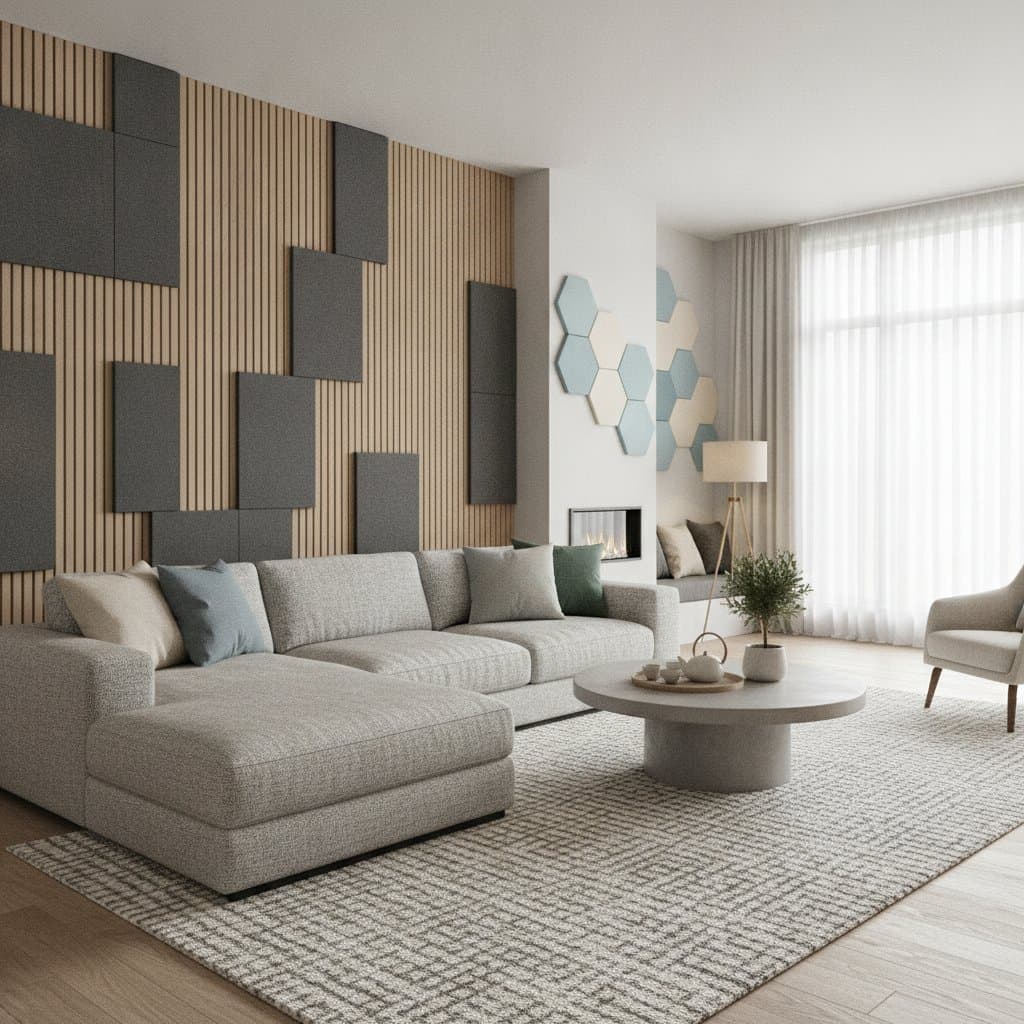
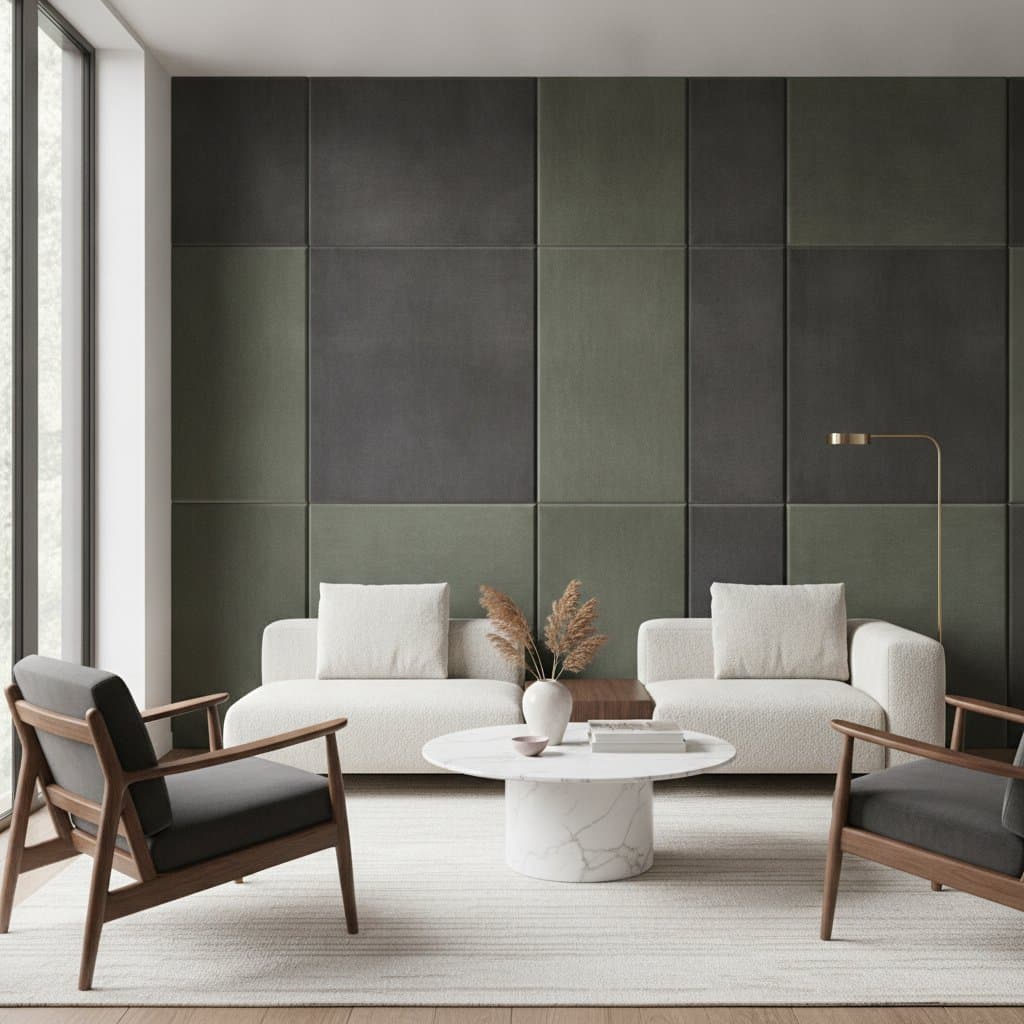
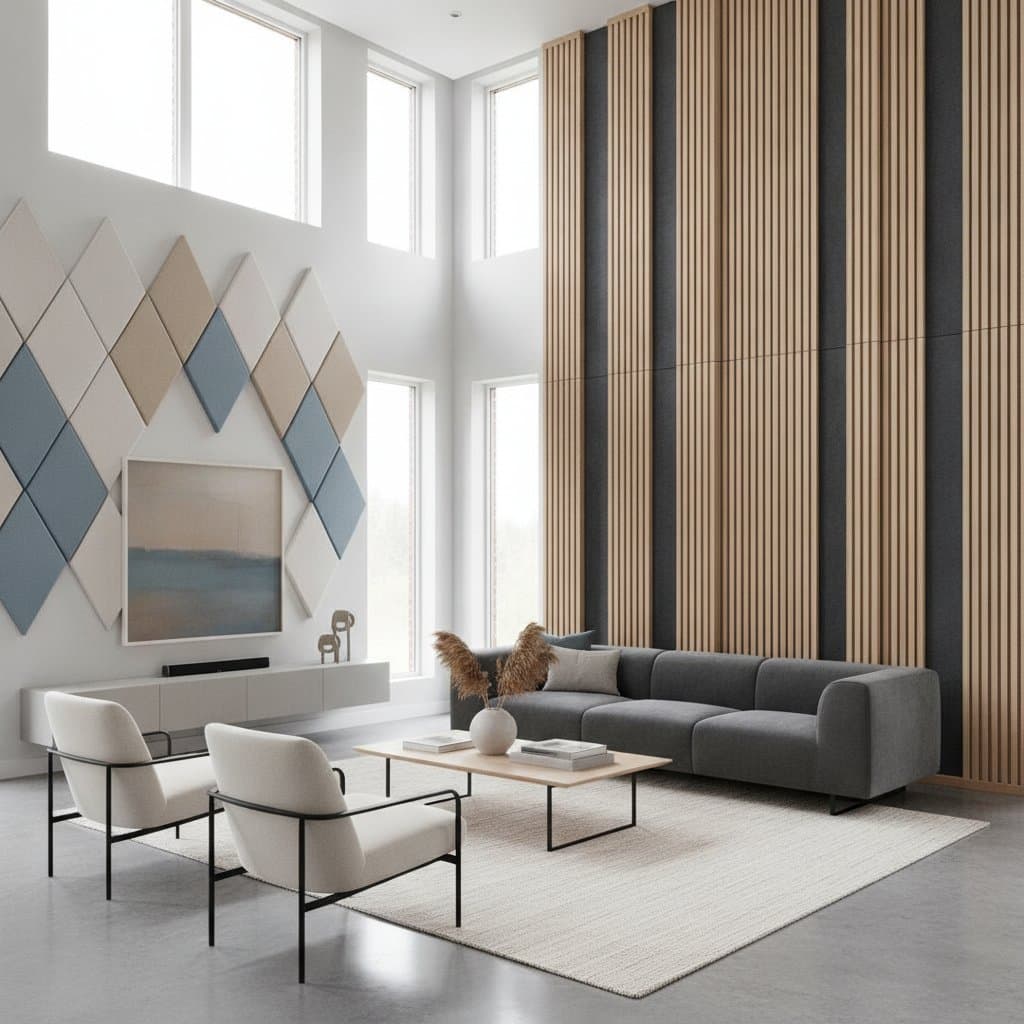
Textured wall panels serve as both sound barriers and focal points. Options range from woven fabric covers to sculpted resin forms that add depth to flat surfaces. Place them behind televisions or along hallways to target specific noise sources.
For residential applications, select panels in neutral tones that complement existing decor. Custom printing allows personalization, such as incorporating subtle patterns that echo wallpaper motifs. Ensure panels cover at least 20 percent of wall space for noticeable improvement.
Integrated Flooring and Partitions
While primarily ceiling-focused, acoustic tiles extend to hybrid solutions like perforated flooring inserts or freestanding screens. These low-profile options suit open kitchens or home offices, absorbing footfall sounds without altering the layout.
Designers pair them with rugs or dividers for layered acoustics. A combination approach yields the best results, creating zones within the open plan that feel intimate yet connected.
Practical Installation Steps
Begin by assessing your space. Identify noisy zones through simple tests: clap your hands and note echo duration. Aim for a reverberation time under 0.5 seconds in living areas.
- Select materials based on style and performance needs. Consult specifications for noise reduction coefficients (NRC), targeting 0.7 or higher.
- Prepare surfaces by cleaning and ensuring level installation points.
- For DIY projects, use grid systems for easy access; professional help suits complex designs.
- Test post-installation by playing audio and adjusting as needed.
Budget considerations vary: basic panels start at $10 per square foot, while custom pieces exceed $50. Factor in longevity; quality tiles last 10 to 20 years with minimal maintenance.
Design Integration Tips
Incorporate acoustic tiles into your overall scheme for cohesion. Match colors to adjacent elements, such as using earth tones in rustic kitchens or sleek blacks in urban lofts. Layer with lighting: backlit panels create ambient glow while enhancing absorption.
Collaborate with interior experts to visualize outcomes. Software tools simulate acoustics and visuals, helping refine choices. The goal remains balance: functionality that elevates aesthetics, not overwhelms them.
Real-World Transformations
Consider a family home in suburban Chicago, where an open great room echoed constantly. Installing geometric ceiling clouds in soft gray reduced noise by 40 percent, allowing quiet evenings without renovation costs. Similarly, a New York loft used fabric-wrapped wall panels to zone a multipurpose space, blending art with utility.
These examples demonstrate versatility across scales. From apartments to expansive estates, acoustic tiles adapt, proving essential for modern living.
Achieving Serenity Through Smart Design
Stylish acoustic tiles redefine open floor plans as havens of calm and creativity. By mitigating noise, they foster environments where ideas flourish and rest comes easily. Invest in these elements to enjoy the full potential of your space: connected, quiet, and beautifully appointed.