Integrating Acoustic Panels for Tranquil Living Rooms
Excessive noise disrupts the harmony of even the most elegantly designed room. Echoes from footsteps on hardwood floors, distant traffic, or overlapping conversations create an underlying tension. A serene living room requires attention to both visual and auditory elements. Acoustic panels address this need by providing effective sound management that integrates seamlessly with contemporary decor.
These panels, originally developed for recording studios, now serve as versatile design elements in residential settings. They absorb sound waves to minimize reflections and foster a more balanced acoustic environment. Available in diverse forms, from artistic wall installations to understated ceiling features, acoustic panels allow homeowners to achieve quiet without sacrificing style.
The Role of Sound in Home Comfort
True quiet in a home involves controlled acoustics rather than absolute silence. Unabsorbed sound rebounds from hard surfaces, amplifying distractions and straining interactions. Acoustic panels mitigate these effects by diffusing and absorbing reflections, which promotes relaxation and mental clarity.
Consider sound as an essential design component, akin to texture or illumination. Optimized acoustics enrich media experiences, clarify speech, and enhance the perception of privacy. This layered approach ensures the living room functions as a true sanctuary.
Creative Applications of Acoustic Panels
Contemporary acoustic panels extend beyond utilitarian designs to include artistic and textural options. They can mimic abstract artwork, woven fabrics, or natural materials, allowing integration into various interior styles. Below are targeted ways to incorporate them effectively.
Geometric Configurations
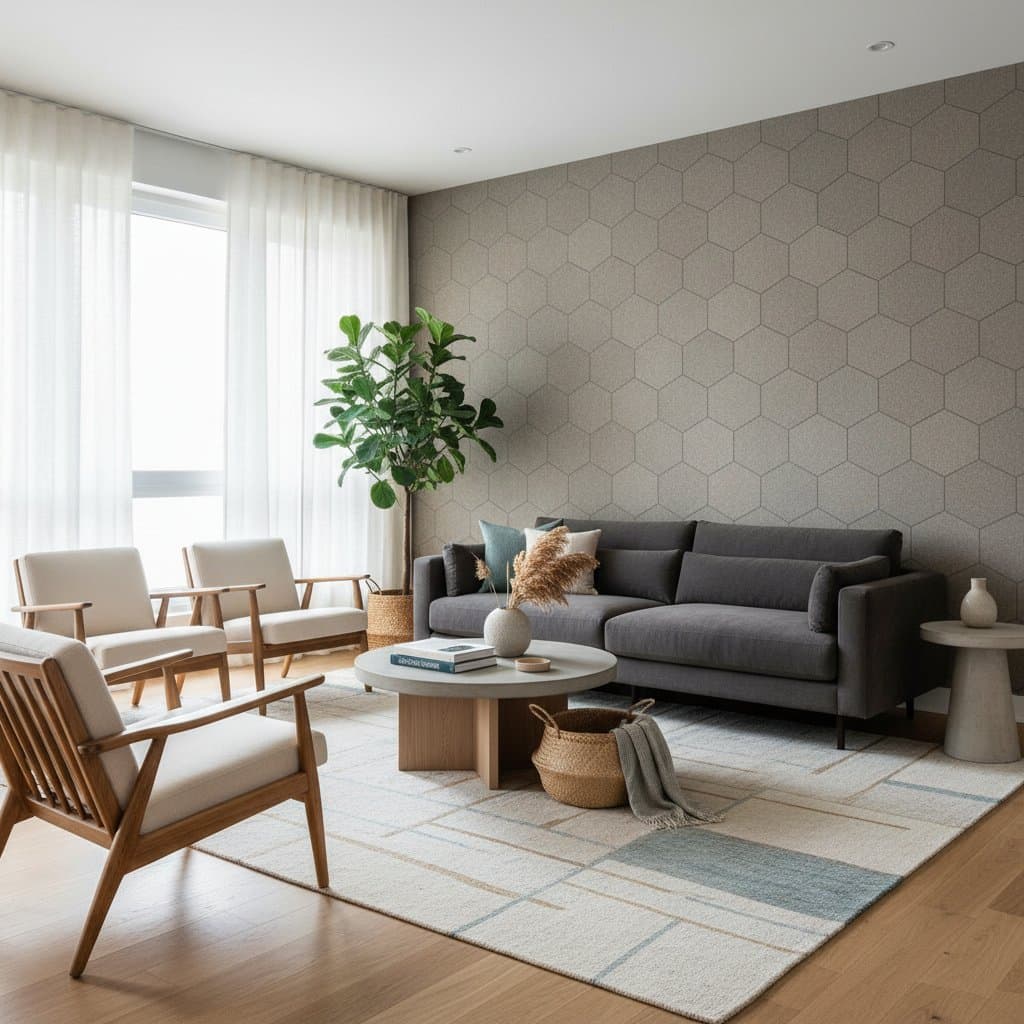
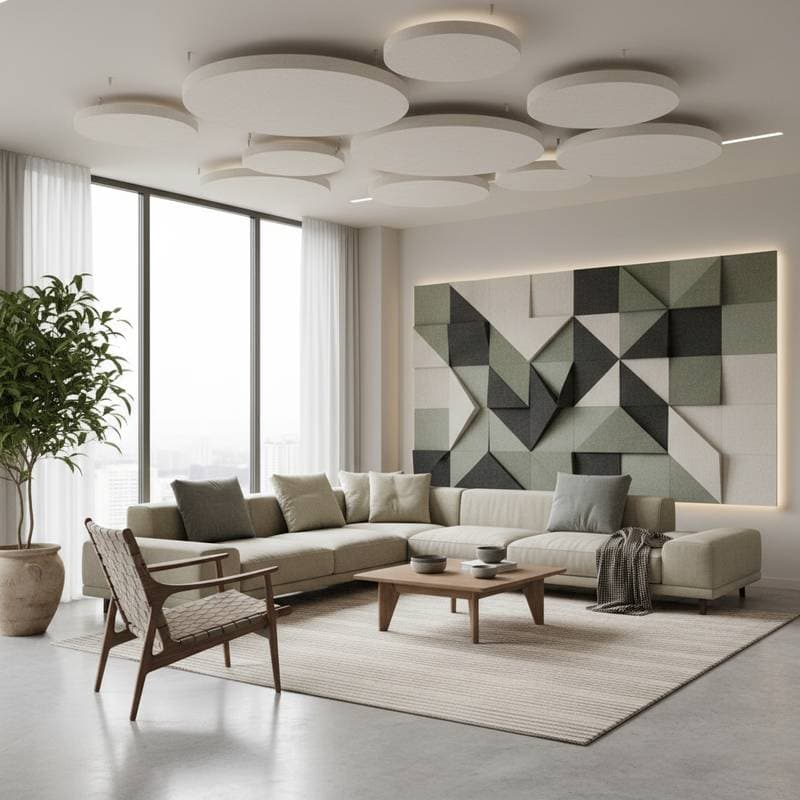
Assemble panels in hexagonal or triangular patterns to form dynamic wall features. Such arrangements introduce visual interest and depth while targeting specific echo zones. Select neutral palettes for understated elegance or vibrant hues for a contemporary edge.
Organic Material Integrations
Panels crafted from felt, recycled cork, or compressed wood fibers introduce natural warmth. These options complement biophilic elements like indoor greenery and plush upholstery. Position a series of cork panels adjacent to a seating area to serve dual purposes as a display surface for personal mementos.
Subtle Fabric Enclosures
Opt for panels encased in neutral fabrics such as linen or merino wool to achieve a low-profile effect. Coordinate colors with surrounding walls for a cohesive blend. This method provides acoustic benefits without dominating the visual composition.
Suspended Ceiling Elements
Address vertical sound paths with ceiling-suspended panels, known as acoustic clouds. Ideal for vaulted or open-plan spaces, these fixtures capture overhead reflections. Choose asymmetrical shapes or linear forms to align with minimalist or industrial aesthetics.
Adaptable Modular Designs
Select systems with interlocking tiles that permit reconfiguration. Begin with a core installation and expand based on evolving spatial demands. This scalability supports ongoing refinement of both acoustics and appearance.
Step-by-Step Guide to Acoustic Enhancement
Implement changes incrementally to observe impacts without overwhelming the space. This methodical approach ensures sustainable improvements in comfort.
-
Assess Acoustic Patterns
Identify persistent echoes by introducing brief claps or spoken phrases in key areas. Note zones near windows, corners, or entertainment centers where reverberations persist longest. -
Target Priority Areas
Prioritize high-use sections, such as media zones or conversational nooks. Applying panels to a single focal wall often yields immediate acoustic relief. -
Layer with Complementary Elements
Pair panels with absorptive textiles like area rugs, heavy drapery, and upholstered furniture. This multifaceted strategy amplifies sound control and enriches the tactile experience. -
Evaluate Post-Installation
Allow one week for adaptation, then test by playing audio or hosting gatherings. Gauge improvements in clarity and overall ambiance. -
Refine Iteratively
Introduce additional elements if residual noise remains. Aim for equilibrium where the space supports diverse activities effortlessly.
Addressing Practical Concerns
Homeowners often hesitate due to perceived complexity in installation or aesthetics. Most panels feature lightweight construction and adhere via adhesive hooks or brackets, requiring minimal tools. They detach cleanly, preserving wall integrity for future adjustments.
Budget considerations can be managed by focusing on impactful locations first. A modest investment in four to six panels often transforms perceived chaos into composure. View selections as customizable experiments; reupholster or reposition as preferences evolve.
Sustaining Acoustic Harmony
A refined acoustic environment encourages mindful dwelling, fostering extended relaxation and meaningful interactions. Regular auditory check-ins maintain this balance amid lifestyle changes.
Dedicate weekly moments to evaluate sound dynamics during varied routines. Shift furnishings or adjust panel orientations as needed. This practice ensures the living room remains a responsive haven, attuned to daily rhythms and promoting enduring well-being.