Acoustic Decor for a Hushed Living Room
A serene living room supports relaxed conversations, focused reading, and meaningful interactions. Echoes from hard surfaces, sparse furniture, and open designs often disrupt this calm. Thoughtful acoustic decor absorbs excess sound while introducing texture, warmth, and visual interest. Style and silence harmonize through these elements.
How Sound Behaves in Home Environments
Sound waves reflect off smooth walls, floors, and ceilings, creating prolonged echoes. This effect intensifies in rooms with minimal soft elements, where even moderate noises like dialogue or media playback dominate the space. Acoustic treatments interrupt these reflections using absorbent materials such as wool, cotton, felt, cork, and dense foam. These materials trap vibrations and foster a balanced auditory environment.
Everyday Adjustments for Noticeable Improvement
Start with accessible changes to existing items before considering specialized products. These tweaks reduce reverberation and enhance coziness without major renovations. Implement them step by step for gradual enhancement.
- Incorporate layered textiles. Place an additional area rug beneath furniture legs to cover more floor space. Fold a heavy blanket over the back of seating or stack extra pillows on sofas. These additions capture sound waves and invite tactile comfort.
- Install fabric wall accents. Select a large macrame piece or quilted hanging to serve as both decor and sound absorber. Opt for breathable fibers like linen or jute for a natural feel that blends with surrounding elements.
- Choose fabric-upholstered pieces. Replace rigid chairs with cushioned armchairs or add a velvet bench near the seating area. These options dampen acoustics more effectively than hard alternatives like wood or metal.
- Block external sounds. Install floor-length drapes with thermal lining on windows and sliding doors. This setup muffles street noise and enhances seclusion during evening hours.
- Populate surfaces strategically. Arrange books on open shelves to create irregular surfaces that scatter sound. Weave baskets for storage or cluster potted greenery on side tables to infuse organic charm and further disperse reflections.
Such modifications yield quick results in perceived quietness. For persistent issues, integrate purpose-built acoustic elements to address specific problem areas.
Versatile Acoustic Panels for Home Integration
Contemporary acoustic panels transcend utilitarian origins. They now appear in designs that complement residential aesthetics seamlessly.
Wall-Mounted Options:
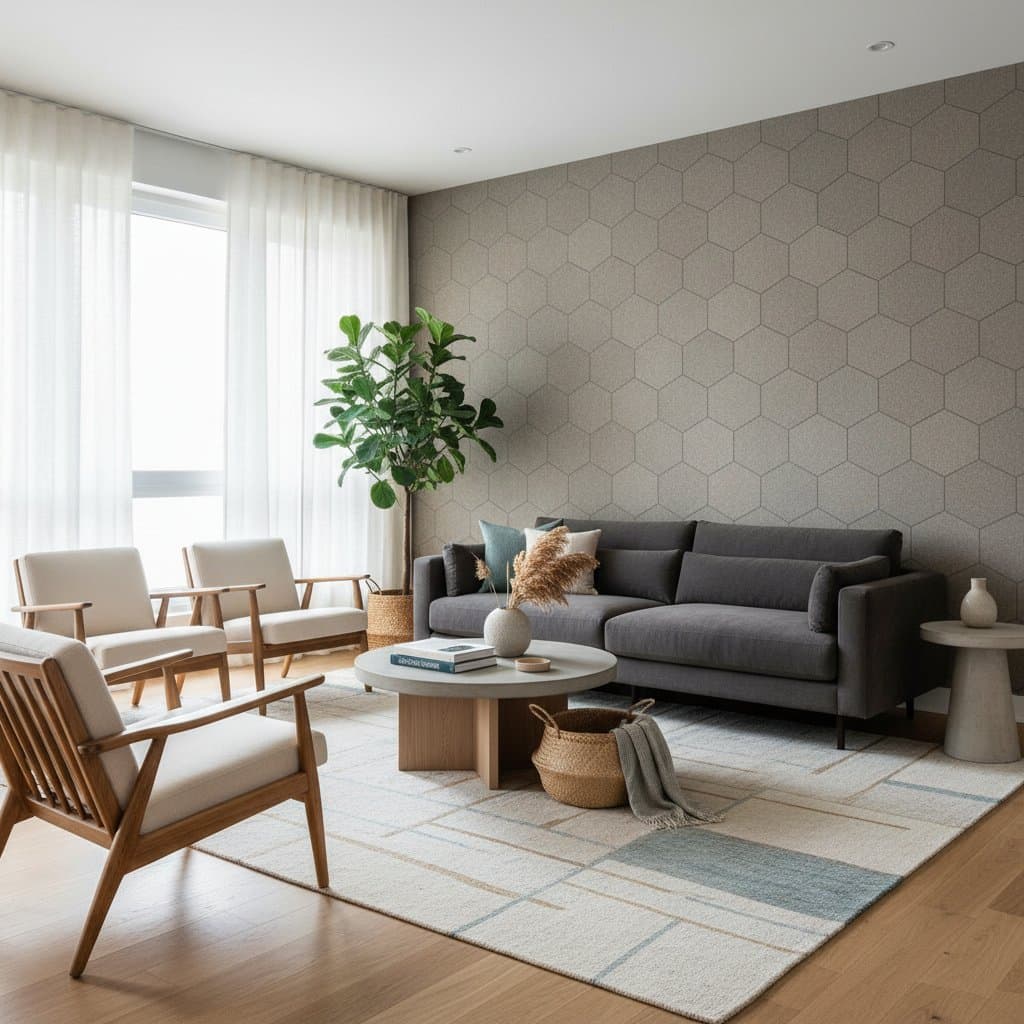
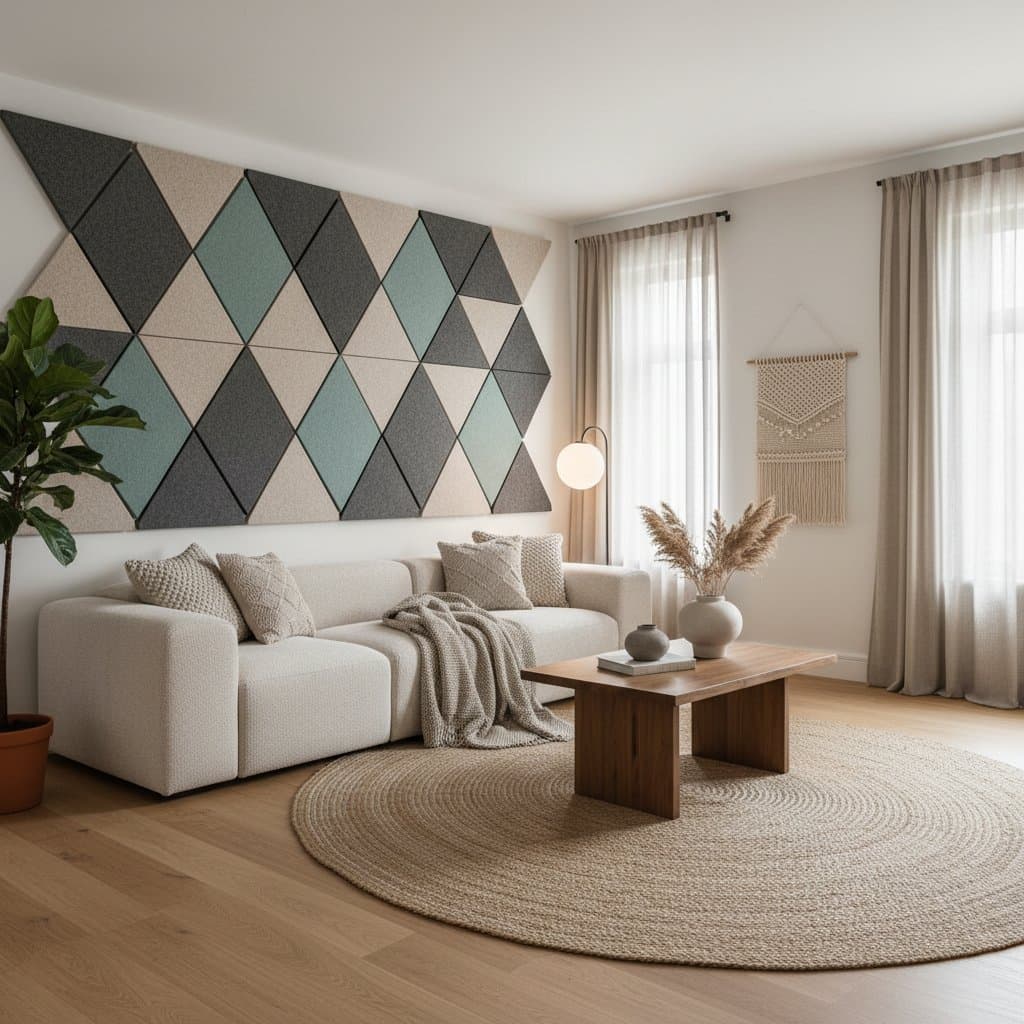
Fabric-encased panels offer customizable hues and patterns to align with the room's palette. Secure them adjacent to entertainment centers or along conversation walls to target key reflection zones. Arrange in asymmetrical clusters for dynamic visual appeal that draws the eye without overwhelming the space.
Overhead Solutions:
Acoustic clouds, lightweight suspended fixtures, capture upward-bound sound in rooms with tall or sloped ceilings. Select matte finishes that integrate with recessed lights for subtle elegance. Position them above central seating to maximize coverage.
Artistic Integrations:
Custom-printed panels transform into focal art pieces, featuring landscapes, geometrics, or personal motifs. This approach maintains decor cohesion while addressing acoustics effectively. Mount them as gallery walls for an integrated look.
Flexible Tile Systems:
Adhesive felt or cork tiles enable DIY patterns, from full-wall coverage to bordered vignettes around media areas. Their interlocking design simplifies installation and allows for easy expansion over time. Apply them in high-traffic zones for targeted absorption.
Organic Materials for Subtle Sound Control
Sustainable choices like cork underlays, wool-based felts, and bamboo dividers naturally mitigate noise. These materials promote airflow and durability in everyday use. Incorporate them to align with eco-friendly home goals.
Cork excels in mid-range absorption and humidity balance, making it ideal for variable climates. Recycled fiber panels resist wear and support eco-conscious living practices. Strategic plant placements, such as ferns in alcoves or corners, further disperse waves without overwhelming the layout.
For streamlined spaces, prioritize selective textures. Pair sheer linen shades with a shag rug and isolated wooden diffusers. This combination creates serenity without excess clutter.
Balancing Acoustics with Inviting Design
Effective sound control enhances rather than detracts from livability. Blend yielding fabrics with firm geometries to anchor the room while preserving openness. This balance ensures the space feels both functional and welcoming.
Pair diffused weaves with polished accents for layered depth that adds interest. Anchor schemes in earth tones to amplify soothing vibes throughout the day. Direct soft glows toward fibrous elements to accentuate tactility and warmth. Retain select shiny touches, such as mirrors or fixtures, for vitality that prevents the room from feeling flat.
Aim for moderated resonance where speech clarifies and melodies envelop the space. This setup cultivates an atmosphere of mindful engagement for all occupants.
Addressing Typical Room Constraints
Compact Layouts: Maximize versatility with hybrid items like bulletin boards clad in felt or storage benches with padded tops. Each contributes to absorption and utility without consuming extra space. Position them near walls to optimize sound control.
Expansive Plans: Employ area rugs and sectional arrangements to delineate zones effectively. Supplement with freestanding screens or valances that softly partition sounds between areas. This prevents echoes from traveling across the entire room.
Cost Considerations: Prioritize high-impact placements, such as panels near noise sources like televisions. Augment with thrifted textiles for amplified effect on a modest budget. Focus on multi-purpose items to stretch resources further.
Sustaining Acoustic Harmony Over Time
After implementation, observe shifts in daily use. Dialogues flow naturally, media integrates seamlessly, and downtime restores energy more effectively. These changes create a more enjoyable living environment.
Monitor residual hotspots and refine with incremental touches, like added bolsters on chairs or vine arrangements on shelves. This iterative approach aligns sound management with evolving home rhythms. Long-term peace emerges from consistent attention to these details.