Japandi Fusion: Redefining Bedroom Serenity Through Zen and Nordic Elements
Emma and Lucas faced challenges in their small urban apartment. Their bedroom resembled a storage area rather than a restful space, with drab gray walls, mismatched furniture, and surfaces cluttered with unused items. They sought tranquility amid the city's constant activity. Japandi style emerged as the solution, combining Japanese minimalism with Scandinavian coziness to infuse their room with purpose and peace.
Key Elements of Japandi Style
- Core Aesthetic: A harmonious blend of Japanese restraint and Scandinavian functionality.
- Color Scheme: Neutral tones including warm beiges, soft whites, earthy taupes, and natural wood finishes.
- Essential Materials: Light oak wood, linen fabrics, bamboo accents, ceramic pieces, and stone elements.
- Overall Atmosphere: Serene, stable, and enduring.
- Cost Considerations: Accessible for most budgets, allowing substitutions with budget-friendly options or investments in artisanal pieces.
Japandi bedrooms prioritize restoration over ostentation. These spaces support unhurried routines and clear evenings. The design achieves simplicity without austerity and layering without excess. Restraint forms the foundation, while personal touches emerge through daily use.
Transformation: Achieving Thoughtful Minimalism
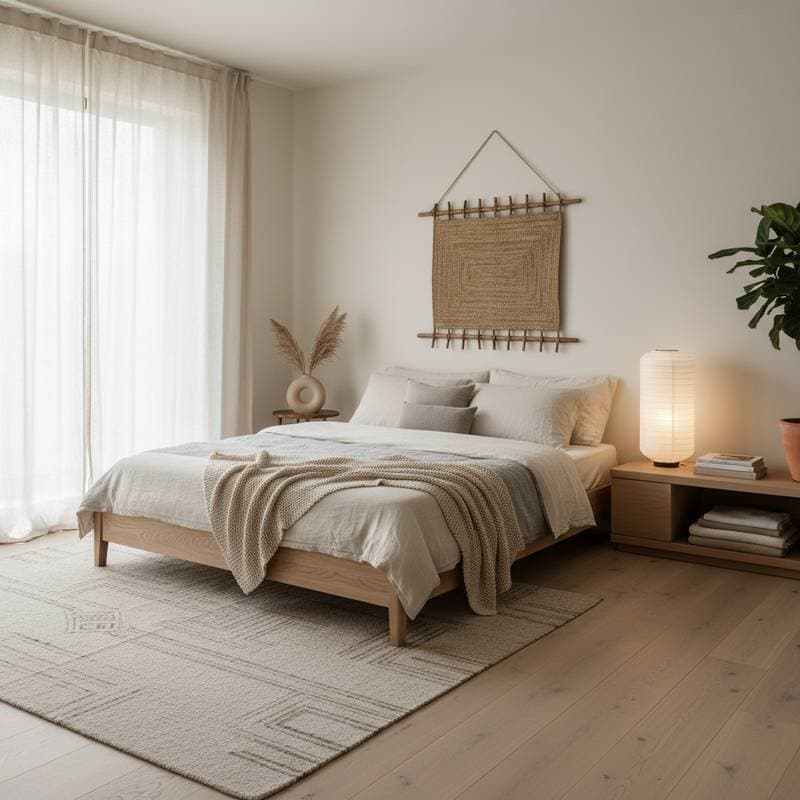
The updated bedroom now evokes a sense of renewal. Clutter has vanished, giving way to deliberate arrangements. Walls in gentle beige complement pale oak furniture and bedding in subdued sand and white linen.
A low-profile platform bed serves as the focal point, drawing from Japanese tatami traditions yet incorporating Scandinavian softness. The headboard features natural linen upholstery, providing subtle texture.
One side includes a wooden stool functioning as a nightstand. The opposite wall hosts a minimalist shelf with a ceramic lamp and one selected book. Each item fulfills a specific role, avoiding any sense of surplus.
The transformation extends beyond visuals to the room's energy. Light reflects softly off even surfaces, and the environment promotes relaxation. This setup encourages pausing, reading, or resting free from interruptions.
Daily Life in a Japandi Bedroom
Emma and Lucas report lighter mornings in their redesigned space. Sunlight passes through sheer curtains, eliminating the need for heavy blackout options. Evenings unfold at a measured pace, with a linen tray organizing tea cups and a ceramic diffuser emitting faint cedar aromas.
Intentionality permeates every aspect. Clothes receive immediate folding upon laundering, facilitated by designated storage. The design subtly promotes positive routines.
Design shapes habits in profound ways. In a Japandi bedroom, serenity transcends appearance to influence actions and mindset. Even the act of making the bed adopts a contemplative quality.
Evolving with Japandi Principles
Japandi transcends fleeting trends to embody an adaptable philosophy. As time passes, subtle changes in materials tell a narrative. Wood patinas gently, fabrics acquire a lived-in softness, embracing imperfection as integral to the design.
To pursue serenity, initiate modest adjustments. Repaint walls in a pale neutral, clear one superfluous object per surface, and swap stark lights for softer alternatives. The shift in mood occurs swiftly.
Emma describes her bedroom as a spa-like retreat that avoids overt effort. This captures the essence of Japandi: effortless nurturing through refined simplicity.
Consider integrating balance into your own space. Begin with a linen coverlet or a wooden side table. Tranquility builds from such foundational steps.