Understanding Japandi Bathrooms
Japandi bathrooms combine Japanese minimalism with Scandinavian hygge to create spaces that emphasize tranquility and functionality. This approach draws on wabi-sabi principles, which honor imperfection and the natural passage of time, paired with Scandinavian focus on warmth and practicality. The result is a bathroom that functions as a private retreat, stripped of unnecessary elements, where each detail promotes peace.
Interior designers highlight how this style meets modern needs for wellness-focused living. Maya Chen of Studio Kin explains, 'Japandi design supports that mindset through balance, light, and materials that age gracefully.' The style grows in appeal because it turns everyday areas into purposeful sanctuaries that stand the test of time.
Core Characteristics of Japandi Design
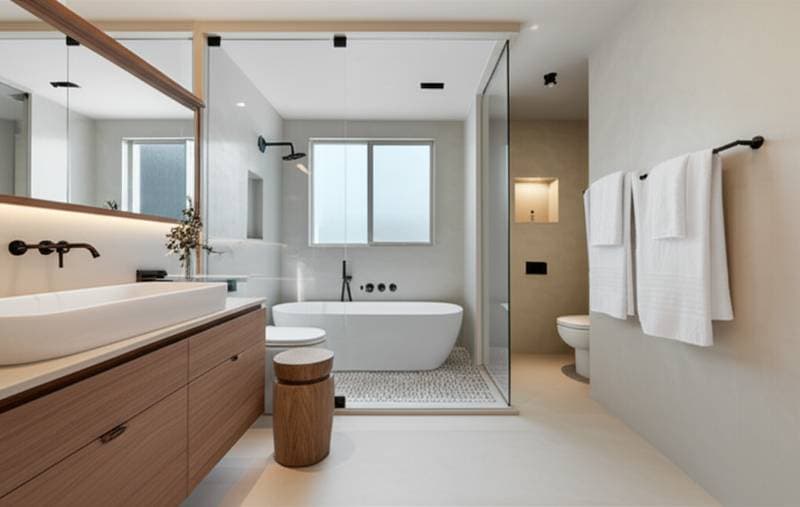
Japandi bathrooms achieve simplicity with natural materials and gentle symmetry. Soft neutral wood tones, like oak or ash, work alongside stone surfaces such as limestone or soapstone to add texture without overwhelming the eye. Fixtures feature sleek lines in finishes like matte black or brushed metal to uphold a sense of restraint.
Effective layout ensures smooth movement. Designers suggest dividing the area into zones for wet and dry functions using subtle barriers. For example, a frameless glass shower enclosure that matches the tile floor extends the sense of space and allows easy navigation.
Storage options focus on hiding items to support the minimalist look. Choose wall-mounted vanities with built-in drawers or recessed wall niches finished in complementary wood. If open shelves suit the design, restrict them to one or two levels and fill with items like woven baskets or ceramic pots that match the color scheme.
Harnessing Light for Serenity
Light forms the foundation of Japandi atmosphere, easing shifts between day and evening. Bring in ample natural light through larger windows or high clerestory openings that provide soft diffusion. Employ shoji-inspired screens or frosted glass to temper harsh sunlight, creating a uniform glow over all surfaces.
Layer artificial lighting to meet various purposes without harsh glare. Opt for bulbs with warm color temperatures of 2700 to 3000 Kelvin to mimic soft evening light. Consider these setups:
- Ambient lighting: Flush ceiling fixtures or recessed lights that illuminate the entire room evenly, minimizing shadows.
- Task lighting: Sconces on either side of the mirror with adjustable arms for clear visibility during grooming.
- Accent lighting: Thin LED strips hidden under vanities or in wall coves to throw gentle upward light that highlights features.
Such layering accentuates material details, like wood grain or stone patterns, while building depth and calm.
Essential Materials and Textures
Material choices establish the true Japandi feel. Select sustainable options that gain personality with use, such as reclaimed wood for cabinets or artisanal tiles with natural irregularities. Steer clear of shiny surfaces; favor matte or honed finishes that encourage interaction.
For floors, wide-format tiles that imitate wood grain or polished concrete provide a solid base. Walls gain from limewash plaster in neutral earth shades, which diffuses light and hides small flaws, echoing wabi-sabi values. Hardware like aged brass lever handles introduces subtle warmth amid the neutral tones.
To combine these elements, assemble a mood board with fabric and material samples for unity. Sample pairings in the real space under different lights to confirm smooth transitions between components.
Practical Implementation Steps
Apply Japandi ideas to your bathroom through careful planning at each phase. Start with a floor plan that enhances flow, designating room for a deep soaking tub or spacious walk-in shower as central features. Take precise measurements of current dimensions to proportion items correctly, creating a balanced rhythm where nothing overshadows the whole.
Budget guides material decisions. Premium selections like bespoke wood milling require more funds, but substitutes such as bamboo laminates or engineered quartz offer similar style at reduced expense. Purchase from trusted vendors that provide guarantees for water resistance.
In installation, prioritize clean connections. Match grout lines to fixture outlines and position cabinets to hover at 32 to 36 inches above the floor for alignment with counters. After setup, seal wood and stone with protective coatings and plan yearly upkeep to maintain durability.
Navigating Challenges and Solutions
Japandi spaces require ongoing care to keep their refined quality. Apply water-repellent finishes to natural materials to avert distortion, and simple designs promote tidy habits that prevent accumulation. Include discreet drainage systems and versatile storage to manage these issues.
Premium features can raise expenses, yet modular components enable gradual upgrades. On tighter budgets, use faux finishes like textured paints to simulate stone or add lighting upgrades to refresh standard setups. Engage experts from the outset to align aspirations with practical limits.
Cultivating Lasting Harmony
A Japandi bathroom matures alongside its users, developing a patina that deepens its story. Wood takes on richer tones over time, and surfaces soften with gentle wear, aligning with wabi-sabi appreciation for transience. Residents often notice changes in habits, with daily tasks turning more intentional and rejuvenating.
Nomi Iwata of Atelier Nomi notes, 'It is not just about looks. It is about how the space supports your state of mind.' This approach cultivates awareness, merging ease with solace to deliver sustained benefits. In essence, such environments sustain health through thoughtful balance and moderation.