Japandi 2.0: Wabi-Sabi Meets Maximalist Bedroom Accents
Consider the bedroom that achieves serenity yet lacks vitality, as if it awaits a subtle infusion of life. Japandi 2.0 addresses this by evolving the core tenets of minimalist design for those who seek both peace and individuality. This approach merges the philosophical depth of wabi-sabi with deliberate layers of texture and warmth, resulting in interiors that feel authentic, inviting, and subtly luxurious.
Traditional Japandi emphasizes purposeful simplicity through natural materials and uncluttered forms. The 2.0 iteration expands this foundation by incorporating narrative-driven accents, vibrant fabrics, and organic irregularities that encourage interaction. Clean silhouettes persist, enhanced by elements that evoke touch and storytelling, preserving the essence of calm while introducing expressive depth.
The following sections outline practical steps to implement Japandi 2.0 in a bedroom setting. Each recommendation maintains visual harmony while elevating sensory engagement.
1. Textured Walls That Whisper, Not Shout
Standard Japandi often features smooth, neutral walls to promote openness. Japandi 2.0 introduces subtle surface variations for added dimension. Opt for limewash finishes or clay plasters that respond dynamically to natural light, creating soft undulations rather than stark uniformity.
These materials provide depth without overwhelming the space. They enhance adjacent elements, such as a simple wooden headboard or sheer linen drapes, by casting gentle shadows that evolve with the time of day. The result is a room with inherent movement, far more engaging than flat paint alone.
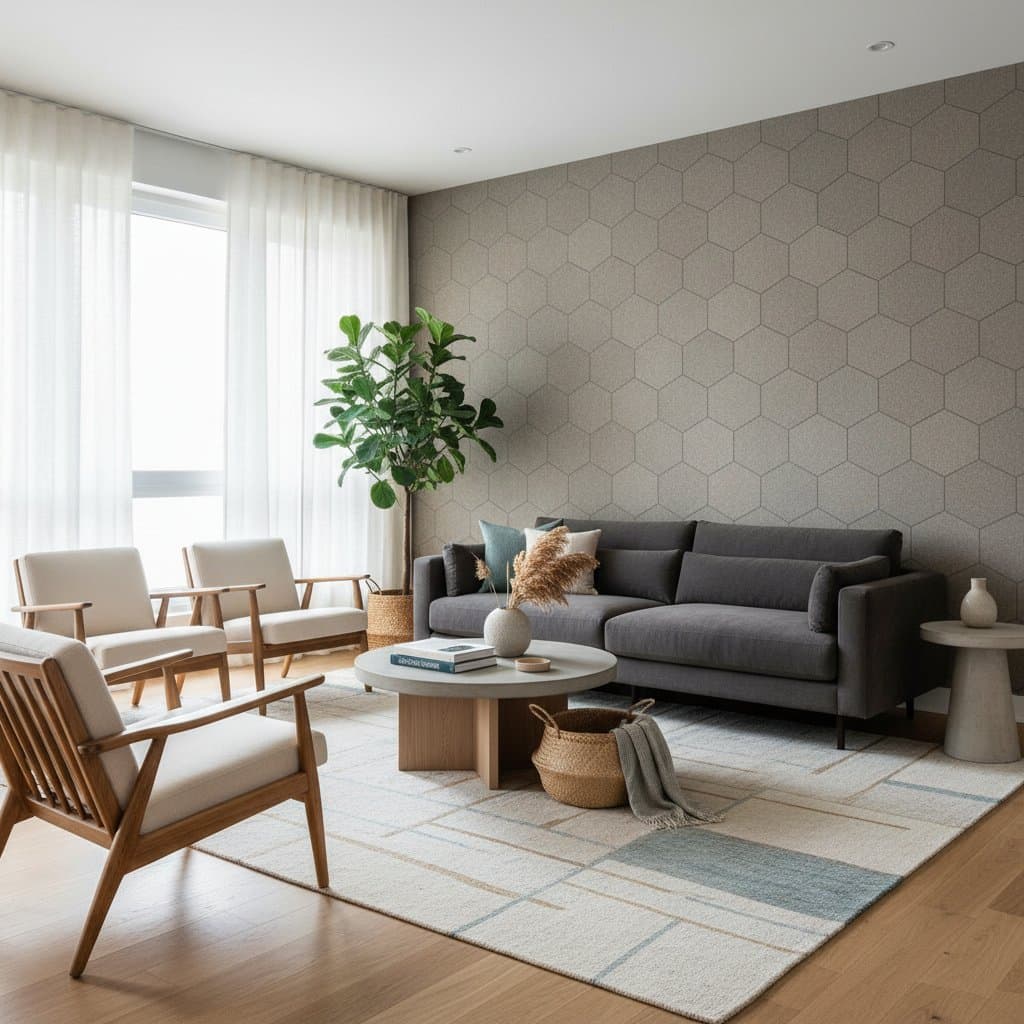
For a less intensive application, apply texture to a single feature wall behind the bed. Alternatives include linen-upholstered panels or fiber-based wallpapers, both of which introduce tactility while aligning with the style's natural ethos.
2. Bedding Layers That Invite Touch
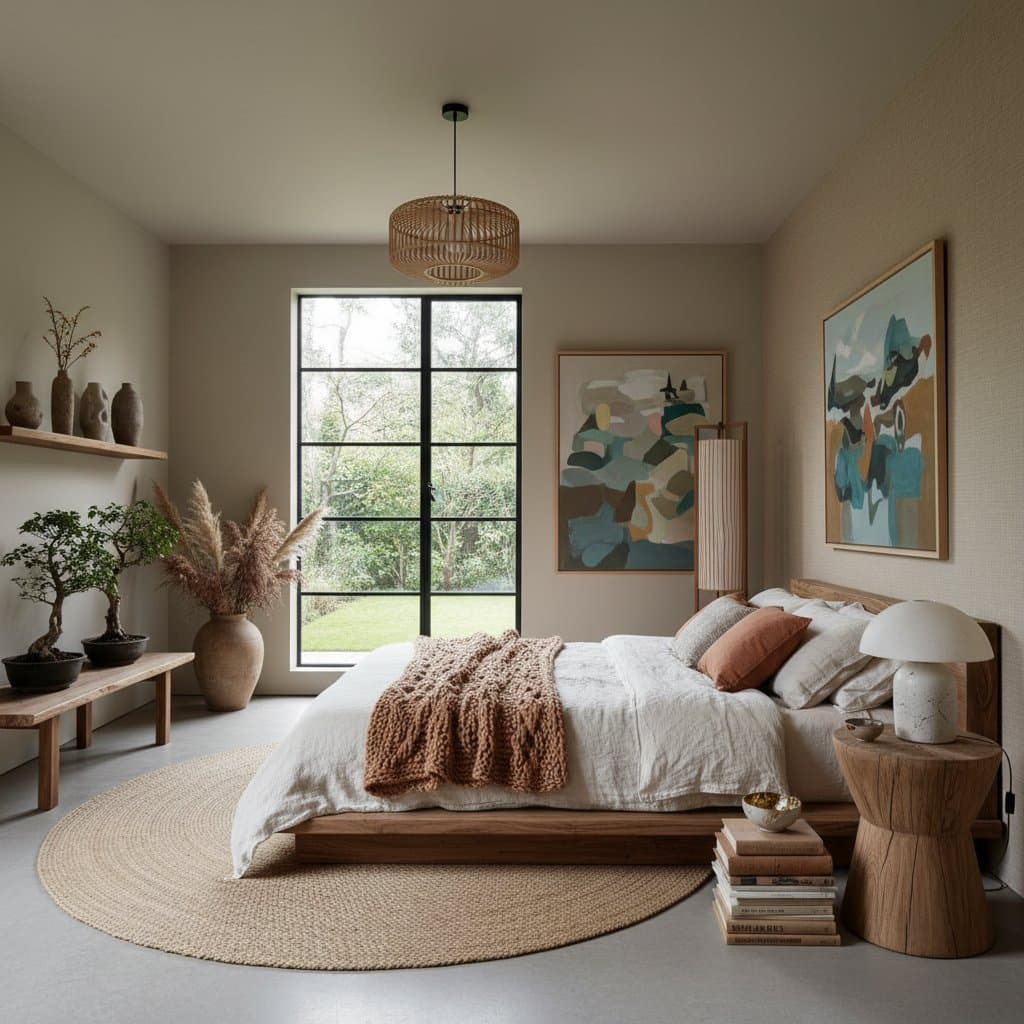
Bedding forms the heart of any bedroom, and in Japandi 2.0, it shifts from stark minimalism to layered comfort. Select organic cotton or linen sheets in muted tones, then layer with handwoven throws featuring irregular weaves or subtle patterns inspired by natural motifs.
This combination ensures breathability and warmth without visual excess. The varied textures—smooth against rough, light against weighted—create a tactile invitation that encourages relaxation. Prioritize pieces with visible craftsmanship, such as frayed edges or hand-dyed variations, to infuse authenticity.
To assemble, start with a neutral duvet cover as the base. Add one or two complementary layers, ensuring colors harmonize with the room's palette. This method transforms the bed into a focal point that feels both restful and personally curated.
3. Furniture That Mixes Clean Lines with Soul
Japandi furniture traditionally prioritizes unadorned forms, yet the 2.0 evolution welcomes hybrid pieces that blend precision with character. Pair a streamlined oak nightstand with a vintage-inspired bamboo armchair or a bench crafted from salvaged timber, emphasizing contrasts in finish and form.
Balance remains essential: for each polished surface, incorporate one with pronounced grain or hand-hewn marks. This prevents the room from resembling a sterile exhibit and instead fosters a sense of history and use.
Homeowners frequently note that such juxtapositions prompt mindfulness, drawing attention to subtle details like wood knots or artisanal joints. These elements underscore the value of skilled workmanship in everyday surroundings.
4. Lighting That Layers Warmth
Effective lighting in Japandi 2.0 moves beyond harsh overhead fixtures to create ambient, multifaceted illumination. Integrate low-slung pendants with rice paper shades alongside table lamps featuring ceramic bases and fabric diffusers, allowing light to filter softly across textures.
Layering—combining direct and indirect sources—produces a warm glow that enhances material qualities without glare. Dimmable options enable adjustment for different moods, from energizing mornings to soothing evenings.
Position fixtures strategically: a bedside sconce for reading, floor lamps for corners. This setup not only illuminates but also sculpts the space, highlighting imperfections as features and deepening the overall serenity.
5. Quiet Storage That Lets You Breathe
Maintaining order is crucial in serene environments, yet Japandi 2.0 avoids cold, impersonal solutions. Employ under-bed drawers with soft-closing mechanisms, wall-mounted shelves with hidden compartments, or rattan baskets integrated into built-ins to conceal essentials discreetly.
Clear surfaces allow the room's materials and forms to take precedence. This visual restraint amplifies the impact of tactile and sculptural details.
Enhance functionality with internal organizers, such as fabric-lined dividers or lidded boxes. These tools support tidiness as a mindful practice, where the beauty of the storage itself contributes to the room's calming rhythm.
6. Personal Objects with Stories
Japandi 2.0 thrives on intentional accents that convey narrative without clutter. Curate a few meaningful items, such as a ceramic vase with thumbprint impressions or a framed ink drawing on rice paper, placed sparingly on surfaces.
Select pieces that resonate personally—perhaps inherited textiles or travel-sourced pottery—to infuse the space with emotional layers. Limit to three to five elements per area to preserve balance.
These objects serve as focal points that invite reflection. They transform the bedroom from a neutral backdrop into a personalized retreat, where each item subtly reinforces the wabi-sabi appreciation for transience and authenticity.
7. Scent, Sound, and the Invisible Layers
Beyond visible design, Japandi 2.0 engages the full sensory palette. Introduce subtle aromas through linen-infused sprays, cedar wood elements, or essential oil diffusers that evoke natural landscapes without overpowering.
These additions cultivate a holistic restorative experience, strengthening the connection to the space. For those averse to scents, focus on auditory softening via thick wool rugs or cushioned seating that absorb sound, reducing reverberation.
Simple interventions, like acoustic fabric behind the headboard, simultaneously improve comfort and ambiance. Together, they ensure the bedroom functions as a multisensory haven.
A Palette That Grounds and Lifts
Color selection in Japandi 2.0 employs restraint with purpose. Anchor with warm neutrals like beige and taupe, then introduce deeper shades such as slate gray, burnt sienna, or forest green for anchoring depth. Accents in terracotta or deep blue provide vitality in measured doses.
This orchestration influences mood effectively: lighter hues promote expansiveness and ease, while richer tones offer enclosure and stability. The interplay yields a versatile atmosphere conducive to rejuvenation.
Experiment by replacing a single item, such as a pillow in ochre or a tray in ebony. Such adjustments reveal the palette's flexibility in adapting to individual preferences.
Embracing Imperfection in Daily Use
Japandi 2.0 liberates design by celebrating flaws as integral to character. A faint mark on wood furniture, an asymmetrical vessel, or a blanket with natural inconsistencies all enrich the narrative of the space.
This mindset extends to habitation: rather than preserving pristine conditions, view signs of use as affirmations of vitality. A subtle imprint from a coffee mug signals unhurried moments; a softened rug edge reflects cherished routines.
Such acceptance fosters a deeper bond with the environment, turning the bedroom into a true extension of life rather than a detached ideal.
Cultivating Lasting Sanctuary
Through deliberate selections in texture, form, and sensory elements, Japandi 2.0 constructs a bedroom that nurtures well-being. The style's strength resides in its adaptability to personal rhythms, creating environments that evolve with their inhabitants. Ultimately, it delivers not fleeting aesthetics but enduring comfort rooted in mindful design.