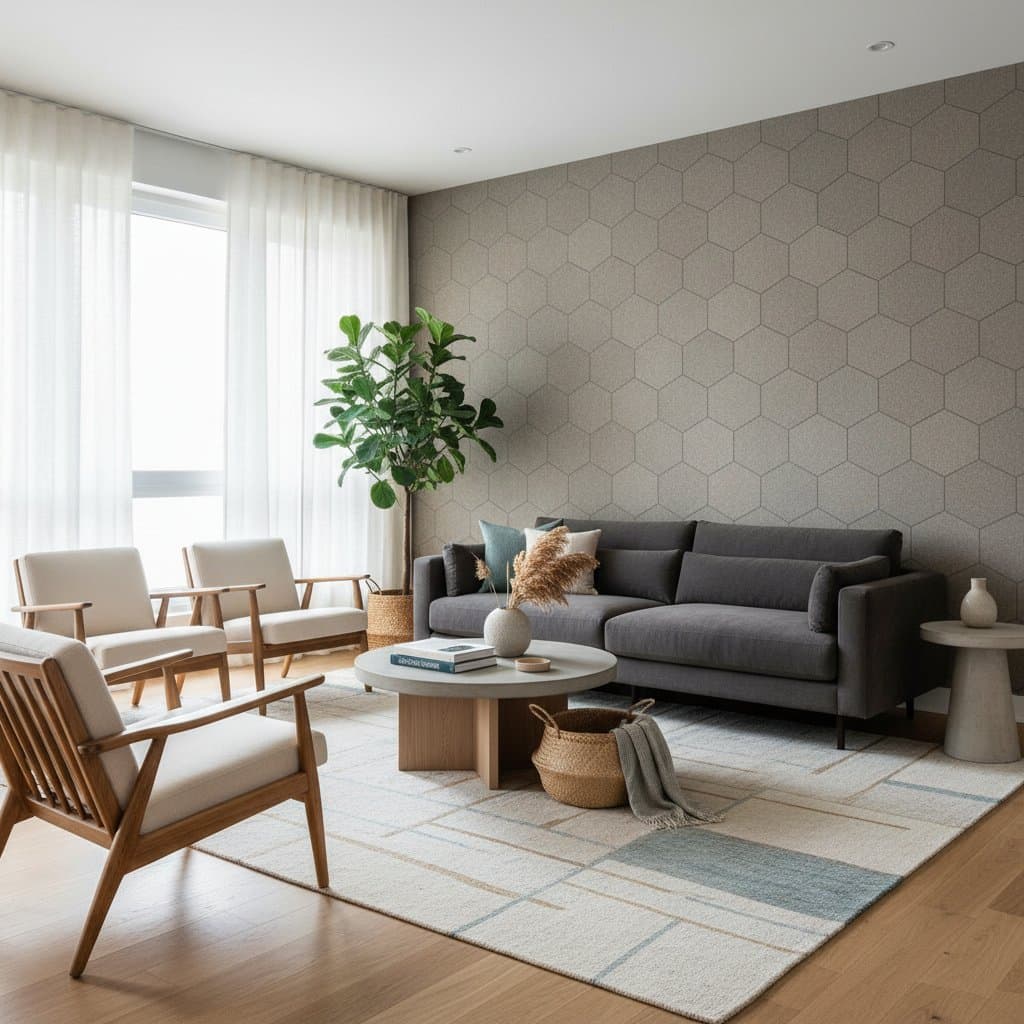
Acoustic Ceilings: Where Style Converges with Sound Control
Open-plan layouts, high ceilings, and rigid surfaces create luminous, expansive interiors, yet they often intensify auditory disturbances. Dialogues reverberate, footfalls resonate, and minor noises persist unduly. Acoustic ceilings address these issues by merging superior sound mitigation with aesthetic appeal, suitable for diverse environments ranging from domestic kitchens to professional studios.
The Importance of Acoustic Design
Sound propagation mirrors light dynamics: it reflects, scatters, and permeates spaces based on surrounding materials. Environments featuring wood, stone, or glass exude visual allure but may induce auditory overload as sound waves lack absorption. Acoustic ceilings counteract this by capturing sound waves, minimizing echoes, and elevating overall comfort. Consequently, rooms attain a serene quality, with speech rendering naturally and elements ceasing to amplify distractions.
Interior designer Lara Chen observes, “When clients enter a completed space, they typically sense the tranquility before identifying the alterations.” This unobtrusive enhancement positions acoustic ceilings as essential in contemporary design practices.
The Development of Acoustic Ceilings
Historically, acoustic solutions remained concealed or confined to institutional applications, such as grid-mounted white mineral tiles paired with fluorescent fixtures. Functionality prevailed, though aesthetics appeared stark. Innovations in materials, configurations, and surface treatments have since reshaped perceptions of auditory management.
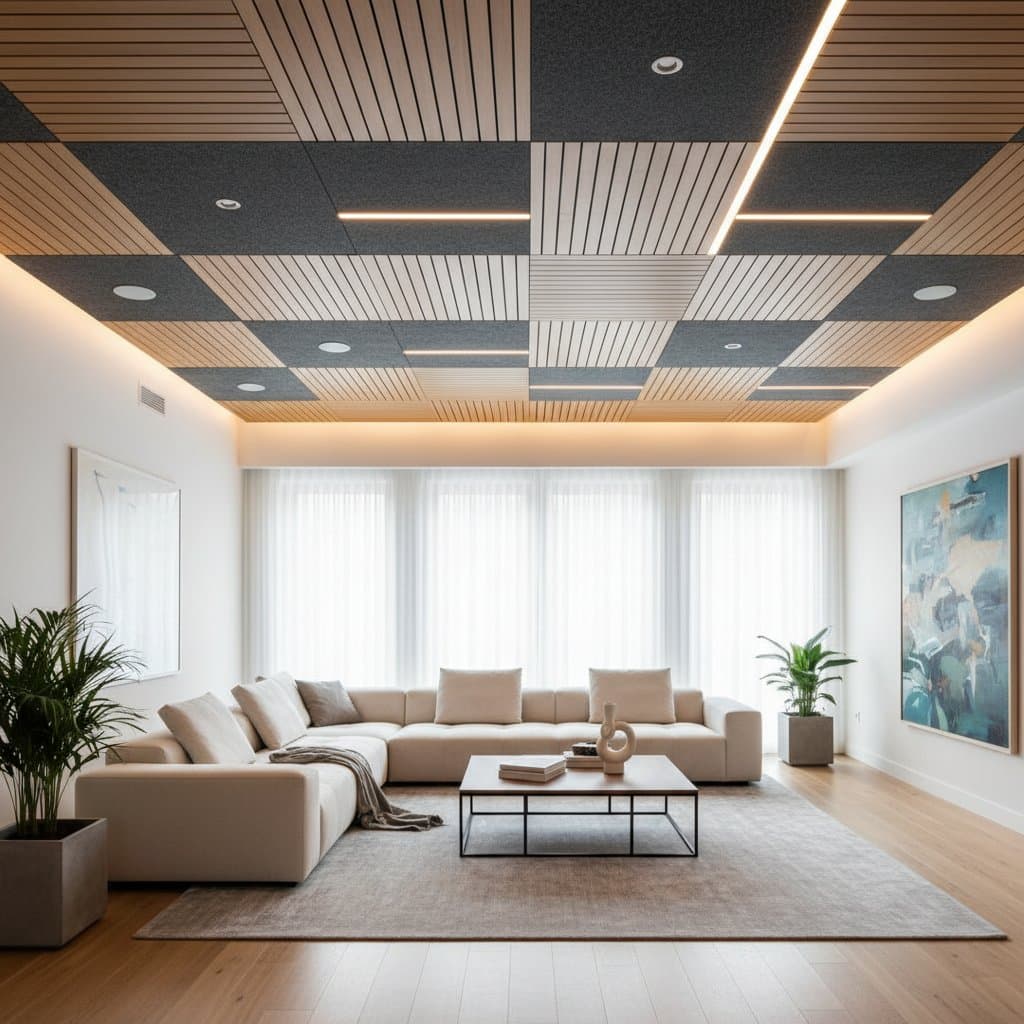
Modern acoustic ceilings incorporate advanced textiles, densified wood composites, felt composites, and molded plaster to yield dual-purpose surfaces. Options include geometrically patterned panels, fabric-encased modules, or systems fused with illumination. Certain designs mask linear ventilation outlets or track lighting, yielding uninterrupted ceiling expanses that veil utilitarian aspects.
Key Overview
Primary Users: Residential owners, architects, and designers pursuing enhanced auditory clarity and unified visuals
Ideal Applications: Kitchens, lounges, home offices, ateliers, and expansive apartments
Standard Dimensions: Modular units from 2 by 2 feet (61 by 61 centimeters) to 4 by 8 feet (122 by 244 centimeters)
Collaborative Expertise: Acoustic engineers partner with interior specialists and illumination experts
Challenges Posed by Rigid Surfaces
Prior to acoustic ceiling adoption, professionals depended on absorbent textiles for noise moderation. Carpets, draperies, and padded furnishings offered partial relief, yet they seldom addressed fundamental problems. In areas with concrete flooring or arched ceilings, subtle sounds traveled extensively. Homeowner David Ruiz recalls of his loft residence, “We could hear every chair shift and every utterance.” Such resonance impeded relaxation.
Open kitchens encountered parallel difficulties. Solid counters and ceramic splash guards echoed utensil impacts and device hums. Despite aesthetic merits, these zones frequently suffered from sonic imbalance.
Transformations Achieved with Acoustic Ceilings
Implementing an acoustic ceiling yields prompt improvements. Positioning absorbent or contoured materials overhead establishes an inconspicuous buffer that dampens reverberations without diminishing luminosity or spatial harmony. Installations may suspend panels inches from the base ceiling, mount flush for streamlined profiles, or form undulating baffles to introduce dynamic visuals.
In a Studio Alar project, oak-laminated panels with drilled acoustic cores revitalized a bustling kitchen into a serene social hub. Integrated LED channels provided uniform counter illumination, supplanting stark downlights. Lead designer Nia Patel notes, “The wood tempers both appearance and acoustics.” The space now conveys warmth alongside quietude.
Essential Design Specifications
- Core Materials: Drilled wood laminates, densified felt, mineral composites, or PET panels derived from recycled plastics
- Surface Treatments: Fabric-clad modules in subdued palettes, coated gypsum featuring fine perforations, or ribbed lumber for organic appeal
- Illumination Fusion: Elongated LEDs, embedded halogens, or veiled diffuse arrays
- Mounting Elevation: Generally positioned 6 to 12 inches (15 to 30 centimeters) beneath the primary structure to accommodate insulation or utilities
- Upkeep Procedures: Vacuum or cleanse with diluted soap solutions for most surfaces
Integrating Acoustics and Illumination
Effective acoustic strategies extend beyond isolation. Ceilings that regulate echoes simultaneously facilitate multifaceted lighting. Professionals deploy acoustic dividers to delineate functional areas, like seating or work zones, obviating partition needs. Paired with adjustable luminaires, these yield adaptable brightness attuned to activities and atmospheres.
A studio photographer, post-felt baffle installation, characterized the shift as “immediate serenity.” The elements curtailed fan whirs and ensured consistent light spread, refining imaging outcomes. Beyond utility, the ceiling cultivated an inspiring milieu.
Expressive Potential in Color and Shape
Formerly utilitarian, acoustic ceilings now embody artistic intent. Wool felt arrays offer extensive hues, spanning soft beiges to rich indigos. Contoured profiles evoke natural formations like clouds or waves, elevating technical components to decorative focal points. Designers echo ceiling motifs in accents or millwork for cohesive narratives.
For sparse aesthetics, seamless acoustic plasters preserve planar continuity while attenuating noise, suiting exhibitions or sleek dwellings. Conversely, offices or youth spaces benefit from vibrant tile mosaics that demarcate regions and infuse vitality.
Strategic Concealment and Utility
Ceilings managing acoustics also obscure infrastructure like cabling, fire suppression, or conduits. Residents often incorporate hidden hatches or pendant organizers. Kitchens gain recessed light troughs or compact exhaust paths that remain unseen. Lounges accommodate suspended audio units via acoustic floats, preserving wall integrity.
Considerations for Implementation
- Financial Range: Options span affordable mineral boards to bespoke lumber or fabric assemblies
- Care Demands: Textile selections necessitate cautious tending in busy locales
- Spatial Impact: Modest height reductions optimize sound but may constrict perceived scale in compact areas
- Fixture Alignment: Coordinate electrical and hardware layouts upfront to sidestep grid interferences
Experiencing the Benefits Daily
Post-installation, acoustic ceilings subtly reshape room dynamics. Exchanges clarify, audio balances, and ambient clamor recedes to agreeable thresholds. Enhancements prove understated yet pervasive. Visitors sense elevated composure without pinpointing the source.
Steps to Integrate Acoustic Ceilings
Assess your space's sonic profile by noting echo durations in key areas. Consult acoustic consultants to measure reverberation times and recommend absorption targets, typically aiming for 0.5 to 0.8 seconds in residential settings. Select materials aligning with your palette and functions, such as perforated woods for warmth or PET felts for sustainability. Engage certified installers to ensure secure mounting and seamless integration with existing HVAC and electrical systems. Test the setup post-completion, adjusting lighting or panels as needed to fine-tune comfort and aesthetics.