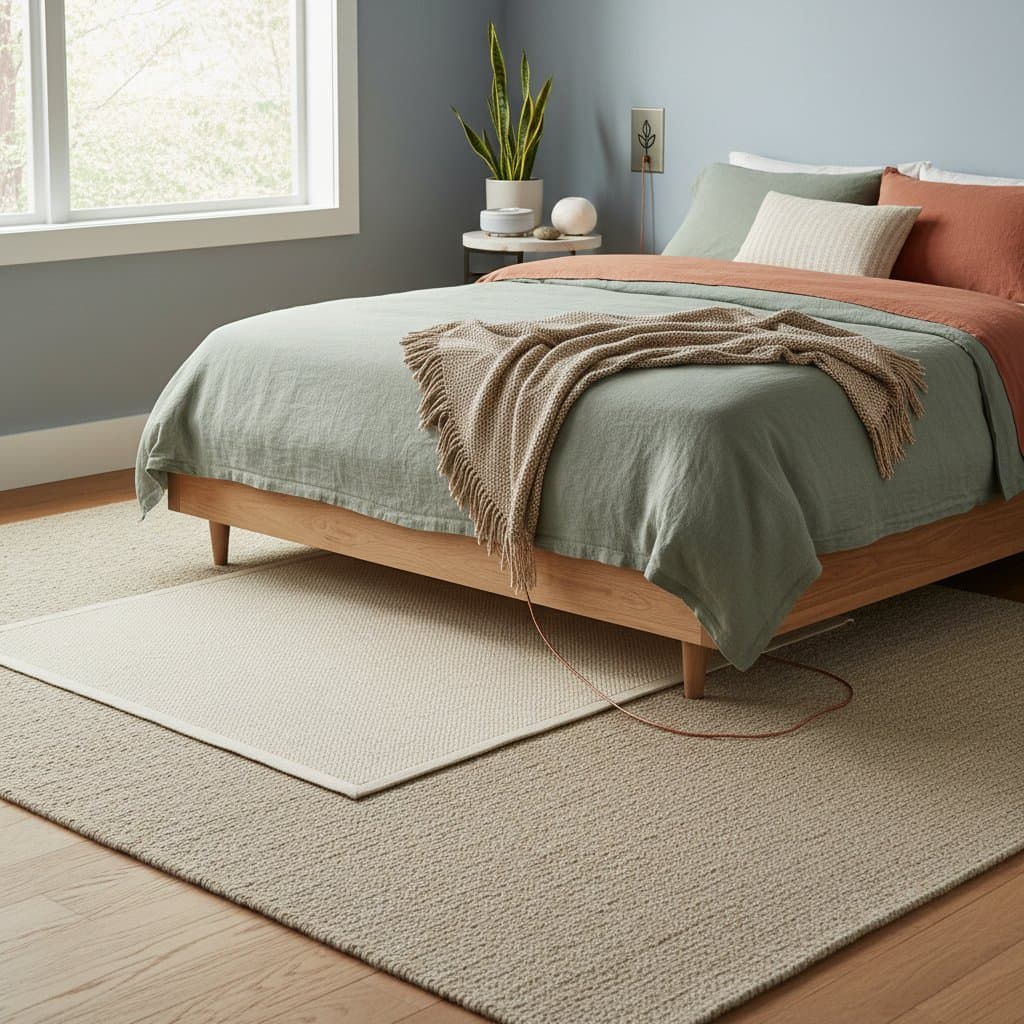
Grounding Mats: Elevate Bedroom Wellness Naturally
Homeowners increasingly seek ways to enhance bedroom environments for better rest and recovery. Beyond traditional elements like lighting and air quality, grounding mats emerge as a subtle innovation. These conductive surfaces, positioned under bedsheets or rugs, link the body to the earth's electrical field. This connection mimics the benefits of barefoot contact with natural ground, such as grass or sand. Interior designers and wellness advocates observe that such integrations alter the room's feel and functionality in meaningful ways.
At a Glance
Who lives here: Individuals prioritizing restorative interiors and natural health practices
Location: Urban apartments or rural homes
Room type: Primary bedroom, ranging from 120 to 220 square feet (11 to 20 square meters)
Design team: Wellness experts, interior designers, and certified electricians experienced in grounding installations
Before
Bedrooms typically emphasize aesthetics through color schemes, linens, and illumination, often neglecting the floor's role. Sleepers frequently interact with synthetic or insulated surfaces that disrupt the body's natural electrical balance with the earth. This isolation may lead to static accumulation, interrupted sleep, and morning fatigue.
Interior designer Laura Cheng shared, “Clients often mentioned feeling wired yet exhausted. Their spaces appeared inviting, but lacked support for physical well-being.” The key challenge involved restoring this natural link indoors while preserving style and ease.
After
Grounding mats provide an effective solution to restore this connection. Placed beneath fitted sheets or rugs, they form a conductive pathway to a grounded outlet or external rod. Materials typically include carbon, silver, or copper threads embedded in a pliable, comfortable base, ensuring conductivity without discomfort.
Changes manifest subtly, yet designers highlight visual enhancements. A mat under a cotton rug offers added stability, creating a solid foundation that aligns with its purpose. When combined with organic fabrics like wool or linen, it fosters a serene, deliberate texture.
Homeowner Daniel Ruiz, after adding a grounding mat under his bed, noted, “Nights became noticeably calmer. Sleep deepened, and mornings brought greater refreshment.” His designer emphasized that embedding wellness features into everyday elements signals a trend toward healing-focused spaces.
Design Details
- Material Composition: Options feature carbon-infused polyurethane for flexibility or silver-threaded cotton for softness and longevity.
- Connection Points: A slim cord links the mat to a grounded wall outlet or an outdoor grounding rod.
- Placement: Position under sheets, below rugs, or integrate into custom floors. Coverage should span the sleep area or foot-contact zones for best results.
- Maintenance: Clean with a damp cloth and gentle soap. Steer clear of bleach or abrasive cleaners to protect conductive elements.
- Visual Integration: Select shades like beige, gray, or pale white to match existing floors or bedding. Route cords along baseboards or behind furniture for seamless appearance.
Why It Matters
Earthing, or grounding, draws from the principle that the earth's surface maintains a mild electrical charge beneficial to human physiology. Ongoing studies explore its effects, with users commonly experiencing enhanced sleep, lessened tension, and elevated mood. Beyond science, the practice promotes intentional living. Linking the bedroom to an external ground point embeds the space within nature's rhythms.
Designer Ravi Patel put it simply: “A grounded body eases the mind. The room transitions from contrived to alive.” This approach complements features like rhythm-aligned lighting, air filtration, and eco-friendly finishes.
Integrating Grounding Mats in Bedroom Design
These mats adapt to sparse or elaborate styles. In streamlined setups, a mat beneath linen bedding remains unobtrusive, enhancing tranquility. In detailed areas, it underpins a wool rug, introducing nuanced depth.
Consider these strategies for cohesive incorporation:
- Bed Area Coverage: Best for discreet use; position flat under the mattress or sheet with a hidden cord.
- Seating or Practice Zones: Employ as a rug underlay in reading spots or meditation areas to aid relaxation and flow.
- Multi-Layer Floors: Pair with cork or bamboo for warmth and authenticity.
For planning, assess the sleep surface precisely. A queen bed, measuring 60 inches (152 centimeters) across, benefits from a mat at least 70 inches (178 centimeters) long, accommodating two people fully.
Smart Storage and Safety Moves
- Cord Management: Secure lines with clips along frames or walls to eliminate risks.
- Outlet Verification: Have an electrician confirm grounding integrity prior to setup.
- Layer Protection: Opt for permeable fabrics over mats to avoid dampness.
- Storage Practices: Roll loosely when storing to maintain wire integrity.
Trade-Offs to Consider
Installation demands initial care, including verifying connections and bypassing ungrounded extensions. Costs span from affordable cotton versions to high-end silver options, depending on dimensions and quality. Though visually minimal, benefits rely on regular application and precise execution.
Living with Your Design
Integrated grounding mats function as unseen supports, enhancing well-being without altering daily routines. Users often sense increased peace upon entering the room. This link fosters habits like evening reading or mindful breathing in a stabilized setting.
Pair with organic fabrics, adjustable soft lighting, and clear surfaces to amplify restoration. Such combinations yield bedrooms that recharge rather than deplete.