Grounding Floors Enhance Bedroom Wellness
Bedrooms cluttered with harsh surfaces often hinder deep rest. These spaces, intended for renewal, frequently lack connection to nature and inner calm. Grounding floors address this by providing physical comfort and a stabilizing link to the earth, fostering overall well-being.
Grounding involves establishing a natural foundation that supports daily routines from morning to night. Materials, textures, and layout choices turn the floor into a daily source of restoration.
Defining Grounding Floors
Grounding floors draw from the principle of linking the body to the earth's surface. In interior design, this translates to materials that conduct natural energy, like conductive systems, or simply mimic the sensation of soil, stone, or wood.
Designers and residents report improved mood and restfulness, even as research evolves. These floors moderate room pace, ease movements, and encourage mindful living. In bedrooms, where extended rest occurs, they promote pre-sleep tranquility and gentle awakenings.
The Sensory Influence of Floors
Floors extend beyond utility to shape emotional responses. As the base for every step, a grounding floor alters the room's sensory profile, welcoming bare feet and evoking security through natural textures.
Solid, soothing surfaces signal relaxation to the body. Options like soft fibers, smooth wood, or polished stone release tension, positioning the floor as a subtle daily anchor.
Selecting Optimal Materials
Material selection determines the bedroom's atmosphere and utility. Each provides unique grounding and comfort levels.
Natural Wood
Wood delivers inherent warmth and organic patterns reminiscent of forests. Light varieties brighten compact spaces, while darker tones envelop for repose. Opt for sustainably harvested sources to align with eco-conscious values.
Apply low-VOC sealants for air quality and tactile preservation. Matte finishes enhance natural appeal over glossy alternatives.
Cork
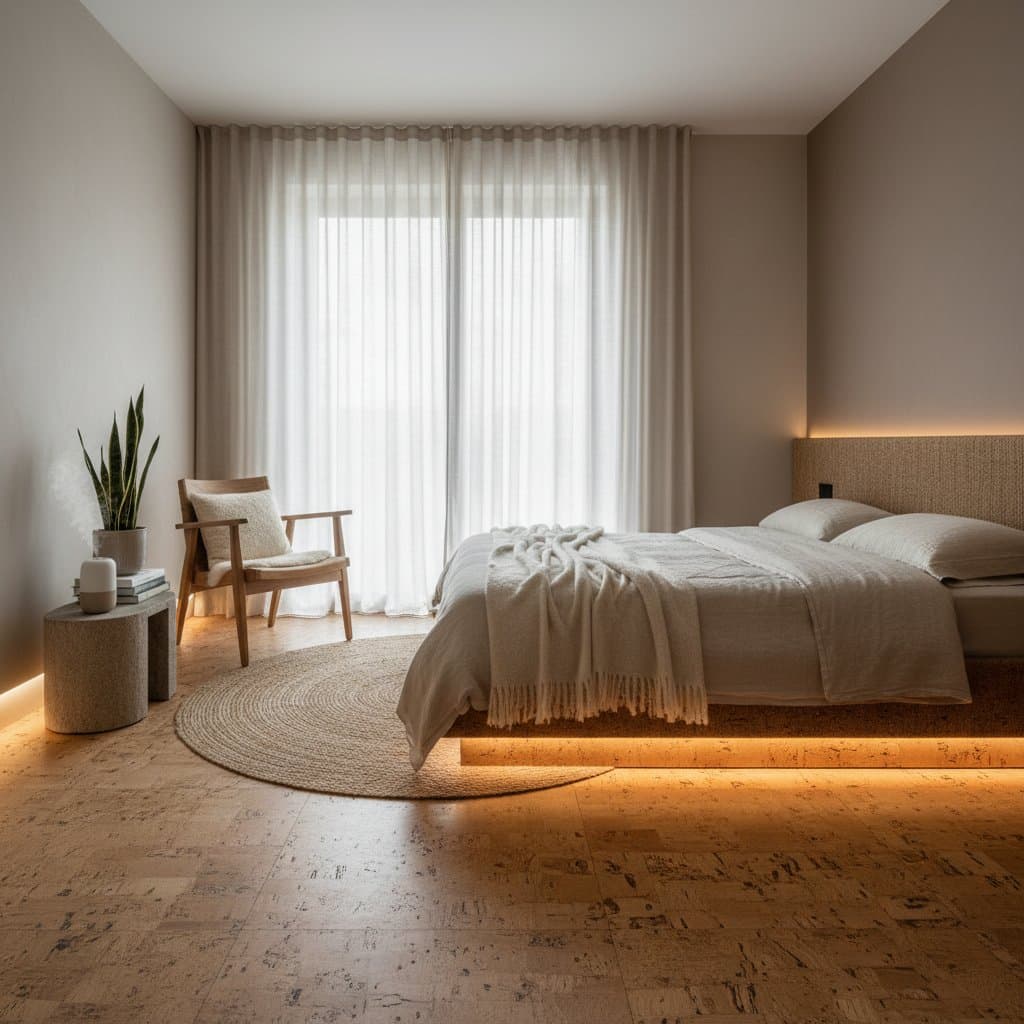
Cork offers resilience, insulation, and sound absorption for quieter, warmer bedrooms. Harvested from renewable cork oak bark, it aligns with sustainability. Its resilient bounce eases joint strain during barefoot walks.
The textured surface prompts sensory engagement, urging presence in the moment.
Clay or Earthen Surfaces
Clay floors, blended with sand and oils, yield an elemental, soothing texture. They maintain stable temperature and humidity across seasons.
Professional installation ensures durability, resulting in steps that feel profoundly rooted.
Natural Stone
Slate, limestone, or granite provides cooling stability, suiting warmer regions or durable needs. Complement with rugs near bedding for balanced warmth.
This combination merges firmness with softness.
Wool or Natural Fiber Carpets
Wool or sisal delivers plush insulation and breathability over synthetics. Low-pile designs accommodate bare feet comfortably.
Layer these over wood or stone to retain grounding while adding coziness.
Optimizing Bedroom Layout for Grounding
Align room elements to amplify floor benefits. Simplify arrangements by minimizing furniture and preserving open areas around the bed for immediate floor contact upon rising.
Employ balanced furniture placement, such as paired nightstands, to reinforce steadiness. Maintain clear paths to minimize visual disruption.
Incorporate warm, diffused lighting that highlights floor textures. Floor-level lamps direct focus downward, strengthening earth connection.
Multisensory Grounding Elements
Grounding engages touch, sound, and temperature fully.
- Texture: Select inviting surfaces like wood grains or woven fibers to promote tactile awareness.
- Sound: Blend hard and soft elements; rugs on stone or wood dampen echoes for harmony.
- Temperature: Natural options self-regulate; stone cools summers, cork and wood warm winters.
Linking Floors to Wellness
Beyond aesthetics, grounding floors impact physical and mental states. Natural contact engages senses to lower stress and steady breath.
Inspired by earthing practices, some systems incorporate conductive layers for indoor earth simulation. Regardless, the core reconnects inhabitants to their environment for equilibrium.
Such designs yield restful, streamlined spaces that ease upkeep and invite unhurried routines.
Incorporating Floors into Routines
Integrate the floor into wellness habits. Start mornings barefoot, sensing texture and stability before daily tasks.
End evenings similarly, using deep breaths on the surface to shed tension. These practices build rituals signaling transition to rest.
Maintenance for Longevity
Sustain floors through routine, gentle care.
- Wood: Vacuum dust; wipe with damp cloths. Refinish sparingly to retain shine.
- Cork: Use mild soap solutions; protect from sharp impacts.
- Stone: Employ pH-neutral cleaners; reseal against moisture.
- Earthen: Oil surfaces seasonally; dust lightly.
- Wool Carpets: Vacuum regularly; sun-dry for freshness.
View upkeep as intentional self-care.
Overcoming Implementation Hurdles
Design shifts can intimidate, particularly with wellness focus. Initiate modestly, like adding a natural mat bedside.
Prioritize decluttering to expose floors, then reintroduce essentials. Emphasize incremental gains over flawlessness.
Harmonizing Bedroom Senses
Extend grounding by matching floors with natural fabrics, minimalist pieces, and ambient light. Steer clear of artificial aromas or vivid hues that compete with earthy tones.
Incorporate subtle sounds, such as water features, to echo natural flows and unify the sensory environment.
Applying Grounding Home-Wide
Extend principles to adjacent areas for fluid transitions. Uniform materials in living spaces or halls promote seamless, calming movement.
This continuity embeds wellness throughout the home.
Sustaining the Grounding Effect
Grounding floors embody enduring mindful design. Residents often experience enhanced peace, sounder sleep, and relaxed starts.
The surface cultivates presence. Refresh seasonally through polishing or repositioning to preserve vitality.
Building Lasting Calm
Grounding floors establish wellness foundations via natural steps. Select materials thoughtfully, maintain with purpose, and weave into habits to craft a bedroom sanctuary.
Begin simply: one natural surface contact daily. This builds enduring serenity, mirroring earth's quiet support.