Grounding Flooring Brings Earthing Benefits Indoors
For many homeowners, wellness design has moved beyond air quality and natural light. The next layer of healthy living is contact with the earth itself, and grounding flooring invites that connection beneath your feet. Also called earthing flooring, these materials are engineered to carry the Earth's subtle electrical charge indoors. The goal is to recreate the calming, balancing effects of walking barefoot on soil or sand while maintaining the comfort and style of a finished interior.
Designers are exploring this new category not as a trend but as a functional layer that supports rest, recovery, and focus. The right materials can look sleek, feel natural, and quietly improve how a home works for its occupants.
At a Glance
Who benefits: Homeowners seeking wellness-focused interiors
Where it works: Bedrooms, offices, and living areas
Surface types: Tiles, engineered wood, vinyl, cork, and conductive carpet
Connection method: Grounding rod or integrated electrical grounding system
Design teams experimenting: Wellness-focused architects, interior designers, and product engineers
After: Floors That Connect and Soothe
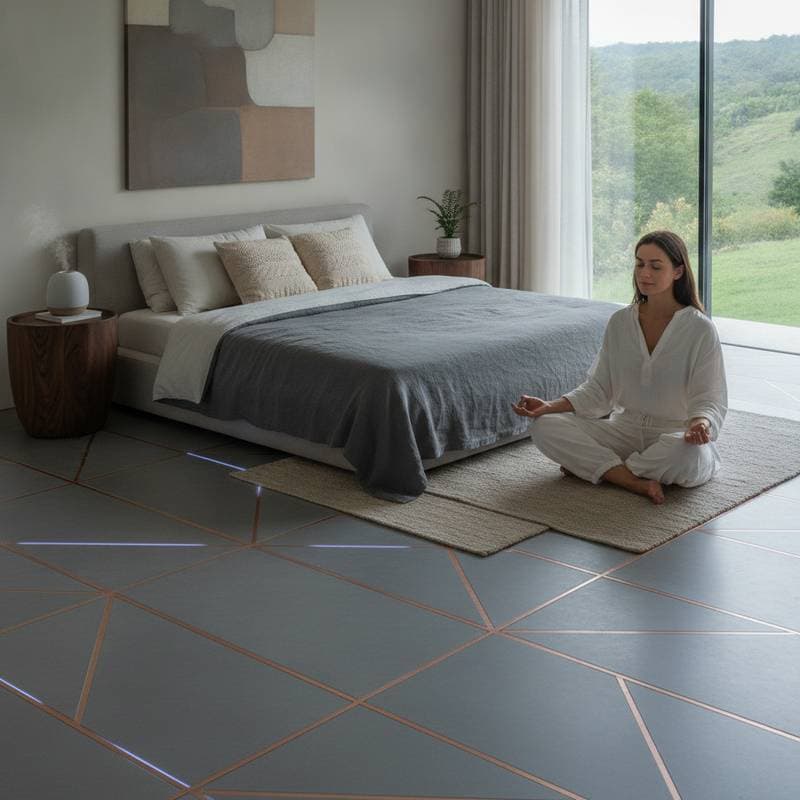
Grounding flooring addresses that hidden layer of wellness by restoring physical connection to the earth’s field. The change is invisible but sensory. Homeowners often describe a feeling of calm or clarity when spending time barefoot on these surfaces.
In a recent project by Studio Terrain, the design team installed conductive cork flooring connected through a discreet grounding wire along a baseboard. The finish looked identical to natural cork, warm underfoot and softly matte, but carried a built-in conductive grid.
The project’s homeowner said, "It feels like walking on warm sand. There’s a sense of balance I didn’t expect from a floor."
Designers pair grounding floors with other wellness strategies such as natural daylighting, low-VOC paints, and layered lighting. The combined effect is a space that supports both body and mind, creating rooms that feel grounded in more ways than one.
Why Designers Are Paying Attention
Wellness design once focused on air and water quality. Grounding floors expand the conversation into energy balance and sensory comfort. Interior designer Kim Patel said, "We spend most of our time indoors. If we can restore even a small part of nature’s balance inside, it changes how the space feels."
The appeal also lies in subtlety. A grounding floor does not look technological. It feels authentic, natural, and timeless. This allows homeowners to pursue wellness benefits without adding visible devices or digital complexity.
Architects are pairing grounding systems with biophilic design principles. By combining wood, stone, and living plants, they create interiors that visually and physically connect to nature. The result is calm, cohesive spaces where materials and sensory experience work together.
Practical Considerations
Grounding floors are safe when installed correctly. The system does not carry electrical current; it allows static discharge and equalization of potential between body and ground.
Professional installation is essential. A licensed electrician ensures that the grounding connection meets local codes and that continuity is maintained across the surface. For homeowners upgrading existing floors, conductive mats or underlayment can retrofit beneath existing finishes.
The cost varies by material but often falls within a moderate premium range. The added layer of grounding mesh or conductive coating typically adds a small percentage to the total flooring cost. Many designers view this as an investment in wellness rather than a luxury upgrade.
Trade Offs to Consider
Grounding systems require precision during installation. Incorrect bonding or use of insulating adhesives can block conductivity. Maintenance must stay gentle, avoiding waxes or sealers that interrupt the conductive path.
In older homes, confirming the quality of the building’s grounding system is essential. Some structures may need an upgraded grounding rod or additional verification.
Homeowners should also consider their lifestyle. If most time is spent in shoes, grounding benefits may be limited. Designers often encourage barefoot or conductive footwear habits to make the most of the system.
Smart Storage and Design Synergy
Integrating grounding flooring often inspires broader design improvements. Designers use the renovation to streamline lighting controls, improve air circulation, and refresh storage layouts.
In one townhouse project, the design team installed grounding wood floors alongside built-in shelving finished in natural oil rather than polyurethane. The continuity of materials made the space feel calm and unified. The homeowners reported that the room "just feels quieter and more balanced."
This synergy reflects how grounding design can anchor a larger wellness approach. It is not only about the floor itself but about creating flow and sensory calm throughout the home.
Bringing Earthing Technology Home
For those curious but not ready for full renovation, smaller-scale options exist. Conductive mats can slip under desks or yoga spaces. These connect via a grounding cord and deliver similar benefits in targeted zones.
Manufacturers now offer modular tiles with built-in grounding clips that snap together, allowing flexible installation. These can later be expanded into full-room systems. Designers often test these prototypes before specifying permanent flooring for clients.
When planning a new build, grounding flooring can be included from the start. Electricians route grounding wires beneath subfloors, and designers select finishes compatible with the conductive layer. The process adds minimal complexity when coordinated early.
Living with Your Design
Once installed, grounding flooring becomes a quiet, invisible ally. It requires no ongoing maintenance beyond regular cleaning and occasional conductivity checks. Over time, the surface patinas naturally, developing the same character as any quality floor.
Homeowners often adjust lighting and furniture placement to encourage barefoot contact areas. A reading nook with a grounded floor and open window can become a daily ritual space.
Designer Laura McNeil summarized it clearly. "The beauty of grounding flooring is that it disappears. You just feel good in the space, and that’s the point."
The concept does not replace other wellness strategies but complements them. When paired with natural ventilation, layered lighting, and thoughtful storage, grounding floors help create homes that support both body and mind.