Acoustic Panels: Stylish Soundproofing for Homes
Consider the moment when a cabinet door closes and the sound echoes throughout the house like a persistent drum. Family movie nights may resemble surround-sound demonstrations rather than relaxed gatherings. These instances highlight how sound influences comfort levels. Walls, floors, and ceilings appear complete, yet they reflect noise relentlessly. Acoustic panels address this issue effectively. They integrate seamlessly without drawing undue attention, yet they restore tranquility to a space swiftly.
These panels extend beyond recording studios and sparse offices. Homeowners now recognize their value for sound management and aesthetic enhancement. What began as utilitarian has evolved into an element of beauty. This discussion examines their functionality, stylistic integration, and the relief they provide for daily living.
Exploring Acoustic Panel Varieties
1. Fabric-Wrapped Panels
Fabric-wrapped panels represent a traditional choice that has advanced significantly from plain gray office fixtures. Contemporary versions feature linen textures, intricate weaves, and custom prints aligned with wall hues or existing artwork. Such panels integrate subtly or serve as focal points.
These options diminish echoes and introduce visual softness. Install a series along a wall to function as both artwork and sound barrier, particularly in expansive living areas. Select fabrics with varying densities for optimal absorption; thicker materials handle mid-range frequencies effectively.
2. Wood Slat Panels
Wood slat panels combine an acoustic core with layered wooden strips, creating a modern, linear aesthetic. Available in finishes from natural oak to painted variants, they diffuse sound waves while adding warmth to interiors. Position them vertically or horizontally to complement room proportions.
This design reduces reflections and enhances acoustics without overwhelming the space. In dining areas, they prevent clattering from utensils and plates. Choose sustainable woods like reclaimed timber for an eco-conscious appeal that aligns with contemporary decor trends.
3. Cork and Felt Combinations
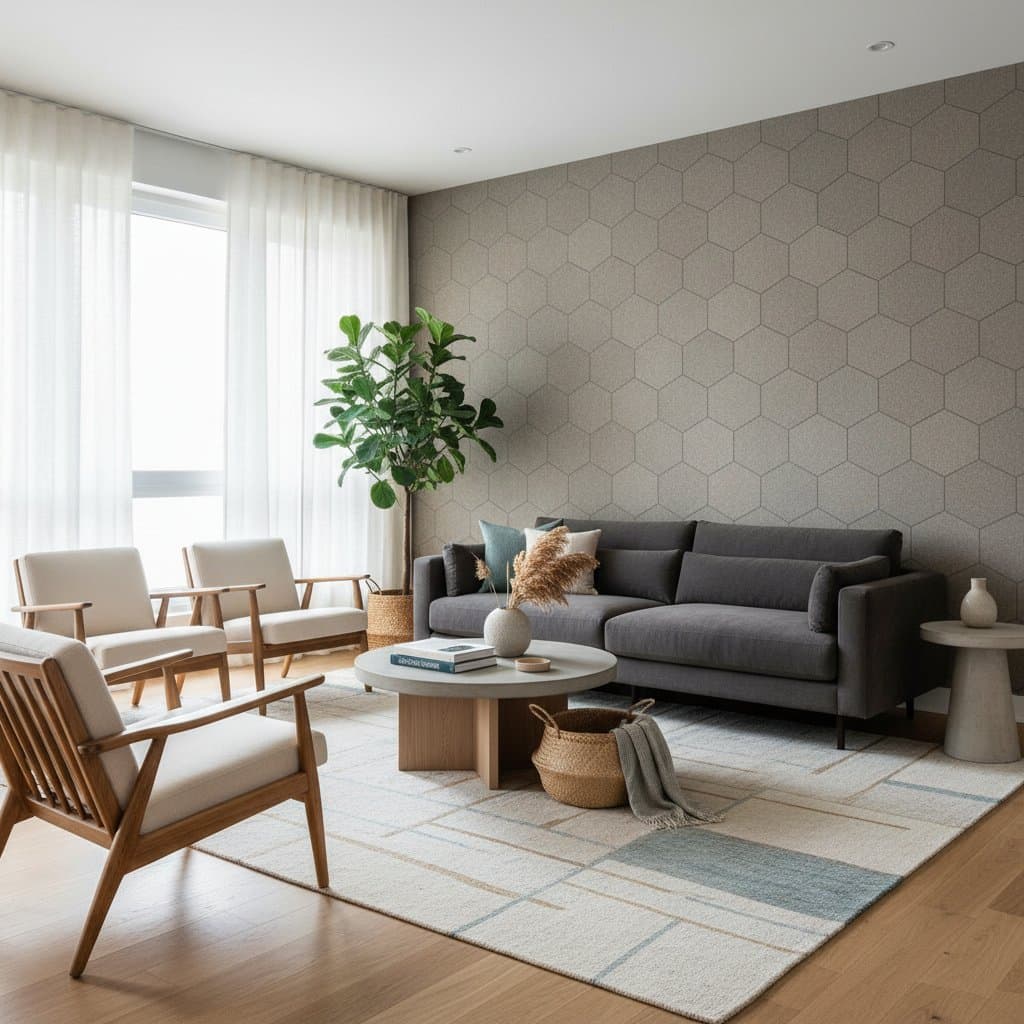
Cork possesses inherent sound-absorbing properties, and when combined with thick felt backing, it forms a sustainable solution. Panels in this style allow for cuts into geometric patterns, transforming utility into artistic expression.
Such combinations mute sounds, lessen reverberations, and provide an organic texture that promotes coziness. The neutral earth tones of cork adapt to diverse decor schemes. For added versatility, layer multiple shapes to create murals that absorb noise while serving as wall accents.
4. Ceiling Clouds
Sound reflections occur not only from walls but also from ceilings, especially in rooms with high or sloped designs. Ceiling clouds, suspended panels, intercept these reflections before they disperse.
This approach suits kitchens and dining spaces where clear, warm conversations matter. It minimizes the perceived volume of appliances like dishwashers. Suspend clouds at varying heights to optimize coverage; ensure secure mounting for safety in high-traffic zones.
Strategic Placement and Installation Guidance
Acoustic panels perform optimally at reflection points. Position them behind audio sources, adjacent to seating, or facing rigid surfaces such as windows. Corners accumulate bass frequencies, so targeted panels there restore balance.
For discreet integration, select colors matching existing walls or enclose panels in frames resembling pictures. Adopt a bold strategy by blending materials: pair wood slats with fabric and cork for dynamic visuals and superior sound control. Experiment with arrangements using removable adhesives for testing before permanent installation.
Small-scale applications yield noticeable results. Covering select areas can halve echo levels, elevating home theaters to professional standards without distractions from ambient noises. Measure room dimensions first and calculate panel quantities based on surface area for efficient coverage.
Benefits of Acoustic Panels in Everyday Settings
Quieter environments represent the primary advantage, yet broader impacts emerge. Enhanced sound control facilitates smoother conversations, eliminating the need for elevated voices. It supports focus in dedicated workspaces and promotes restful sleep in private quarters.
Families benefit from reduced disturbances between differing schedules. Remote professionals experience clearer virtual meetings with minimized echoes. Design enthusiasts gain another tool for intentional space curation.
Controlled acoustics alter perceptions of light and material details. Subtle sounds, such as pages rustling or footsteps on flooring, integrate harmoniously. This balance elevates a visually complete home to one that feels profoundly settled.
Integrating Acoustic Panels for Lasting Comfort
A harmonized acoustic setting proves transformative and difficult to relinquish. Notice the newfound peace in communal areas or the ease of concentration at work surfaces. These enhancements demand no extensive overhauls; most panels affix via brackets or adhesives.
Acoustic panels merge technical precision with aesthetic appeal, enriching routines subtly. They contribute value without fanfare, fostering environments that support well-being.