Elevate Living Rooms: Acoustic Panels for Serene Peace
Noise infiltrates daily life at home in subtle yet persistent ways. Echoes rebound from bare walls, conversations carry across rooms, and television audio merges into a constant drone. Increasing numbers of homeowners recognize the impact of sound on overall comfort, prompting the rise of acoustic panels as a transformative element in living room design. When integrated thoughtfully, these panels dampen excessive reverberation and foster environments that promote tranquility and focus.
At a Glance
Who lives here: A couple with two young children
Location: Suburban townhouse
Size: 420 square feet (39 square meters) living room
Design team: Studio Orla Interiors
Photography: Claire Benton
Before
Prior to the renovation, this open-plan living room appeared airy and illuminated, yet the acoustics proved challenging. Hard surfaces amplified sounds from the adjacent kitchen and stairwell. Homeowner Mia observed, “We loved the openness, but every movie night felt like an echo chamber.” The parallel walls, lacking sufficient soft elements, intensified footsteps, leading the family to increase audio volumes for clarity.
The design team determined that the existing layout could remain intact, provided surfaces gained texture and sound-absorbing properties. Their objective centered on crafting a space that performed acoustically as effectively as it did visually, without resembling a professional recording facility.
After
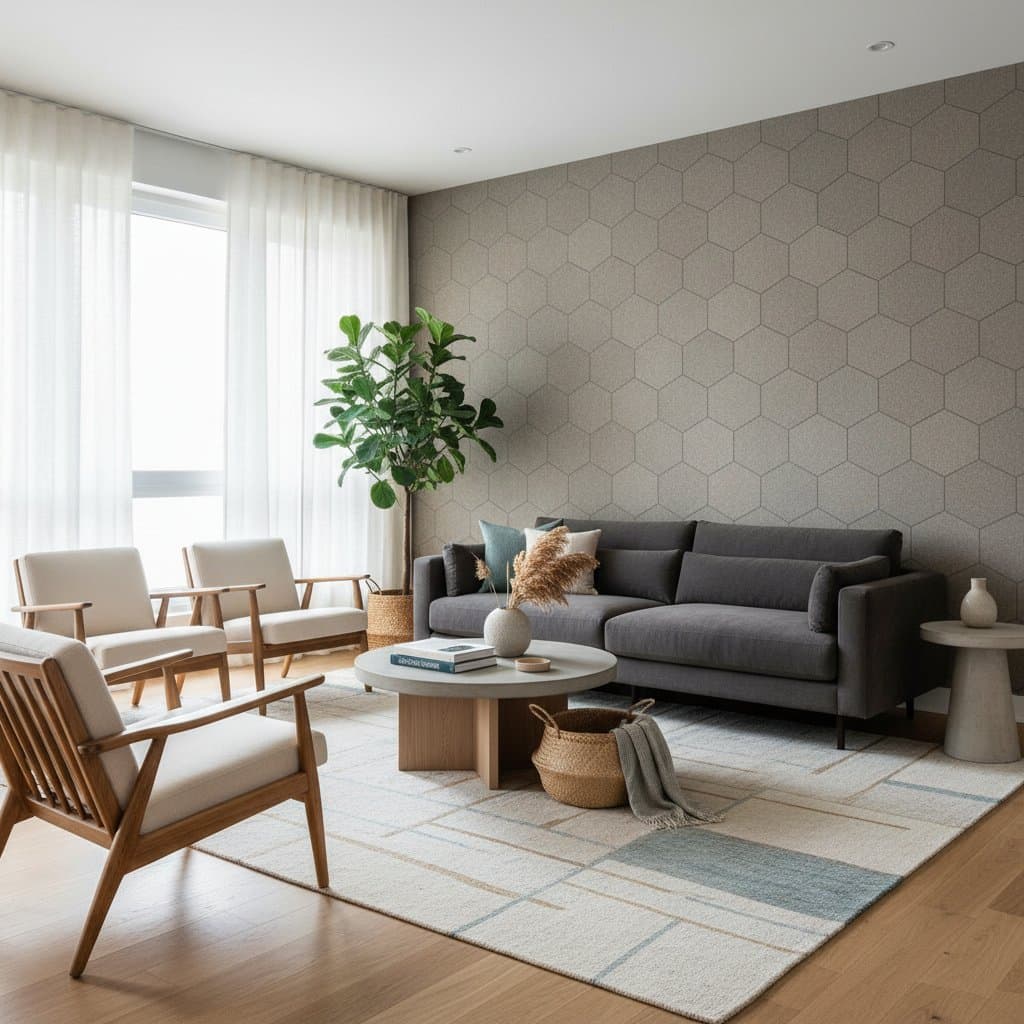
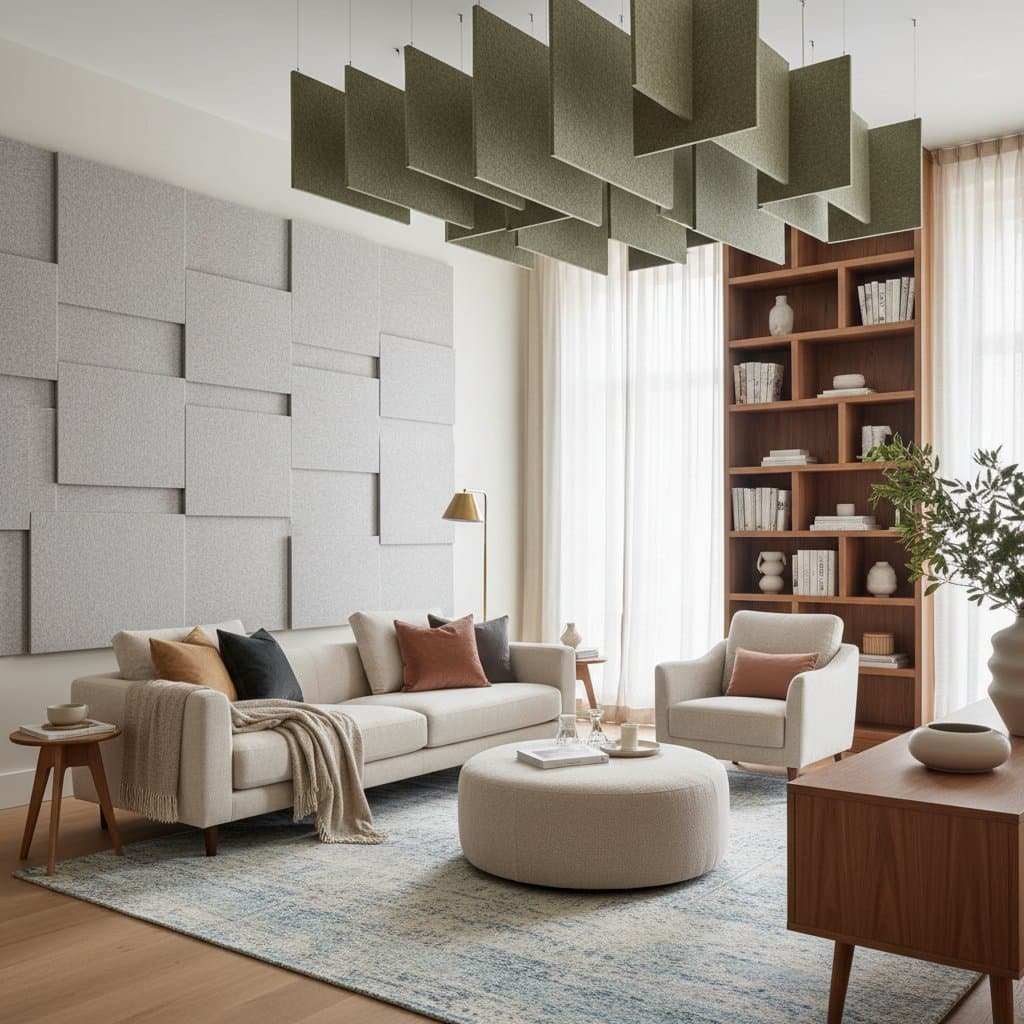
The redesign adhered to a core principle: achieve acoustic equilibrium through multifaceted materials. Custom acoustic wall panels, upholstered in natural wool, now adorn the primary television wall. Each panel spans 24 by 48 inches (61 by 122 centimeters) and mounts via concealed cleats, creating a one-inch air gap that enhances absorption efficiency. The warm clay hue of the panels harmonizes with the oak flooring, serving as both functional absorbers and aesthetic focal points.
Felt-encased wooden ceiling baffles suspend above the seating area, mirroring the vertical panel arrangement for visual continuity. A dense area rug secures the sofa zone, while substantial curtains supplant lightweight sheers. These elements collectively reduce echoes and temper the room's visual intensity. Designer Orla Jensen explained, “We treated sound as part of the design palette, just like color or light.”
The outcome yields a living space where dialogue resonates distinctly and music playback maintains equilibrium. The shift proves understated yet profound; guests frequently remark on an indefinable sense of calm, attributable to the hushed quality of the atmosphere.
Design Details
- Wall panels: Wool-blend upholstery over high-density acoustic foam, installed with a 1-inch (2.5-centimeter) air gap for optimal performance
- Ceiling baffles: Lightweight medium-density fiberboard frames encased in acoustic felt, positioned 18 inches (46 centimeters) apart to diffuse overhead sound
- Flooring: White oak planks installed over a thick underlayment to minimize impact noise transmission
- Soft furnishings: Heavy cotton drapery featuring blackout lining, complemented by layered cushions in linen and velvet fabrics
- Lighting: Adjustable LED track systems integrated with wall-mounted sconces to eliminate harsh glare and support a soothing ambiance
- Hidden storage: Low-profile media console equipped with perforated wooden doors that permit ventilation while concealing audio-visual equipment
Why Acoustic Panels Work
Sound propagates as vibrations through the air, rebounding from rigid surfaces to generate echoes and auditory strain. Acoustic panels capture these vibrations, preventing their reflection and thereby mitigating noise buildup. In multifunctional living rooms dedicated to conversation, film viewing, and social gatherings, such interventions yield significant improvements in auditory comfort.
Full wall coverage proves unnecessary; targeted application behind primary seating or opposite entertainment setups often suffices for effective control. Aesthetic considerations play a crucial role in selection. Fabric-upholstered panels can blend seamlessly with existing wall colors for a sleek appearance or incorporate subtle patterns to introduce dimension. Alternatively, wood-slatted designs with integrated felt layers offer rhythmic patterns suitable for contemporary or traditional schemes. Successful integration positions panels as intentional components of the overall interior composition.
Smart Storage Moves
- Integrate acoustic panels with hinged panels that conceal shallow shelves for organizing remotes, cables, and charging devices.
- Opt for built-in cabinetry featuring fabric-wrapped doors to extend the sound-absorbing treatment across functional areas.
- Select upholstered ottomans with dense foam interiors and lift-top storage compartments to combine acoustic benefits with practical utility.
Living with Your Design
Acoustic panels demand minimal maintenance following installation, typically limited to periodic dusting with a soft cloth. The rewards manifest in enhanced daily experiences: dialogues proceed with greater ease, ambient noises recede, and media consumption requires lower volumes without sacrificing detail. For households incorporating remote work or study routines, these enhancements extend beyond the living room, bolstering focus and serenity across multiple areas.
To implement similar improvements, commence with modest interventions. Apply modular felt tiles to a single prominent wall for immediate acoustic gains. Layer in weightier window treatments or a high-pile rug to amplify the results. Gradually, these accumulations cultivate an environment characterized by composure, seclusion, and restorative quiet.
Applying Acoustic Solutions at Home
Homeowners seeking to replicate this approach should evaluate their space's specific acoustic challenges first. Measure room dimensions and identify noise sources, such as adjacent high-traffic areas or reflective finishes. Consult with interior specialists to select panels rated for broad-spectrum absorption, ensuring compatibility with the room's style.
Budget considerations favor DIY options like adhesive-backed foam tiles for smaller zones, while custom installations suit larger transformations. Test samples in situ to verify color and texture harmony. With deliberate planning, acoustic enhancements not only refine soundscapes but also elevate the sensory appeal of living spaces, fostering lasting well-being.