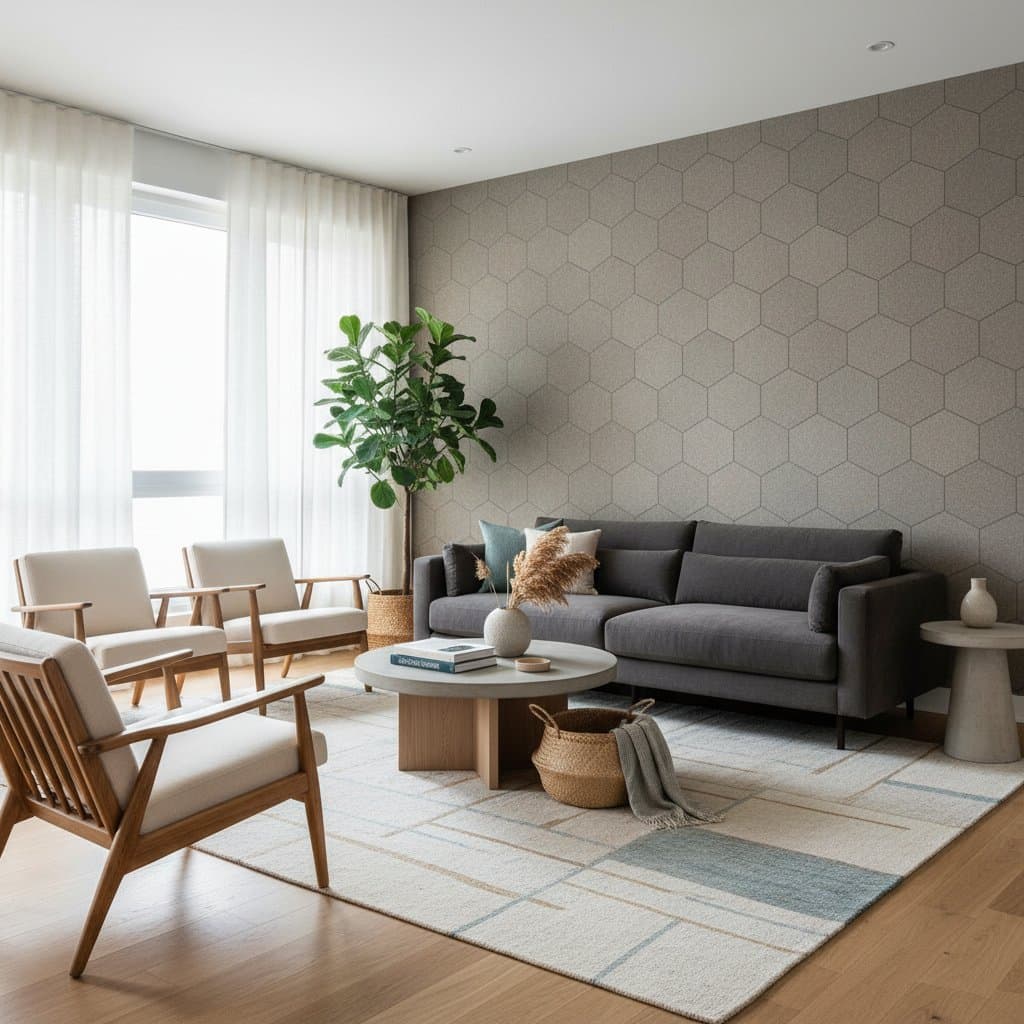
Acoustic Panels Now Double as Living Room Art
Acoustic ceiling panels are redefining soundproofing as a design statement. They blend texture, warmth, and calm into modern homes. Once purely functional, these panels now enhance both acoustics and aesthetics. From recycled felt to wood veneers, designers craft serene, stylish spaces where sound, light, and architecture work in harmony.
Integrating Lighting and Surfaces
Recessed LED spots fit between panels with acoustic gaskets to prevent sound leaks. A wool area rug and linen drapery extend sound absorption vertically. The ceiling now reads as one textured field rather than a patchwork of panels. Light bounces softly across the surface, and the subtle weave adds warmth to what was once a blank expanse of drywall.
Expanding the Idea Across Surfaces
Ceiling panels remain the most effective way to tame echo. Designers apply the same materials across walls, cabinetry faces, and even furniture. Slatted wood panels backed with acoustic felt provide rhythm and depth. In bedrooms, upholstered headboards that extend onto the wall double as sound absorbers. In small offices, sculptural felt clouds hung above desks define zones while improving focus. Each approach builds on the same principle of controlling how sound reflects and diffuses across surfaces.
Interior designer Sofia Nunez, known for her minimalist spaces, described acoustic panels as a quiet layer that supports everything else. She often specifies panels in shades close to the ceiling or wall color so they disappear, or in tonal variations that add subtle pattern. Texture is the key. When you can feel depth with your eyes, you usually hear less echo in the room.
Selecting Materials for Performance and Style
The choice of material influences both performance and style. Consider these common options.
- Recycled PET felt is made from plastic bottles. This lightweight material comes in a wide color range. It can be laser cut into geometric shapes or soft curves and works well for DIY installations.
- Mineral fiber panels are dense and highly absorptive. These suit larger rooms or ceilings where maximum sound dampening is needed.
- Wood veneer with acoustic backing offers the warmth of timber with hidden acoustic benefits. The perforations or slats allow sound to pass through to a felt core.
- Fabric wrapped foam is common in home theaters and studios. This option provides excellent absorption and can be custom upholstered to match furniture fabrics.
Designers often combine materials to balance performance and aesthetics. A wood slat ceiling might conceal mineral fiber panels above it. This creates a layered solution that feels natural but functions like professional soundproofing.
Balancing Aesthetics and Function
Soundproofing can easily look utilitarian if not planned with the rest of the interior. The most successful installations treat acoustic panels as part of the architecture rather than as add ons. Aligning panel grids with lighting, vents, or ceiling beams helps them feel intentional. Matching fabric tones to wall colors avoids distraction. Using contrast can define zones such as dining or workspace areas.
In one recent renovation of a downtown loft, designer Malik Ortega installed charcoal gray panels above the seating area and left the kitchen ceiling white. The shift in tone subtly marked the change in function without adding walls. The ceiling became our zoning tool, he said. The panels also hid wiring for track lights. This proves that acoustic design can solve multiple needs at once.
Coordinating with Storage and Lighting
For those planning to integrate acoustic panels during a renovation, consider how they can work with built in storage or lighting. Panels can sit within shallow coffers framed by wood trim. This gives a tailored look while concealing insulation. In kitchens, soffits lined with acoustic fabric reduce clatter from dishes and appliances. Acoustic tiles can be mounted on magnetic frames that open for maintenance or wiring access. Combine recessed downlights with indirect cove lighting to maintain brightness without glare reflecting off panels. Each of these moves uses acoustic materials in ways that enhance both practicality and visual rhythm.
Weighing Practical Trade Offs
Acoustic panels deliver clear benefits, yet they require planning and accurate installation. Suspended systems can slightly lower ceiling height. In rooms under eight feet, opt for thinner panels or wall treatments instead. Fabric options may need occasional vacuuming to remove dust. In kitchens, select wipeable finishes or panels with removable covers. For moisture prone areas such as bathrooms or basements, choose nonporous materials rated for humidity.
Budget can vary widely. Ready made felt panels start at modest prices per square foot. Custom wood or fabric systems can cost several times more. Still, many homeowners find the comfort and clarity worth the investment. You notice good acoustics the moment you walk in, Nunez said. It feels peaceful even before you realize why.
Assessing Your Space for Upgrades
Identify which rooms sound harsh or fatiguing. Large, hard surfaces like tile floors, glass doors, and high ceilings usually cause the most echo. Record a short voice memo in the room to hear how reflections affect clarity. Then explore materials that suit your aesthetic. Felt panels can be ordered in sample sizes. This allows you to test both look and function before committing.