
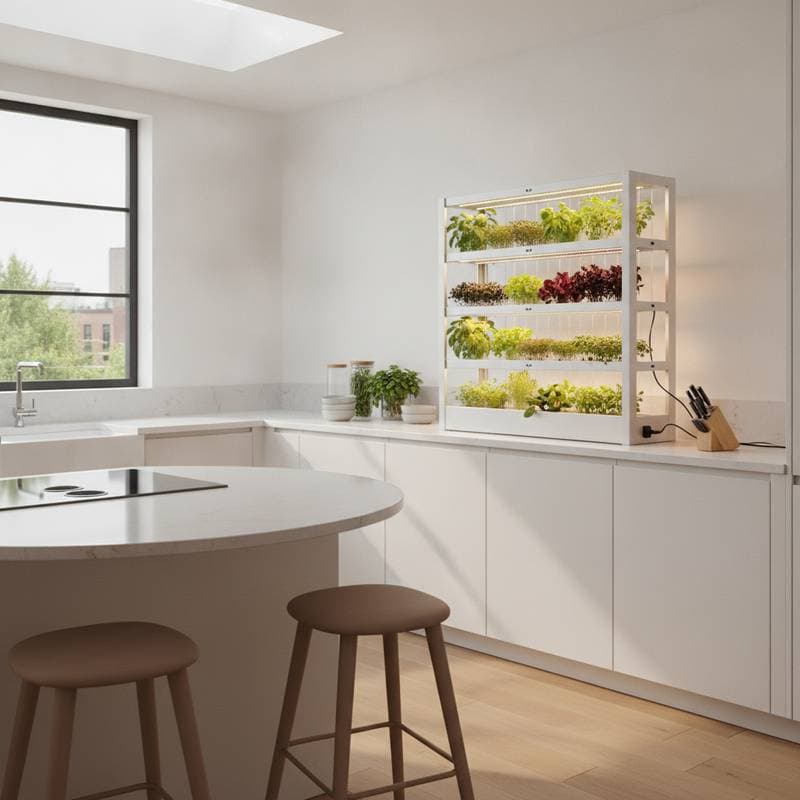
Integrate Hydroponics in Your Kitchen for Fresh Produce
A kitchen hydroponic garden places herbs and leafy greens within reach of the cutting board. The key decision involves selecting a growing system that matches the room's circulation patterns, lighting conditions, and maintenance requirements rather than positioning it as an afterthought.
Hydroponics grows plants without soil by using water enriched with nutrients. In kitchen settings, this method supports fresh basil, lettuce, mint, parsley, chives, and compact greens while adding a living element to the space. The most effective setups feel organized and practical, with clean water access, a nearby power outlet, and sufficient clearance for harvesting.
At a Glance
- Best crops: Basil, lettuce, arugula, mint, parsley, chives, and microgreens
- Ideal locations: Countertop, open shelf, pantry wall, or kitchen island
- Typical footprint: About 12 to 24 inches wide (30 to 61 centimeters)
- Key needs: Water, nutrients, electricity, airflow, and suitable light
- Design goal: Fresh produce without blocking prep space or daily movement
Kitchen Layout Considerations
Most kitchens were designed around cabinets, appliances, and work surfaces. A hydroponic garden introduces another functional element, so placement requires the same attention given to a coffee machine or toaster.
Counter space can disappear quickly, especially in compact rooms. A unit placed beside the sink may simplify refilling but crowd the main cleaning zone. One positioned near a window may benefit from natural light, yet direct sun can heat the reservoir and encourage algae growth. Open shelving can create an attractive plant display, though it may expose cords and make spills more visible.
Maintenance also shapes the experience. Plants need regular water checks, nutrient additions, pruning, and cleaning. A system that is difficult to reach may be ignored, even when it produces healthy growth. "The garden has to fit the routine first," says indoor growing consultant Maren Cole. "When care takes only a few minutes, people keep using it."
Successful Placement Strategies
The most successful kitchen hydroponic installations assign the garden a clear home. A slim countertop unit can sit at the end of a run, leaving the primary prep zone open. Look for a footprint with enough room to remove the reservoir without shifting the entire appliance. A clearance of roughly 4 inches (10 centimeters) on each accessible side makes cleaning easier.
For a larger kitchen, a dedicated shelf can frame the growing system and keep it above splash level. Choose a surface with a sealed finish, such as powder coated metal, glazed tile, compact laminate, or well finished hardwood. A shallow tray beneath the unit catches drips and separates wet tasks from dry storage.
Lighting should support both plants and the room. Many indoor systems include adjustable grow lights, often mounted on a slim arm or canopy. Place the unit where that light will not reflect directly into seating areas or create glare on glossy cabinet doors. Warm ambient fixtures can balance the cooler appearance of plant lighting, while under cabinet lights can illuminate nearby prep work.
Storage makes the routine smoother. Keep nutrients, pruning scissors, plant labels, and a small cleaning brush in a nearby drawer or lidded bin. If the garden sits near the refrigerator, reserve a narrow shelf for harvested greens. This simple arrangement encourages a cut and use habit, reducing waste.
Design Details
- Choose the crop list first: Compact greens and herbs suit indoor systems better than tomatoes, cucumbers, or sprawling plants.
- Protect the counter: Use a waterproof mat or shallow tray under the reservoir and inspect it for standing water.
- Plan the cord path: Route cables along the rear edge of the counter, using concealed clips where appropriate, and keep connections away from wet areas.
- Control the view: A system near an entry sightline can act as a green focal point. A unit inside a pantry or utility zone offers a quieter visual presence.
- Use vertical space: Wall shelves or a tall freestanding rack can hold several small growing modules without consuming the main worktop.
- Keep airflow moving: Avoid tight corners. Gentle air circulation helps foliage stay dry and supports sturdier growth.
- Match finishes: White, stainless steel, pale wood, and matte black units can coordinate with common kitchen palettes without competing with cabinetry.
- Harvest often: Regular cutting keeps herbs compact and gives the garden a productive, tended appearance.
Location Options
A countertop station works well for first time growers and households that cook often. The garden remains visible, making water checks easy. An open shelf installation suits kitchens with limited counters, though the shelf must support the filled weight of the system. A pantry placement provides visual calm and can protect plants from direct sun, but ventilation and electrical access need careful planning.
A kitchen island can support a compact garden at one end, especially when the island includes a prep sink. Keep the growing unit outside the main chopping and serving zones. For a family kitchen, a lower display position may invite children to observe growth, while nutrients and cleaning supplies should remain secured.
Important Trade Offs
Hydroponics reduces soil mess and can deliver produce close to the point of use, but it still requires attention. Pumps may create a soft hum, lights consume electricity, and reservoirs need cleaning to prevent residue or odor. The system also depends on replacement nutrients, growing pods, or planting media.
Select a model with removable parts, readable water indicators, and accessible filters. A beautiful unit with difficult maintenance will not serve the kitchen for long.
Getting Started
Start with one compact system and a short crop list. Basil, lettuce, and chives offer quick rewards while teaching the basics of light, water levels, and pruning.
As the garden becomes part of meal preparation, its placement will reveal what works. You may shift it closer to the sink, add a shelf for supplies, or move it away from strong sun.
Ongoing Maintenance
Regular attention keeps the system productive and the kitchen organized. Check water levels daily and add nutrients according to the manufacturer's schedule. Clean the reservoir monthly to prevent algae buildup and maintain water quality.
Prune plants weekly to encourage bushy growth and prevent overcrowding. Remove yellowing leaves promptly and harvest outer leaves first to extend the productive life of each plant. Replace growing media and clean filters as recommended by the system manufacturer.
Kitchen Integration Tips
Position the unit away from heat sources such as ovens, stovetops, and dishwashers. These appliances can raise water temperatures and stress plants. Keep the garden at least 3 feet from cooking zones to avoid oil splatter and steam damage.
Consider the sound level of pumps and fans, especially in open concept kitchens. Some systems operate quietly while others produce noticeable noise. Test the system in your space before committing to a permanent location.
Label storage containers clearly and keep a simple log of water changes and nutrient additions. This practice helps maintain consistent growing conditions and makes troubleshooting easier when plants show stress symptoms.