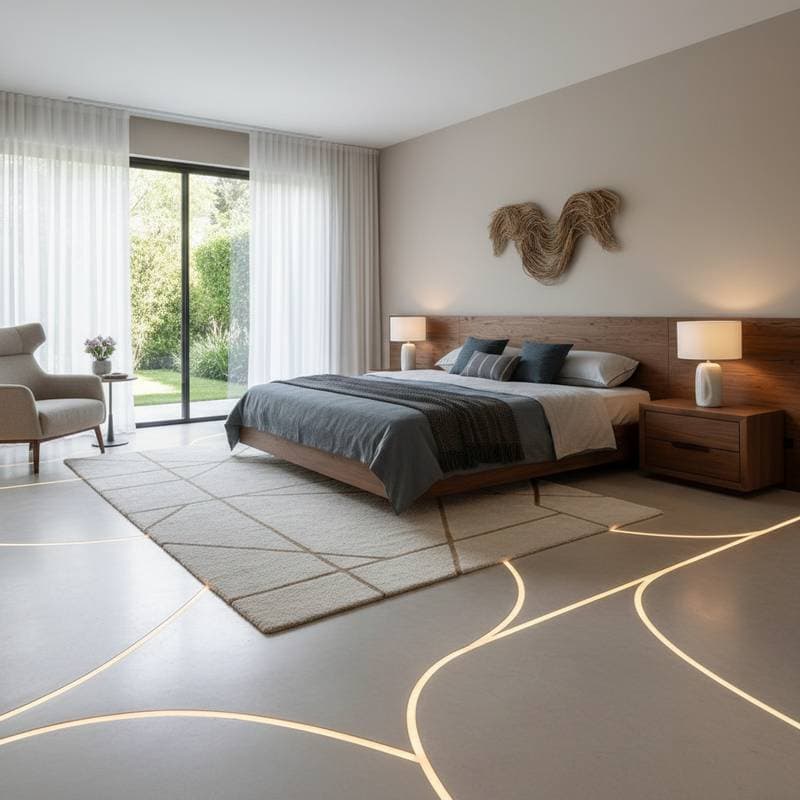
Grounding Mats: Embedding Wellness Technology in Bedroom Floors
A discreet conductive layer beneath the feet alters perceptions of sleep environments. Grounding mats, known also as earthing mats, integrate into bedroom floors amid a rising trend that merges interior design with physiological equilibrium. The principle involves channeling the earth's inherent electrical charge indoors via materials that sustain bodily contact during rest or movement.
Professionals incorporate this approach to cultivate serene atmospheres that support superior sleep and mitigate static accumulation. Once confined to portable wellness items under desks or beds, these mats now form part of flooring assemblies compatible with hardwood, cork, or low-pile carpet finishes.
Key Overview
Primary users: Individuals prioritizing health, rest optimization, and non-toxic living spaces
Common settings: City apartments and suburban residences desiring natural ties
Standard coverage: Beneath 120 to 250 square feet (11 to 23 square meters) of bedroom surface
Involved experts: Wellness-oriented architects, flooring installers, and electricians versed in conductive systems
Core Principles
Grounding mats consist of conductive sheets linked to the earth via a specialized rod or confirmed grounded outlet. Positioned under flooring, they facilitate an exchange of electrons between the body and the ground. Advocates maintain that this process diminishes free radicals, regulates sleep-wake cycles, and induces relaxation.
Although research evolves, practitioners observe client satisfaction with the resulting composure. Interior designer Marla Hensen, who incorporates such underlays in luxury bedroom projects, notes, "People notice the difference in how grounded they feel when they wake up."
Traditional Bedrooms: Isolated from Natural Forces
Conventional bedroom floors, often elevated multiple levels above soil, feature insulating synthetics and vapor barriers that sever earthly connections. Such setups foster static electricity, particularly with carpets or laminates. Residents frequently face sleep disruptions from artificial illumination, gadgets, and poor air circulation.
Prior to grounding innovations, enhancements targeted surface treatments like eco-friendly paints, organic mattresses, or light-blocking curtains. Floors served merely as structural bases, selected for visual or thermal qualities rather than health benefits.
Transformed Spaces: Seamless Earth Connection
Embedding a grounding mat under the top layer shifts construction methods and tactile sensations. The setup employs a slim conductive sheet, typically carbon-enhanced rubber or silver-woven textile, layered beneath floating wood, cork tiles, or low-emission vinyl. A copper cord secures the sheet to an exterior soil rod or tested outlet, overseen by a qualified electrician.
The surface appears unchanged, yet the underlying element redefines utility. Architect Julian Cross from Fieldline studio describes it as "a wellness membrane that preserves visual harmony while enhancing physical perception."
Users experience gentle warmth via bare skin and diminished static. Those opting for low-profile beds amplify this bond through closer proximity.
Technical Specifications
- Core materials: Carbon-infused rubber sheets or silver-threaded meshes, approximately 1/8 inch (3 millimeters) in thickness
- Suitable overlays: Engineered timber, resilient cork, linoleum, or natural-fiber carpets with minimal backing impedance
- Earthing method: Copper conductor linked to a dedicated ground rod or authenticated electrical ground
- Assembly process: Comparable to underfloor heating installations, using adhesives or loose-lay configurations
- Upkeep: Periodic continuity checks with a multimeter or dedicated tester
- Pricing: $8 to $15 per square foot for complete installation, varying by material and site conditions
Holistic Wellness Fusion
Grounding mats yield optimal results within comprehensive health strategies. Pair them with rhythm-aligned illumination, permeable surfaces, and streamlined arrangements. The electron flow augments optical stability from organic textures and harmonious layouts.
In a 180-square-foot (17-square-meter) bedroom renovation, a silver-mesh layer under bamboo planks combined with linen linens and amber-hued wall fixtures. The client reported "a quieting of the space," highlighting the subtle enhancement.
These integrations also temper minor electromagnetic fields from appliances. Though not full shielding, they neutralize static from devices and fabrics.
Essential Considerations
Plan grounding mats early in flooring projects, as penetration risks damage the conductive plane, restricting nail-down options. Electricians may advocate independent rods over home wiring to ensure reliability, potentially increasing expenses.
Standard cleaning applies, but heavy rugs or pads may interrupt contact; expose sections near sleeping or lounging zones for direct touch. Test efficacy by walking barefoot post-installation to gauge energy flow.
Layout and Storage Strategies
To preserve floor prominence in wellness-focused bedrooms, incorporate recessed bed storage, wall-hung tables, and hidden cabling. A full-height linen panel dampens sound while reinforcing calm.
Select subdued tones like soft whites, earthen beiges, or light grays to underscore tactile priorities without visual clutter.
Daily Integration and Benefits
Grounding mats operate unobtrusively, rendering floors more stable, warmer, and static-resistant to promote barefoot habits and intentional routines.
For initial trials, employ movable pads near bedsides or workstations before full-scale updates. Complement with enhanced airflow, silent circulation, or adjustable task lighting to forge unified restorative zones.
This flooring approach bridges design and health subtly, preserving aesthetics while optimizing sensory and functional outcomes.