Grounding Floors: Bridging Bedroom Wellness to Earth's Vital Force
Bedrooms serve as essential retreats for physical and mental renewal, where surrounding elements profoundly shape daily well-being. Individuals dedicate significant time to sleep and relaxation in this space, influenced by subtle factors such as textures, hues, and materials that either soothe or disrupt equilibrium. While aspects like illumination, ventilation, and linens often receive attention, the flooring beneath provides a foundational impact on sensations of stability and rejuvenation. Grounding floors reframe the bedroom as a conduit to earth's inherent energy, fostering deeper harmony.
Grounding, or earthing, involves direct interaction with natural elements such as soil, grass, or rock to absorb stabilizing electrons from the planet. Within contemporary interiors, this practice translates through deliberate flooring selections that emulate earth's tactile and energetic properties. Such surfaces transcend mere utility, serving as pathways that synchronize personal rhythms with natural cycles for enhanced repose.
Selecting Materials for Grounded Comfort
Flooring choices in a wellness-oriented bedroom should prioritize sensory authenticity over synthetic uniformity. Each option delivers a distinct interaction with the body, promoting presence and ease. Focus on durable, eco-conscious materials that evolve with use, enhancing the room's serene atmosphere.
Wood
Wood stands as a classic selection that conveys warmth visually and physically. Direct foot contact with wooden surfaces yields a comforting sensation, as the material adapts to ambient temperatures without abrupt shifts. Opt for responsibly sourced hardwoods or salvaged boards treated with minimal oils or waxes. These finishes preserve the wood's breathability and maintain genuine tactile feedback, avoiding impermeable barriers that distance users from natural feel.
Cork
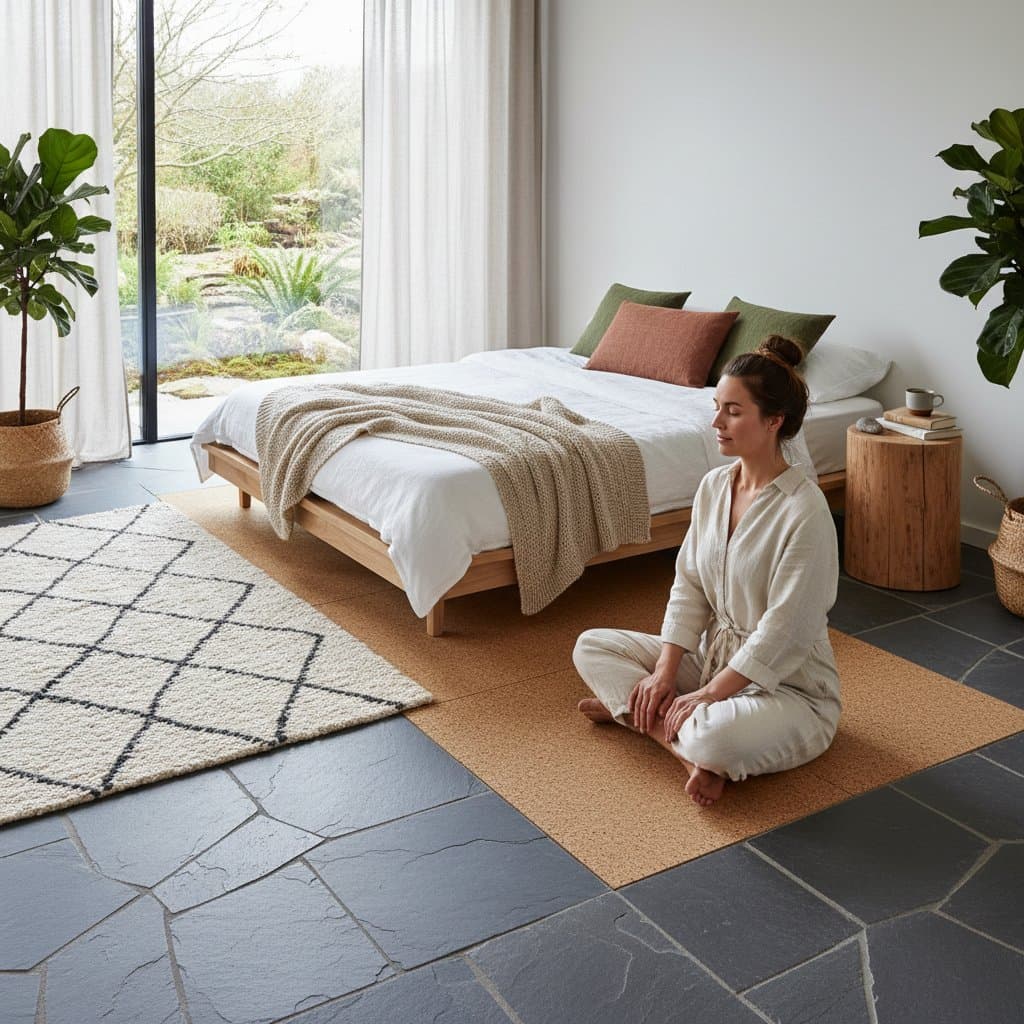
Cork provides a resilient, cushioned underfoot experience while muffling ambient noises, rendering it suitable for quiet bedrooms. Harvested from cork oak bark, this resource regenerates without tree removal, instilling environmental assurance. The inherent elasticity mimics earth's yielding terrain, supporting prolonged standing or pacing with reduced strain on joints.
Clay or Terracotta Tiles
Clay tiles embody earth's solidity and subtle chill, ideal for moderating warmer environments. Their unglazed variants reveal organic patterns that soothe the gaze and touch. Integrate them with layered, breathable rugs to blend firmness with plushness, creating versatile zones for movement and rest.
Stone
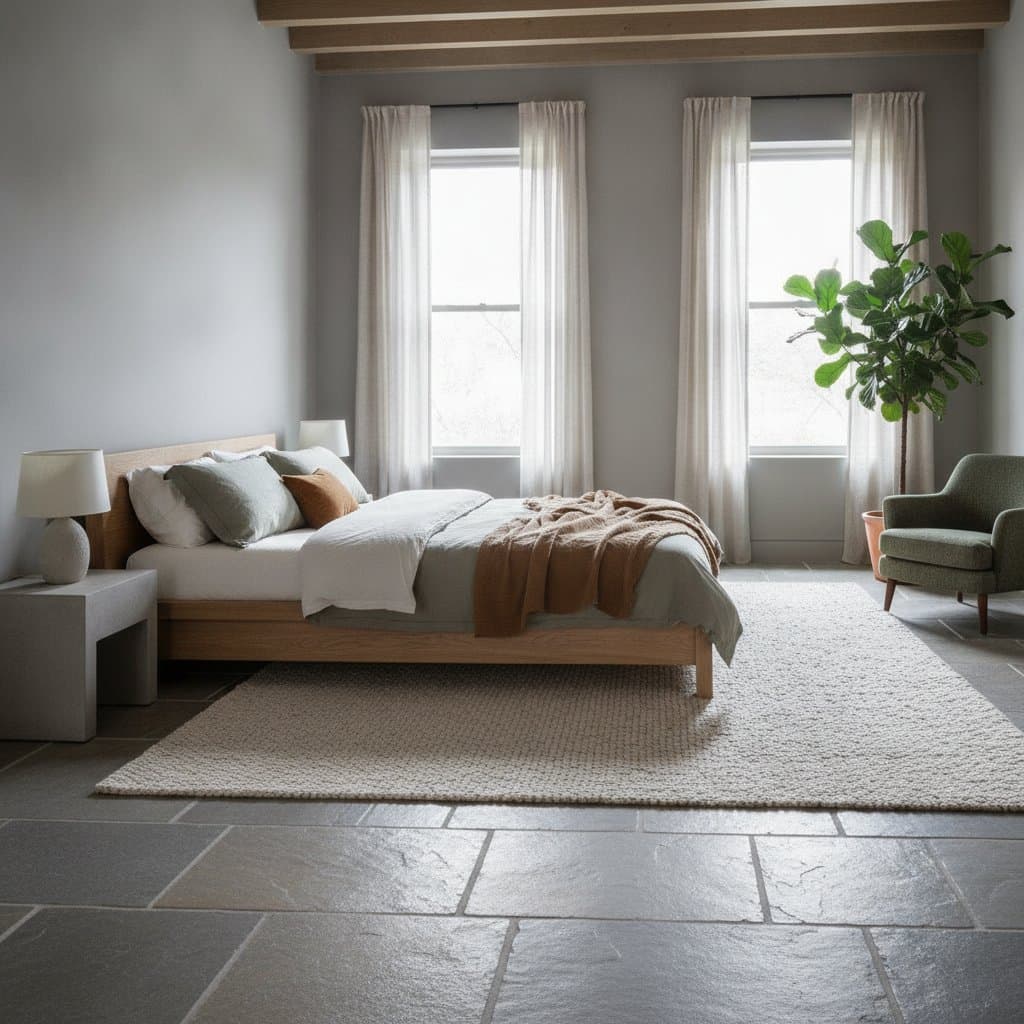
Options like slate, limestone, or marble evoke ancient geological stability, offering a profound sense of anchorage. These materials maintain consistent coolness, which invigorates during humid seasons. Temper their firmness with strategically placed wool or cotton rugs adjacent to sleeping areas, achieving a harmonious interplay of resilience and tenderness.
Natural Fiber Carpets
For those seeking plushness, carpets woven from wool, jute, or sisal deliver authentic earth-inspired tactility. Wool imparts insulating warmth, whereas jute and sisal introduce textured ruggedness. Select pieces dyed with plant-based colors and backed by organic materials to safeguard indoor air purity and minimize volatile emissions.
Harnessing Texture and Color for Stability
Textures and colors play pivotal roles in cultivating a grounded ambiance, directing focus toward serenity rather than distraction. Opt for subdued, non-reflective finishes that echo natural landscapes, stabilizing visual and emotional states.
Warm Earth Tones
Shades of gentle browns, softened beiges, and golden woods evoke safety and rootedness. These complement organic fabrics like linen sheets and clay pottery, forming cohesive, inviting ensembles.
Cool Mineral Hues
Subtle grays and stone-inspired palettes project enduring fortitude. They establish a balanced backdrop for recuperation, enhanced by layered natural weaves that introduce coziness.
Organic Imperfections
Embrace materials displaying inherent inconsistencies, such as wood's figuring or stone's marbling. These variations infuse vitality without overwhelming, illustrating nature's poised irregularity.
Establishing Daily Grounding Practices
Integrate grounding into routines to maximize its benefits, transforming the floor into a cue for mindfulness. Consistent engagement reinforces the bedroom's role as a wellness anchor.
Morning Awakening
Start each day by positioning bare feet on the floor beside the bed. Perform gentle stretches while attuned to the surface's temperature and texture. This brief practice grounds intentions, easing the shift from slumber to activity.
Evening Unwinding
Before retiring, stand mindfully on the flooring and inhale deeply several times. Envision tensions dissolving into the earth below. Such moments facilitate a smooth passage into restorative sleep.
Seasonal Adaptations
Align room elements with environmental changes to sustain vitality. Add insulating sheepskin during winter for added warmth; expose bare surfaces in summer for cooling. These adjustments attune the space to broader natural patterns.
Addressing Practical Hurdles
Implementing grounding floors demands navigation of real-world limitations, yet targeted solutions preserve the vision.
Managing Costs
Premium natural elements may strain finances, so prioritize high-impact zones. Install premium wood or cork in traffic paths, supplementing with affordable area rugs in secondary spaces. This approach delivers substantial benefits without excess expenditure.
Working with Current Setup
Full replacements prove unfeasible for many; instead, overlay existing floors with dedicated natural mats in key spots. A single grounding station near the bed suffices to alter the room's overall energy.
Simplifying Upkeep
Natural surfaces demand attentive care but develop character over time. Employ mild cleaners and occasional conditioning to sustain integrity. View these tasks as extensions of the grounding ritual, fostering ongoing appreciation.
Enhancing Overall Wellness Integration
Grounding extends beyond flooring to influence sleep patterns, mobility, and awareness. Rooms featuring these elements often exhibit reduced auditory clutter, even amid household activity. The constant subtle input from below recenters attention on embodiment, countering digital overstimulation.
Sourcing materials from natural origins infuses personal sanctuaries with planetary essence, potentially elevating rest depth and mood steadiness. Stable surroundings signal the autonomic system to relax, promoting holistic health.
Harmonizing with Complementary Design
Grounding floors amplify when coordinated with supportive room features, creating synergistic calm.
Illumination Strategies
Employ diffused, amber-toned lighting to accentuate flooring's organic qualities. Favor low-profile lamps over stark ceilings to diffuse light softly across surfaces.
Fabric Selections
Incorporate breathable textiles such as hemp or organic cotton for drapery and upholstery. These reinforce the floor's earthy motif, ensuring sensory cohesion.
Ventilation Practices
Circulate fresh air regularly to invigorate the space. This infusion pairs with grounding effects, merging interior stability with exterior vitality.
Acoustic Considerations
Inherent material properties dampen reverberations, fostering hush. Layered fibers further quiet steps and echoes, enveloping the area in peace.
Sustaining Grounded Living
Embrace the grounded bedroom as an evolving practice that extends into daily life. Regular barefoot contact builds cumulative benefits, nurturing sustained well-being. Through these intentional designs and habits, the space becomes a reliable source of renewal and connection.